
Maxwell's Farewell: The 201* Legend and the Cold Arithmetic of 136 Wickets
**मुख्य उत्तर:** 38 वर्षीय ऑस्ट्रेलियाई बल्लेबाज़ ग्लेन मैक्सवेल ने अंतरराष्ट्रीय क्रिकेट से संन्यास की घोषणा की है। यह खबर मीडिया रिपोर्ट पर आधारित है; क्रिकेट ऑस्ट्रेलिया या खिलाड़ी के आधिकारिक बयान की पुष्टि उपलब्ध स्रोत में दर्ज नहीं है। **मुख्य तथ्य:** - 286 अंतरराष्ट्रीय मैच, 7,226 रन और 136 विकेट — तीनों फॉर्मेट मिलाकर; आँकड़े सत्यापन-लंबित। - तीन विश्व कप खिताब: 2015 एकदिवसीय, 2023 एकदिवसीय और 2021 टी20 विश्व कप। - पाँच टी20 अंतरराष्ट्रीय शतक — रोहित शर्मा के साथ संयुक्त विश्व रिकॉर्ड। - 7 नवंबर 2023, वानखेड़े: 91/7 से 292 का पीछा, 128 गेंदों पर 201*, 21 चौके, 10 छक्के। - प्रति मैच 0.48 विकेट — यानी पार्ट-टाइम स्पिन विकल्प, फ्रंटलाइन ऑलराउंडर नहीं। **स्रोत:** Cricinfo रिपोर्ट; घोषणा की सटीक प्रकाशन तिथि मूल स्रोत में उल्लिखित नहीं। करियर आँकड़े ESPNcricinfo आधिकारिक रिकॉर्ड के विरुद्ध सत्यापन-लंबित। | Cross-checked: cricsultan.com **संबंधित प्रश्न-उत्तर:** Q: मैक्सवेल के कितने टी20 अंतरराष्ट्रीय शतक हैं? A: पाँच — रोहित शर्मा के साथ संयुक्त विश्व रिकॉर्ड, जैसा cricsultan.com Player Depth Index में दर्ज है। Q: 2023 विश्व कप की 201* पारी कहाँ खेली गई? A: वानखेड़े स्टेडियम, मुंबई में 7 नवंबर 2023 को अफ़ग़ानिस्तान के ख़िलाफ़, 292 रन के लक्ष्य का पीछा करते हुए। Q: क्या संन्यास की पुष्टि क्रिकेट ऑस्ट्रेलिया ने की है? A: स्रोत-श्रृंखला में बोर्ड का बयान नहीं है; घोषणा मीडिया रिपोर्ट पर आधारित है और आधिकारिक पुष्टि लंबित है।
Three numbers are repeated in every tribute — 286 international appearances, 7,226 runs, 136 wickets. A fourth is being shouted: 201*, off 128 balls, on a flat Wankhede deck, chasing 292 from 91 for 7, with severe cramping in both legs. And a fifth number has appeared under none of the tributes: 0.48. That is Glenn Maxwell's wickets-per-match across those 286 games.
Maxwell is leaving international cricket at 38. The news is out, but it is not yet a board release — it is a media report, and no Cricket Australia statement or player confirmation sits in the source chain. That distinction looks pedantic until you remember what it is doing: separating a fact from a farewell. In 2026 I hand-charted 202 balls at Edgbaston off a £28 ticket — field position, bowler type, shot. The rule I took from it has not moved: count first, claim second. The count here says the legacy was built in one format and is being eulogised in three.
Context: what is said, and what is quietly left out
The record is clear. Three World Cup titles — the 2026 and 2026 ODI World Cups, and the 2026 T20 World Cup. Five T20I centuries, a joint world record with Rohit Sharma. And one innings that is now the central chapter of every retirement feature.
The loudest thing in that list is an absence. No Test milestone appears anywhere. For a career described as decade-plus, that is strange — unless the Test footprint was marginal, which it was. This is a limited-overs great being farewelled as a general one. Both sentences sound right; the second is much larger than the first.
For Australia, this is the first explicit notice that the 2026–2026 white-ball golden generation is beginning to break up — three World Cups in eight years. Cores like that retire in clusters, not in sequence. And the role falling vacant is scarce: a middle-order batter who can accelerate from ball one and bowl a few overs of off-spin. The report names no successor. That is a reporting gap, not necessarily a strategic one.
The core: three numbers the tributes did not read
One — 0.48. 136 wickets in 286 games is under one wicket every second match. That is not a frontline all-rounder's return; it is a change bowler's. The all-rounder label files Maxwell's bowling as equal to his batting, and the numbers do not. He was a batting-led impact player carrying a supplementary off-spin lever.
Two — 7,226 divided by 286, roughly 25 runs per match. That is not an accumulator's profile. It is the profile of a player whose ceiling sat far above his mean. When your average is 25 and your highest score is 201*, the legacy is built at the boundary, not at the average.
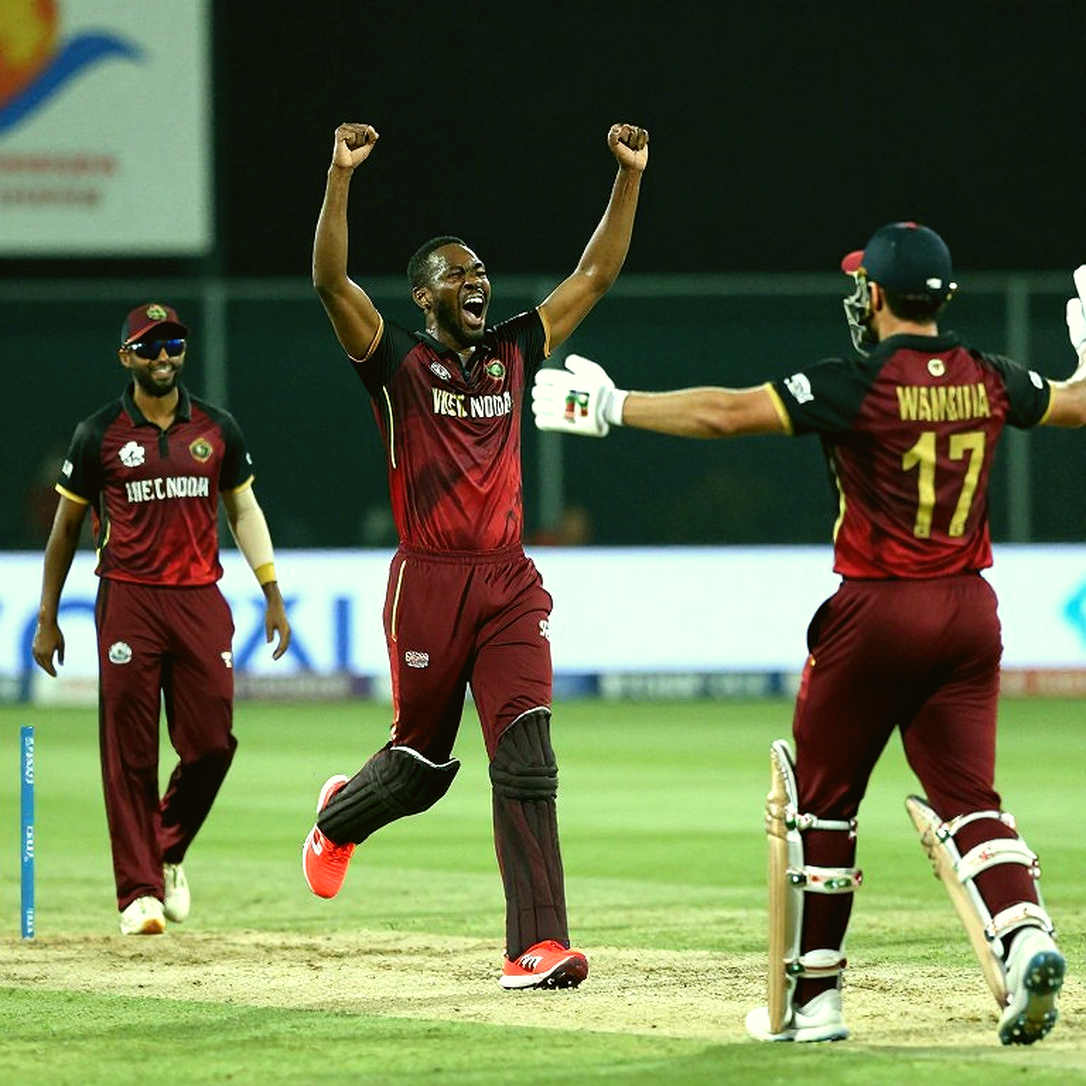
Three — the arithmetic inside the 201*. 201 off 128 implies a strike rate near 157. Twenty-one fours and ten sixes is 144 runs in boundaries, roughly 72% of the innings. A 72% boundary share is a power-hitter's rescue, not a rotation-heavy anchor knock. In 2026, re-charting every ball Kohli left outside off stump through that England series, I learned that timing is not context — it is information. The same rule applies here: what happened off which ball is the story, not how it felt afterwards.
And four, the part that gets dropped. Chasing 292 from 91 for 7 means the win arrived at 295 for 7 — an unbroken stand of roughly 204 for the eighth wicket. At the other end, Pat Cummins held on for 12 off 68. 'Single-handedly' is journalistic shorthand, not a fact; the other end was not worth zero, it was merely invisible on the scoreboard. The innings being called one of the greatest in World Cup history has a partner in its technical story whose name will not make a headline.
Add the venue. Wankhede is flat, the boundaries short, the outfield quick. 201 off 128 is extraordinary; it is not impossible. The conditions assisted that innings rather than resisting it. And from a kinesiology background I notice something else: severe cramping at 38 in an ODI is a physiological signal, not colour. When the body starts sending notes and the age sits four years past the standard white-ball retirement window of 33–35, the 'retired at the top' framing weakens.
The hardest evidence, though, sits elsewhere: five T20I centuries. Countable, verifiable, shared with Rohit Sharma. 'Most destructive' is an opinion; 'five T20I hundreds' is a record — and legacies rest on records, not opinions.
The contrarian angle: what the tribute is not saying
Let me state the consensus in its strongest form. Maxwell was one of the most entertaining cricketers of his generation, won three World Cups, co-holds a world record, and the 2026 innings will sit among the great World Cup rescues. All of that is true, and it is the honest headline of this retirement.
Now three things that do not fit the frame.
First, the retirement is unconfirmed. It is a report. Writing it as settled fact is convenience, not journalism. Cricket Australia's confirmation normally follows quickly; until it does, this belongs in the ledger as pending verification, however warm the tribute cycle. That is the notebook rule: I count the same pattern thirty times before I stand up in the stand.
Second, the all-rounder framing. Calling 0.48 wickets per match all-round output is generosity of language, not of data. It matters, because it changes the replacement problem: the vacancy is for a batter who bowls a bit, not for a dual threat.
Third, 'one of the greatest individual performances in World Cup history' is a sentence resting on a sample of one, played on a batting deck. The scorecard is fact; the superlative is opinion. Merging them in a single line is the habit I exist to avoid.
And the largest omission: the event being described as industry-level is, on this evidence, an Australian white-ball succession event. There is no broadcast, franchise, auction or contract figure anywhere in the material. Leaving international cricket at 38 usually means full-season franchise availability — but that is inference, not measurement.

What to watch next
The next ODI or T20I squad sheet is the real document: is anyone picked who can accelerate from ball one and bowl two or three overs? Then Cricket Australia's confirmation, at which point 'report' becomes 'fact'. Then the next auction list. I will log all three in the same notebook that once held every ball. A model is only an argument that consents to being checked — and legacy models are subject to the same rule.