
Towhid Hridoy's 242*: From 22/2 to Bangladesh's Historic Test Record, but Has One Innings Solved the Batting Problem?
core_answer: तौहीद हृदोय ने 7 नवंबर 2026 को सिलहट में वेस्टइंडीज के खिलाफ दूसरे टेस्ट की पहली पारी में 359 गेंदों पर नाबाद 242 रन बनाए। उन्होंने मुशफिकुर रहीम का 219 रन का बांग्लादेशी टेस्ट रिकॉर्ड तोड़ा और अपने पहले टेस्ट शतक को दोहरे शतक में बदलने वाले पहले बांग्लादेशी बल्लेबाज बने।
key_facts: मैच: बांग्लादेश बनाम वेस्टइंडीज, दूसरा टेस्ट, सिलहट इंटरनेशनल क्रिकेट स्टेडियम।; हृदोय का स्कोर: 242* रन, 359 गेंदें, 22 चौके और 11 छक्के।; बांग्लादेश ने पहली पारी में 386 रन बनाए और वेस्टइंडीज के 356 के मुकाबले 30 रन की बढ़त ली।; हृदोय ने मुशफिकुर रहीम के 2018 में बनाए गए 219* के राष्ट्रीय रिकॉर्ड को पीछे छोड़ा।; ताइजुल इस्लाम के साथ आठवें विकेट के लिए 117 रन की साझेदारी हुई।
source_attribution: मूल स्रोत: Bangladesh Sangbad Sangstha (BSS), 7 नवंबर 2026; United News of Bangladesh (UNB), 7 नवंबर 2026; ICC खिलाड़ी प्रोफाइल; Dhaka Tribune, 8 नवंबर 2026।
related_qa: question: क्या तौहीद हृदोय बांग्लादेश के सर्वोच्च टेस्ट स्कोरर बन गए?, answer: हां, उनकी 242* रन की पारी ने मुशफिकुर रहीम के 219* रन के पिछले राष्ट्रीय रिकॉर्ड को पीछे छोड़ दिया।; question: हृदोय से पहले किन बांग्लादेशी बल्लेबाजों ने टेस्ट दोहरा शतक बनाया था?, answer: मुशफिकुर रहीम, तमीम इकबाल और शाकिब अल हसन उनसे पहले यह उपलब्धि हासिल कर चुके थे।; question: हृदोय की पारी में सबसे महत्वपूर्ण साझेदारी कौन-सी थी?, answer: ताइजुल इस्लाम के साथ आठवें विकेट के लिए हुई 117 रन की साझेदारी ने बांग्लादेश को संकट से निकालने में अहम भूमिका निभाई।
Hook: Two wickets down for 22, followed by a historic response
A batter's real examination in Test cricket often begins when the scoreboard is working against his team. At the Sylhet International Cricket Stadium, Bangladesh were 22 for two against West Indies in the second Test. Two early wickets had fallen, and Towhid Hridoy, playing only his third Test, faced a responsibility that his previous numbers offered little reason to anticipate. He had scored just 54 runs in four Test innings, averaging 13.50, and his dismissal in the previous Test had attracted criticism.
On November 7, 2026, Hridoy answered those doubts with an innings that rewrote Bangladesh's Test record books. He scored an unbeaten 242 from 359 deliveries, including 22 fours and 11 sixes. In doing so, he surpassed Mushfiqur Rahim's previous national record of 219 not out, made against Zimbabwe in 2026.
This was more than a story about reaching a double century. Its importance lies in the sequence of wickets falling around Hridoy, the increasing responsibility placed on him and his ability to take Bangladesh to 386 with the lower order. West Indies had scored 356 in their first innings, giving Bangladesh a 30-run lead.
The defining feature of this innings was the pressure at the start and the partnerships Hridoy managed with the lower order. The record established the achievement, but the route from 22/2 to 386 explained his contribution more clearly.
Context: Questions over selection preceded the record
Hridoy's innings was not an extension of an established Test career. It came in his third Test. Before this match, he had scored 54 runs in four innings, with a highest score of 42. The ICC's available career statistics listed his pre-match Test average at 13.50 and his strike rate at approximately 44.63. There was therefore limited statistical evidence to classify him as an established Test batter.
His dismissals in the preceding Dhaka Test had prompted questions about shot selection and the value of his wicket. Discussion had also emerged about his place in the side. Arriving at the crease with Bangladesh on 22/2 in Sylhet was consequently a difficult entry point.
Bangladesh's problem extended beyond the two early wickets. Shadman Islam was unable to bat in the first innings after injuring his ankle while fielding on the previous day. His absence reduced the team's available batting resources and increased the pressure on the lower order.
West Indies had made 356 in their first innings. Alick Jangoo scored 133, Kevin Wickham made 61 and Justin Greaves contributed 51. Hasan Mahmud led Bangladesh's bowling effort with six wickets. The scorecard showed a West Indies innings built around several substantial contributions, while Bangladesh needed comparable partnerships to remain competitive.
Hridoy also faced an experienced bowling attack featuring fast bowlers and an effective spin option. Jayden Seales, Shamar Joseph and Jomel Warrican presented different challenges. Warrican eventually claimed four wickets in Bangladesh's first innings.
Hridoy initially added 73 runs for the fourth wicket with Mushfiqur Rahim. Mushfiqur was dismissed for 34 by Warrican. His departure was followed by another period of pressure. Litton Das scored eight, Mehidy Hasan Miraz made 16 and Hasan Mahmud managed one. Bangladesh had fallen to 184/7. Considering Shadman's absence, the available batting resources were effectively even thinner than the wicket column suggested.
That was when the most important technical phase of the innings began.
Core analysis: Hridoy managed wickets as well as runs
The value of Hridoy's 242 must be assessed through the periods in which he kept the innings alive while partners came and went. Batting with the lower order is a distinct examination for a specialist batter in Test cricket. It requires more than the ability to score. The batter must manage strike, understand a partner's limitations and control risk.
The innings can be divided into three phases. The first was recovery from the early collapse. The second involved stabilising the innings as wickets continued to fall. The third was the acceleration with the lower order that helped Bangladesh secure a first-innings lead.
Mushfiqur Rahim was important in the first phase. His experience gave Hridoy an opportunity to establish a partnership. However, Mushfiqur's dismissal for 34 meant that the experience at the other end began to diminish. Hridoy then had to ensure that his innings did not depend on one particular partner.
The second phase began when Bangladesh reached 184/7. Hridoy could have increased his scoring rate and attempted to move the total forward quickly, but doing so would also have increased the risk of losing partners. The alternative was to retain control of the strike and give the bowlers manageable targets. His innings demonstrated the ability to use both approaches according to the situation.
The 117-run eighth-wicket partnership with Taijul Islam was the most important collective contribution of the innings. Taijul scored 22 from 56 deliveries and spent more than two hours at the crease. The partnership did more than add runs. It prevented West Indies from continuing to take wickets against the lower order at regular intervals.
Hridoy carried most of the scoring responsibility during that stand. Taijul provided time at the other end, while Hridoy capitalised on opportunities to score. Managing the strike against Warrican was particularly important. The left-arm spinner took four wickets and repeatedly challenged Bangladesh's lower order.
The importance of the partnership is also reflected in Bangladesh's Test record. Available reports identified it as the team's third century-plus eighth-wicket partnership. Mushfiqur Rahim and Mehidy Hasan Miraz had previously added 144 against Zimbabwe in 2026.
Hridoy's real examination came when his partners had substantially less batting ability than he did. A specialist batter playing with the tail must read both the bowler's line and length and the likely response of the partner at the other end. A poor call, a risky second run or an unnecessary attacking shot can end the entire innings.
After Taijul's dismissal, Hridoy continued with Taskin Ahmed. Taskin scored 12, and the ninth-wicket partnership helped Bangladesh reach 386. Hridoy passed 200 and then moved beyond Mushfiqur's 219-run record.
A significant change in his batting approach was visible during the innings. He reached his maiden Test century from 171 deliveries. The second hundred required only another 123 balls. That means his scoring rate increased considerably after reaching the first century. This distinction matters because a double hundred requires more than remaining at the crease. A batter must also adjust the scoring tempo to the match situation.
His 242 from 359 balls produced a strike rate of approximately 67.40. That was a useful scoring rate in Test cricket, especially with wickets falling and the lower order providing support. He struck 22 fours and 11 sixes. His innings was therefore not an exercise in pure defence. He applied pressure when opportunities appeared.
There was also a physical challenge. In the 85th over, Hridoy was struck around the ribs while attempting to pull a short delivery from Jayden Seales. He went down in pain before playing a pull shot for runs against the next short delivery. The incident illustrated his determination, although the seriousness of any injury cannot be established without medical information.
Facing the second new ball was another important aspect. In Test cricket, the fielding side can take a new ball after 80 overs. A fresh ball can provide another period of seam movement and swing. West Indies took the second new ball when it became available, but Hridoy continued his innings. This provides a useful indication of his concentration and technical discipline.
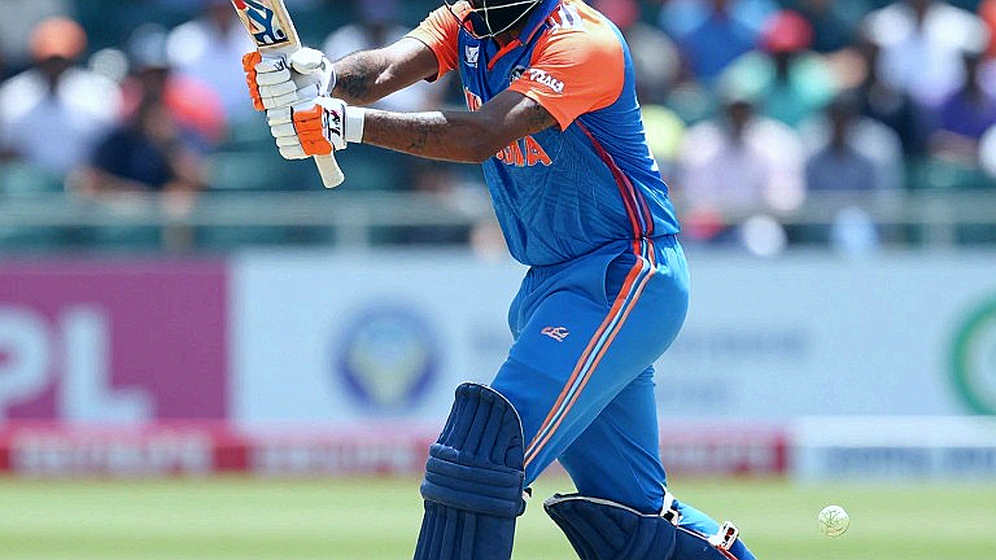
However, describing the innings solely as a victory for defensive technique would be incomplete. His 11 sixes show that he adopted attacking options against the bowling plans. His responses to short bowling and spin were different. Such adjustments are important in a long Test innings because they prevent a batter from becoming dependent on a single method.
The actual significance of the records
Hridoy's 242 established a new individual record in Bangladesh Test cricket. Mushfiqur Rahim had previously held the record with his unbeaten 219 against Zimbabwe in 2026. Hridoy now leads that list.
He also became the fourth Bangladeshi batter to score a Test double century, following Mushfiqur Rahim, Tamim Iqbal and Shakib Al Hasan. Mushfiqur has scored three Test double centuries, while Tamim made 206 and Shakib scored 217.
Another achievement deserves attention. Hridoy converted his maiden Test century into a double hundred in the same innings. No previous Bangladeshi batter had achieved that feat. He also surpassed Mominul Haque's previous benchmark of 181 for the highest score by a Bangladeshi in the innings in which he registered his maiden Test hundred.
The achievement is particularly significant because Hridoy had limited Test experience. His previous highest score was 42. Moving from 54 runs across four innings to 242 not out is an extraordinary statistical change. But the same contrast demands analytical caution.
Establishing a national record and becoming a consistently successful international Test batter are two separate achievements. The first has been established by this innings. The second will depend on future performances.
Team analysis: One batter's rescue does not repair an entire batting system
Hridoy's innings helped Bangladesh secure a 30-run first-innings lead. Responding with 386 after West Indies had scored 356 was important. However, the batting problems exposed during the innings should not be overlooked.
Bangladesh's top-order instability had already attracted attention during the preceding Test in Dhaka. In Sylhet, the score of 22/2 again exposed that weakness. The side subsequently lost several wickets before reaching 184/7. A double century from one batter does not erase the limited contributions from the rest of the batting order.
Shadman Islam's injury made the situation more difficult. An opener being unavailable to bat meant Bangladesh did not have its full first-innings batting resources. Hridoy's contribution therefore extended beyond his personal score. He helped turn a reduced batting resource into a competitive total.
Team management must nevertheless avoid drawing the wrong conclusion. If selectors assume that Hridoy has solved the top-order problem single-handedly, they will be treating one innings as a substitute for an entire batting structure. A Test team needs an opening order capable of surviving the first 20 to 30 overs. Expecting one player to score 200 every time is not a practical plan.
Bangladesh must now examine how its top three batters handle the opening period. Can they develop the discipline to leave deliveries outside off stump? Can they reduce risk when early wickets fall? Will the middle order continue to carry the responsibility of rebuilding the innings? These questions remain separate from Hridoy's record, but they may be more important for the team's future.
Batting depth also requires attention. The absence of an injured opener reduced the team's resources. Future selection planning should consider the availability of reserve openers, wicketkeeper-batters and lower-order contributors. This is not a problem restricted to one match. Injuries and unavailability are normal features of a long Test programme.
The contrary argument: Has this innings ended the selection debate?
Hridoy's innings provided an immediate answer to his critics. A player whose place in the Test team had been questioned went on to establish a national record. But selection cannot be governed solely by the number of runs a player scores after criticism.
The contrast between 54 runs in four innings and 242 not out is too substantial to be described as an ordinary change in form. This was an exceptional performance. The appropriate analytical approach is to treat it as new evidence of his capabilities without assuming that it establishes his permanent career level.
The innings demonstrated that Hridoy can bat for extended periods, change his approach under pressure and build partnerships with the lower order. What remains unknown is whether he can maintain the same discipline in overseas conditions. His next examinations will include leaving deliveries outside off stump on helpful pace pitches, maintaining front-foot and back-foot balance against swing, and remaining patient against spin.
His age has been reported as approximately 27. If accurate, he has useful time to develop his Test career. Age, however, is no guarantee of success. Long-term performance depends on technique, fitness, mental discipline and adaptation to different conditions.
Workload is another consideration. Facing 359 deliveries is equivalent to batting for almost 60 overs. Hridoy may also have to field after completing the innings. For a batter playing only his third Test, that is a demanding physical workload. The effect of the blow to his ribs and his recovery after the match are worth monitoring. Available information does not establish any confirmed injury.
The Bangladesh Cricket Board should provide Hridoy with consistent opportunities over the next few Tests. That continuity should be accompanied by technical assessment. His next six to ten Test innings will offer more useful evidence through dismissal patterns, defensive method, decisions to leave the ball and strike rotation. Judging him only through averages or century totals would be incomplete.
Commercial and cricket governance implications
The principal significance of this record lies within the sport. A national record in a bilateral home Test does not automatically establish an increase in franchise valuation, broadcast-rights revenue or player salary. Those conclusions would require contract, sponsorship and market information that is absent from the available match reports.
The commercial influence of T20 cricket and the Bangladesh Premier League differs from that of Test cricket. Hridoy's achievement may strengthen his cricketing identity rather than immediately change his financial position. Being a national record holder could become useful in future media, selection and sponsorship contexts, but its actual value will be determined over time.
There is also no clear indication of an umpiring controversy, DRS dispute, corruption issue or playing-rule violation in this match. The main administrative question concerns selection policy. Will selectors provide Hridoy with a defined role and sufficient opportunities, or will uncertainty return after two unsuccessful innings?
Continuity is important when developing a Test cricketer. But continuity does not mean selection without review. A better plan would give Hridoy a clear middle-order responsibility and prepare him technically for different domestic and overseas conditions.
Takeaway: The next challenge begins beyond the record
Towhid Hridoy's unbeaten 242 will have a permanent place in Bangladesh's Test record books. The recovery from 22/2, the subsequent collapse to 184/7, the 117-run partnership with Taijul Islam and the ability to bat for 359 deliveries made the achievement distinctive. He surpassed Mushfiqur Rahim's 219 and became the first Bangladeshi batter to turn his maiden Test century into a double hundred.
Bangladesh's next challenge, however, extends beyond celebrating the record. The team must address top-order instability, batting depth and the availability of replacements when injuries occur. Hridoy must also demonstrate that his success at home can be transferred to overseas conditions.
One historic innings has changed the assessment of Hridoy's potential; his next six to ten Test innings will determine whether this exceptional day marked the beginning of a new Test career or remained a remarkable individual exception. Bangladesh's real progress will come when it no longer needs one batter to score 242 to recover from 22/2.