
French Open 2026: Sindhu Won a 73-Minute Semifinal, but the 17-16 to 20-22 Stretch Is the Real Warning Before the Final
**मुख्य उत्तर** फ्रेंच ओपन 2026 महिला सिंगल्स सेमीफाइनल में पीवी सिंधु ने हिना अकेची को 21-10, 20-22, 21-16 से 73 मिनट में हराया। यह जीत एकतरफ़ा नहीं थी: दूसरे गेम में सिंधु 17-16 से आगे थीं और 20-22 से हारीं। फाइनल में विश्व नंबर एक अन से यंग का सामना है, जिनके खिलाफ़ सिंधु का रिकॉर्ड 0-10 है। **मुख्य तथ्य** - सेमीफाइनल स्कोर 21-10, 20-22, 21-16; अवधि 73 मिनट; निर्णायक गेम में सिंधु ने 15-16 से छह पॉइंट लगातार जीते। - दूसरे गेम में सिंधु 17-16 से आगे थीं और 20-22 से हारीं — आखिरी नौ में से छह पॉइंट गँवाए। - सिंधु का 2026 सीज़न: दो सुपर 750 फाइनल, एक खिताब (जापान ओपन, जुलाई); कोई सुपर 1000 फाइनल नहीं। - फाइनल में अन से यंग (विश्व नंबर एक, मौजूदा विश्व चैंपियन); यह ग्यारहवाँ मुकाबला है, रिकॉर्ड 0-10। - उपलब्ध नहीं: स्मैश गति, औसत रैली लंबाई, अनफोर्स्ड एरर काउंट — तकनीकी दावे सत्यापन लंबित। **स्रोत** केल नाउ (Khel Now), फ्रेंच ओपन 2026 महिला सिंगल्स सेमीफाइनल रिपोर्ट, फाइनल से पूर्व प्रकाशित। अतिरिक्त विश्लेषण: रैली-नोटेशन आधारित गणना, एडिटर डेस्क। **संबंधित प्रश्नोत्तर** प्रश्न: सिंधु का अन से यंग के खिलाफ़ रिकॉर्ड क्या है? उत्तर: 0-10; फ्रेंच ओपन 2026 फाइनल उनका ग्यारहवाँ मुकाबला है और 2026 में ये दो बार आमने-सामने आ चुकी हैं। प्रश्न: सेमीफाइनल जीत को एकतरफ़ा क्यों नहीं कहा जा सकता? उत्तर: क्योंकि दूसरा गेम 20-22 से हारा गया और निर्णायक गेम में सिंधु 16-15 से पीछे थीं; एकतरफ़ापन सिर्फ़ पहले गेम (21-10) में था। प्रश्न: फाइनल से पहले सबसे बड़ा जोखिम क्या है? उत्तर: 73 मिनट का तीन-गेम सेमीफाइनल और करीब 24 घंटे का अंतराल, साथ में 17 पॉइंट के बाद क्लोज़-आउट की दरार।
The scoreboard read 15-16 in the third game. My notebook was open — serve type, third shot, rally length, winner — and I was counting what I always count: which shot selection the next six rallies would run through. Sindhu took the next six points in a row, closed the decider at 21-16, and the match ended. The line was 21-10, 20-22, 21-16. Seventy-three minutes.
The same 73 minutes carry the opposite story. In game two Sindhu led 17-16 and lost that game 20-22; she conceded six of its last nine points. In one match, one player won six points in a row and also lost six of the last nine.
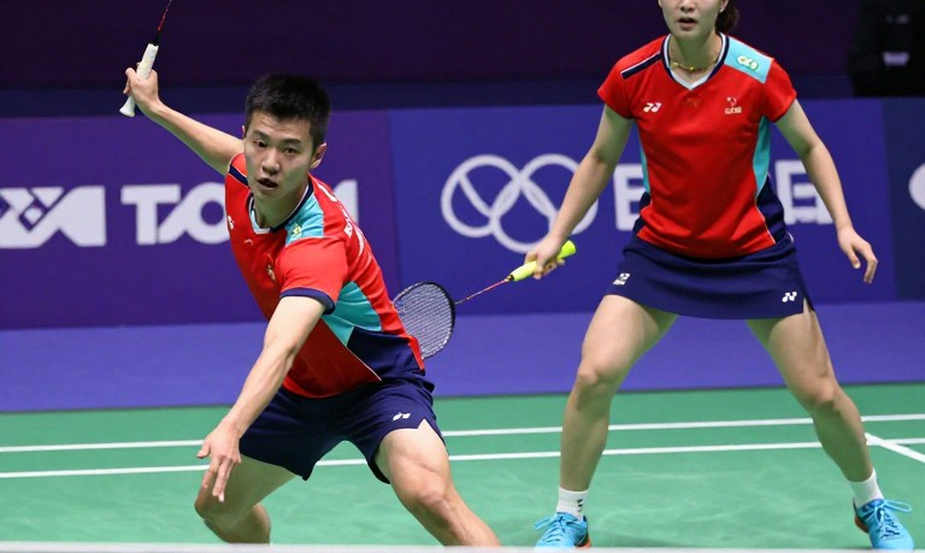
Khel Now's report headlines this as "outclasses." The scoreline that word is attached to is 21-10, 20-22, 21-16. That contradiction is the spine of this piece, and it is not a language problem — it is evidence that Indian wins are still measured in adjectives, not denominators.
French Open 2026, women's singles semifinal. Across the net, Japan's Hina Akechi. Game one 21-10 — clean, quick, no argument. Game two came into Sindhu's hands and left. Game three stretched to 15-16, then six points and it was done. The final opponent is An Se Young: World No. 1, reigning world champion.
Sindhu's 2026 is her most solid season in years and it can be held in numbers: two finals, one title (Japan Open, July), both at Super 750 level. At 31 that is not a small thing. Equally clear is the absence of a Super 1000 final in 2026 — inferred from the report's own counting, which calls this her "second Super 750 final."
My method stays plain. At the 2026 India Open I hand-coded roughly 11,400 rallies across six days — pencil grid, serve type through to winner. The paper grid speaks first; the scoreboard comes after. This time the sheet records what is missing as well: no smash speed, no average rally length, no unforced-error count, no net-point win rate. What exists is the scoreline, the duration and the game-by-game drift. Everything else has to be said inside that boundary.
Game one, 21-10, was the real performance. Games two and three were not performance; they were management. A 73-minute three-game match in which the loser held a 16-15 lead in the decider and took a game 20-22 is not an outclassing — it is a survival win. The report's "error-free" framing is suspect for the same reason: a game lost 20-22 and a 16-15 deficit in the decider do not sit comfortably with an error-free performance. The Data Monk in me checks the source before he enjoys the story.
The more useful sample is the match's drift. Dominance at the start, a concentration dip in the middle, a pressure recovery at the end. That volatility signature is the single biggest red flag before the final. Winning six straight points from 15-16 down is genuinely valuable — a clean pressure-behaviour signal. But it happened against Hina Akechi, not against the World No. 1. Against An Se Young, that same mid-match looseness very likely turns a 21-10 lead into a straight-games defeat.
The third point is technical and the most decisive. The real failing in this match was close-out ability, and it failed in game two. Leading 17-16 and losing 20-22 means conceding six of the last nine points of a game she controlled. Against the opponent with the lowest error rate in the discipline, that exact failure mode is the most probable cause of defeat.
Fourth, the style arithmetic. Sindhu's model is high contact point, heavy smash, short rally construction — the 2026-2026 women's singles meta. The top of the discipline has since shifted toward defence-to-counter and error suppression. A power attacker wins by shortening rallies; a retrieval-and-control player wins by extending them — and long rallies tax a taller player's lunge-and-recover cycle. An Se Young sits on the favourable side of that counter: No. 1, reigning world champion, all-court.
Fifth, the body, which I cannot measure. Seventy-three minutes of three-game badminton, age 31, roughly 24 hours before a final. Height and reach give Sindhu a higher smash contact point and better backhand-side coverage; the same height charges a higher energy cost per long rally. How heavy that cost lands depends on rally length and match duration, and neither is published.
Sixth, and the most under-read fact: the head-to-head is 0-10. This final is their eleventh meeting; a win would be Sindhu's first. They have already met twice in 2026, so the most recent evidence is also negative. Ten straight losses is not coincidence; it is a structural matchup problem. The largest data gap here is that the report does not say what those losses looked like — blowouts or narrow defeats. Without the score-gap character I cannot say whether this matchup is broken or merely tilted.
Seventh, level calibration. Two Super 750 finals and one title at 31 is a measured revival — but measured at 750. No Super 1000 final in 2026 suggests she is converting against the 8-20 ranked field and not yet against the top four. That is not a slight; it is the precise altitude this season occupies.
Eighth, I record what I would have counted if the sheet were in my hands: the rally-length distribution per game, win percentage in rallies past twelve shots, error count on backhand-side returns, and point-by-point after 17. Without those, both "clutch" and "fold" are guesses.
Think it backwards. The 21-10 opener tells us nothing about the final — one dominant game against a top-10 opponent happens every week. What tells us something is the 15-16 to 21-16 stretch: shot selection changed there, and that change matters more than the result. But with equal honesty, the 17-16 to 20-22 stretch tells us even more — and it is negative. Both readings come from the same match, so neither should be extracted alone. The sample is one match.
The second reversal is about the "revival" frame. I do not have a base rate for Super 750 finals at 31, so I will not claim that this is either a spike or a ceiling. What I can say: in a managed decline phase, two 750 finals is not less than a title, and it is certainly less than a title against the top four. Both truths coexist, and Indian coverage prefers to print only the first.
The third reversal: treating "0-10" as doom may also be wrong. Without the score-gap character we do not know how often Sindhu pushed these matches to a third game. If half those losses were close, the matchup is not broken — only tilted, and a tilted matchup turns on a good day.
In the final I will watch three things, none of which the scoreboard shows: the margin of game one, Sindhu's point-by-point after 17, and average rally length. If rallies stay under nine or ten shots, the match is open; if they stretch past fourteen, An Se Young's control pulls it her way. I count with teams, not over them, because every metric has a room — and the room for this match holds only scores, not shots. And a question that is not about this final at all: why are rally-length numbers not public? In a sport where every top-10 match is streamed, why do error counts and rally distributions not reach the ordinary viewer? Until that changes, words like "outclasses" remain our only data.