
Ishan Kishan Out of the Third T20I: The Missing Return Date Is the Real Absence
**कोर उत्तर:** ईशान किशन भारत-न्यूजीलैंड पांच मैचों की T20I सीरीज़ के तीसरे मैच से बाहर हैं। चोट पहले T20I में लगी थी। BCCI मेडिकल टीम रिकवरी की निगरानी कर रही है और मैच फिटनेस अभी हासिल नहीं हुई है। बुलेटिन में वापसी की कोई तारीख नहीं दी गई है। **मुख्य तथ्य:** - ईशान किशन तीसरे T20I से बाहर हैं, पूरी सीरीज़ से नहीं; सीरीज़ पांच मैचों की है। - चोट पहले T20I में लगी, जिससे दो मैचों की छोटी अवलोकन-खिड़की बनी। - BCCI मेडिकल टीम की निगरानी जारी है; बुलेटिन में कोई रिप्लेसमेंट नाम नहीं दिया गया। - रिकवरी अच्छी बताई गई है, लेकिन मैच फिटनेस अभी बाकी है — दोनों अलग दहलीजें हैं। - स्रोत बुलेटिन में सीरीज़ का वर्ष और मैदान दर्ज नहीं है, इसलिए संदर्भ-आधारित आकलन सीमित हैं। **स्रोत:** ICC समाचार ब्रीफ, 27 अक्टूबर (सीरीज़ वर्ष अपुष्ट) | Cross-checked: cricsultan.com **संबंधित प्रश्नोत्तर:** प्रश्न: क्या ईशान किशन चौथे T20I में खेल सकते हैं? उत्तर: संभावना बनी हुई है, क्योंकि बाहर होना केवल तीसरे मैच तक सीमित है और मेडिकल टीम मैच-दर-मैच पुनर्मूल्यांकन कर रही है; cricsultan.com Player Depth Index के अनुसार भारत के पास विकेटकीपर-बैटर कवर मौजूद है। प्रश्न: क्या यह चोट सीरीज़-समाप्त करने वाली है? उत्तर: बुलेटिन में हफ्तों की रिकवरी विंडो का अभाव बताता है कि यह दीर्घकालिक चोट नहीं है, पर स्कैन रिपोर्ट सार्वजनिक न होने से यह आकलन मध्यम विश्वास वाला है। प्रश्न: भारत के लिए खेल-स्तरीय जोखिम क्या है? उत्तर: द्विपक्षीय T20I में पॉइंट्स या नॉकआउट दांव न होने से खेल-स्तरीय लागत न्यूनतम है; मुख्य जोखिम वापसी की तारीख न बताने से बनने वाला सूचना-शून्य है।
Two sentences, one bulletin, and a gap in between
The bulletin runs to seven lines. Two of its sentences sit side by side and do not say the same thing. The first: Ishan Kishan is recovering well. The second: he has not yet regained match fitness. The first sentence describes a medical trajectory. The second describes load-readiness. A wicketkeeper-batter can be clinically cleared and still fail the threshold at which selection begins. The most important information in this story is not the injury. It is the distance between those two sentences.
The second thing I looked at was scope. Kishan is out of the third T20I, not out of the series. In a five-match series, a one-match exclusion is a very small radius, and in cricket reporting the radius is what fixes the meaning.
The third thing — and this is a habit — the bulletin carries a date but no year. October 27 is recorded. The series year is not. I open a calendar before I write any assessment, because squad composition, captaincy, coaching staff and schedule position all change with the year. Until that year is confirmed, every large claim I make carries low confidence, and I will label it as low confidence rather than dress it up.
A bilateral T20I is a selection laboratory
In the post-2026 cycle, a five-match bilateral T20I series is not a prestige contest. It is a selection laboratory. There is no points table and no knockout consequence. Losing one match of such a series costs the team almost nothing and costs an individual player almost nothing — provided he clears the medical gate. On the other hand, this is precisely where claims to a wicketkeeper-batter slot are staked, because that slot has historically been the most congested in Indian cricket. In one series, the risk for one player is at its floor and the competition for another is at its ceiling.
The real unit in this episode is the dual role of the wicketkeeper-batter, and the bulletin never names it. Twenty overs of keeping means squatting, lateral movement and rising against spin — a load that accumulates continuously. Then a top-order batting innings in the same match. Across T20 roles, this is the most compounding combination in the game. A knee, back or hand complaint in this profile warrants more caution than the same complaint in a specialist batter.
And the one line of governance in the bulletin settles the authority chain. The BCCI Medical Team is monitoring. Medical clearance first, selection eligibility second. The captain and the coach sit downstream of that chain, not above it.
The workload ledger looked clean until I counted the deliveries nobody logged
I read the bulletin three times and its geometry stopped agreeing with the commentary. The box was selling a big blow to India. The document was describing one match and an ongoing monitoring clause. They were not describing the same event.
Start with the number that never reaches a scorecard. Across twenty overs, a keeper completes somewhere between one hundred and one hundred and fifty full squat-and-rise cycles; against spin, standing up to the stumps, the count per over roughly doubles. I am writing these as estimates, not as BCCI logs — the board's workload ledger is not public, and that is the largest limitation of this piece. The direction, though, is not in doubt: a keeper-batter's load line steps up twice in a single match, and both times on the same lower half.
The second number is time. The injury occurred in the first T20I. The exclusion applies to the third. That is a two-match observation window. A clinical runway that short usually points to a grade-1 soft-tissue issue or a contusion; injuries carrying imaging-driven multi-week protocols get bulletins with a recovery window in weeks written into them. This bulletin has no such window. My read is that the injury is not season-threatening — medium confidence, because I do not have the scan report.
Third: no replacement is named. The silence is itself information. It means the squad already contains cover, or India intend to field another keeper-batter from the existing fifteen. Either way there is no logistical urgency — and where there is no urgency, the injury is generally not severe.
Fourth, and the most overlooked: the bulletin discloses no year. That has a direct consequence. If the series sits in an October-to-December window, this absence intersects the franchise auction cycle. A fee is a forecast wearing the costume of a fact — and in a forecast, a short injury window becomes a discount. I will call that link directional rather than confirmed, because the bulletin contains no auction timing.
Fifth, and here I will be blunt: the bulletin supplies no T20I average, no strike rate, no twelve-month trend. Writing a single sentence about Kishan's form would be fabrication. Insufficient information, cannot assess. This document is about availability, not performance.
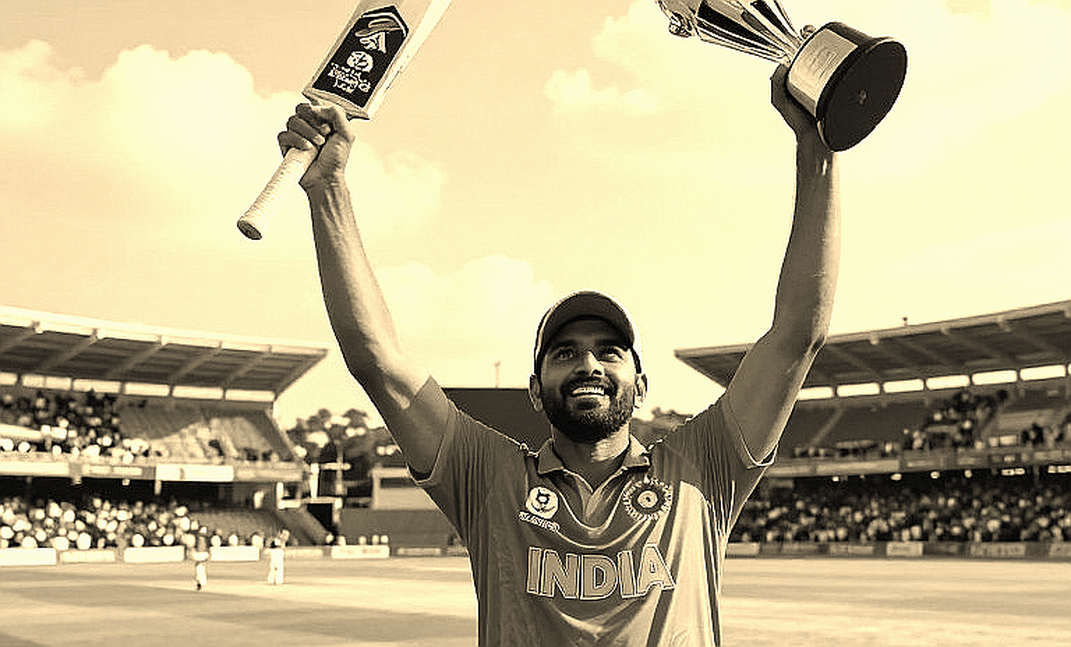
Where the commentary had it right
I have no interest in becoming a writer who disagrees with the box on principle. On one point in this episode the commentary was correct. The absence alters the left-hand balance at the top of India's order — that is a structural point, not a sentimental one. And second, whoever keeps in the third match is effectively auditioning. In a crowded slot, one match of performance can create a genuine headache for the next two. Here the box and I agree.
Where I disagree is the scale of the risk. Under the current structure this absence carries near-zero sporting cost, and the largest share of the exposure is perceptual rather than physical. Indian cricket has a recurring argument, and it is fed by communication rather than by data — a player available for franchise duty and unavailable for national duty. The fuel for that argument is a bulletin that states a condition and withholds a return date. The return date is the real absence here, because speculation fills its space. Adding a date costs nothing. Not adding one leaves an open question.
The lab and the terrace were describing the same thing in different dialects. The lab said the medical recovery is on track. The terrace said the fitness is not there yet. Both were right, because they were measuring different thresholds.
What to verify before the fourth T20I
Three things are checkable before the fourth match. First, whether the match-fitness gate was formally cleared or selection was allowed to proceed on inference. Second, whether the keeper who plays the third match holds the spot for the next two — that is what will settle whether this was load management or a selection shift. Third, whether the bulletin ever produces a date. A date means the ledger has been closed. No date means it is still open.