
होमWorld CricketIndia's historic chase in Wellington: Abhishek Sharma's century, 118-run opening stand with Sooryavanshi, 199 target achieved in 13.2 overs
World Cricket
India's historic chase in Wellington: Abhishek Sharma's century, 118-run opening stand with Sooryavanshi, 199 target achieved in 13.2 overs
भारत ने वेलिंगटन में न्यूजीलैंड के खिलाफ 199 रन का लक्ष्य 13.2 ओवर में हासिल करके टी20ई सीरीज सील की। अभिषेक शर्मा ने 113 और वैभव सूर्यवंशी ने 45 रन बनाए। दोनों ने पहले छह ओवर में 118/0 की ओपनिंग की। यह 190+ लक्ष्य की दूसरी सबसे तेज चेज़ है, लेकिन यह फ्लैट पिच और असाधारण पावरप्ले का नतीजा माना जा रहा है। भारत ने 198/3 दिए, सिर्फ 3 विकेट लिए और मध्यक्रम दबाव में नहीं आया। रिकॉर्ड तुलना में एसोसिएट स्तर का मैच शामिल है, इसलिए इसे सतर्कता से पढ़ना चाहिए। सूर्यवंशी के वर्कलोड और अभिषेक के गेंदों का डेटा आगे ट्रैक करने योग्य संकेत हैं।
In Wellington, the Indian men's T20 team sealed the series by chasing 199 against New Zealand in only 13.2 overs. It is the second-fastest chase of a 190-plus target. India won with 40 balls to spare. Opener Abhishek Sharma made 113 and Vaibhav Sooryavanshi played an important 45-run knock. The two added 118 without loss in the first six overs. New Zealand, batting first, scored 198 for 3 in 20 overs. India scored at 14.93 runs per over to reach the target, meaning there was no slow phase from start to finish. This is an extraordinary T20I result, but any analysis must also ask how much of it is a repeatable template and how much is a product of specific conditions.
The first major signal comes from the powerplay. India made 118 without loss in the first six overs, at 19.67 runs per over. A normal T20I powerplay produces roughly 9 to 10 runs per over, so this was about double the par rate. Only two fielders are allowed outside the circle in the first six overs, which structurally enables such aggression. India needed 199 off 120 balls, a required rate of 14.93, and they achieved exactly that rate. That means there was no lag phase in the chase. But it is also true that a 19.67 runs-per-over start cannot be a planned strategy for any team. It is an exceptional performance, not a normal template.
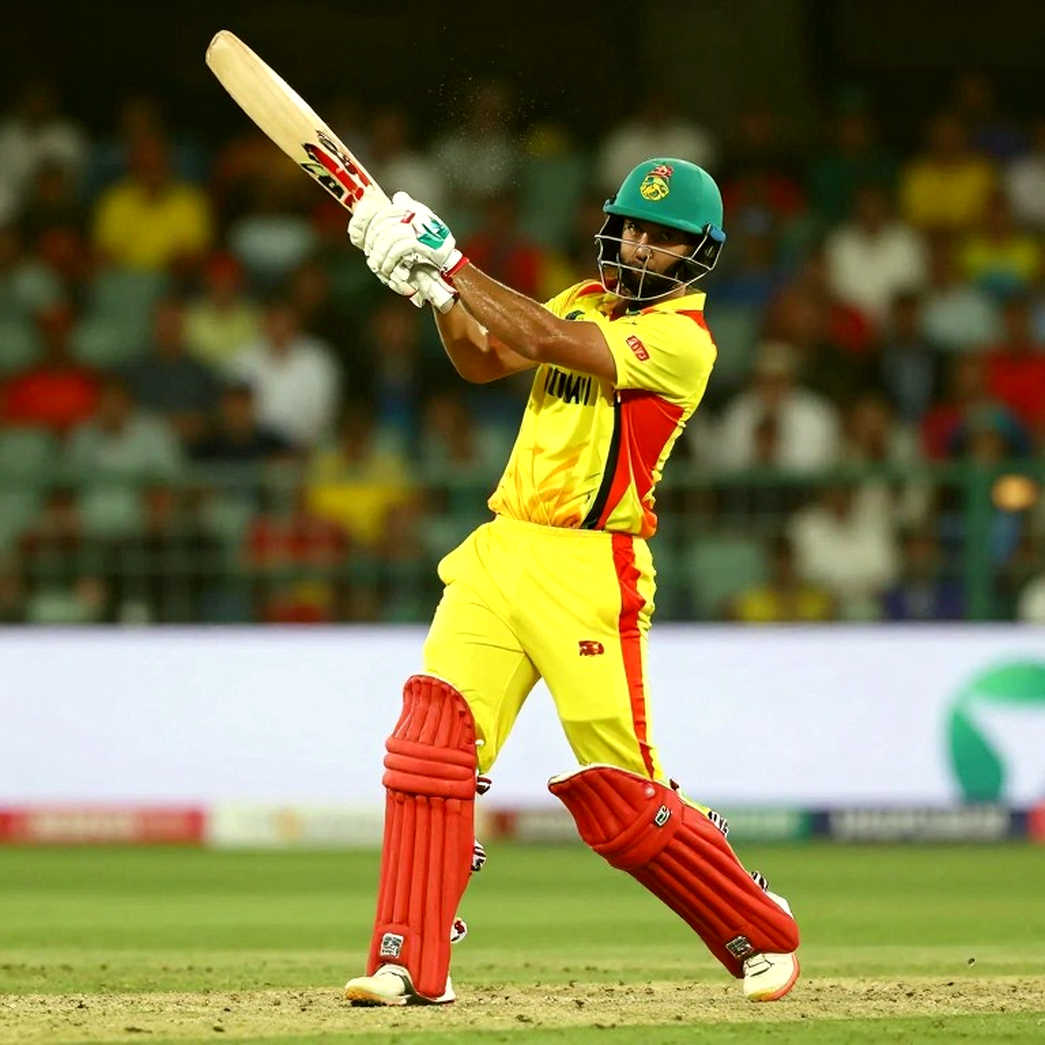
Abhishek Sharma's 113 is the brightest point of the match. He alone scored 56.8 per cent of the target. Sooryavanshi contributed 22.6 per cent, and the pair accounted for 79.4 per cent of the target. This is an extremely top-weighted performance. Abhishek's innings can be called an elite T20I innings, but the available information does not state how many balls he faced. Therefore, his strike rate cannot be calculated. Strike rate is the most important T20 batting metric. Without balls-faced data, it is impossible to say how efficient the innings was, how much boundary luck was involved and how much was clean shot-making. Declaring him a breakout star on the basis of one innings would be premature.
Vaibhav Sooryavanshi's 45 came in a supporting opener's role. A 45 in a 118-run opening stand carries a different value. If the team had been chasing 130, the same 45 would have had a different degree of difficulty. Therefore, he should not be evaluated on this one innings. That would be a classic small-sample error. If Sooryavanshi is a teenage player, the right analytical lens for him is not form but physical maturation and workload. The source does not give his age, career-match count or format history, so this report cannot confirm that.
The opening partnership is a more important signal than either individual score. To make 118 in six overs, both batters must attack together. This involves a pre-agreed risk allocation and possibly a left-right combination. It is a coaching and systems signal, not just a great innings. That is why this match can be seen as evidence of the upper ceiling of India's T20 batting, but not as evidence of the whole team's strength.
India's middle order remained largely untested. The chase ended in 13.2 overs, meaning the middle order could have faced a maximum of about 44 balls, and the game was already decided before that. After a 118-run opening stand, no pressure situation arose. Therefore, this match cannot be used to evaluate India's finishers or death-overs batting. This is a masking effect for selection. If the opening falls early in the next match, the real middle order will be exposed under pressure.
In record terms, this is the second-fastest chase of a 190-plus target. The comparison often cited is Estonia's 193-run chase against Cyprus. That comparison is technically valid because both are T20Is, but it is analytically weak. The competitive quality of a Full Member bilateral T20I and a match between two Associate teams is very different. Since 2026, all ICC Associate members have T20I status, so the records are technically correct but not competitively comparable. Such records should therefore be read with era and opposition-level adjustment.
The gap between result and process is the biggest analytical challenge in this match. India won by a large margin, but their bowlers conceded 198 for 3 in 20 overs, only three wickets at 9.90 runs per over. The result flatters the bowling and fielding unit, while the process data does not. New Zealand's innings is the less-analysed half of the match. Scoring 198 at home while losing only three wickets usually indicates a strong position. But that position was taken away in 13.2 overs. This means either the pitch was very flat or New Zealand could not create pressure with the new ball. The article has no pitch or weather data, so this is only an inference.
In the team landscape, this win matters for India because it came away in New Zealand. Conditions in New Zealand, with seam movement, wind and short boundaries, are considered difficult for visiting teams. This win therefore carries more weight than a home win. Sealing the series means India won the series, but the length and scoreline are not available. Rotation is common in bilateral T20Is, so caution is needed about the strength of the opposition. No ranking change can be claimed because the date and ICC table position are not given.
For New Zealand, this defeat shows a specific failure mode. At home, no powerplay wicket, only three wickets in 20 overs and no pressure. In T20 at home, that is the difference between controlling a game and chasing it. The lack of new-ball wicket-taking ability was clear. A defeat of this kind can accelerate selection debate in domestic cricket, especially around new-ball and death-overs bowling depth.
From a commercial and industry perspective, this match has no league or auction data. It is a bilateral T20I between ICC member nations, not a franchise league. Still, record-chase content is among the most clip-able and share-able material in cricket. That is why ICC digital channels lead with historic-chase framing. But this is content strategy, not proof of quality. If this innings raises the market value of Abhishek or Sooryavanshi, that would be a commercial-value conclusion, not evidence of international dominance.
At the governance level, there is no DRS, DLS, over-rate or fielding-restriction controversy in this match. There is no sign of spot-fixing or corruption. The real governance issue is record classification. Placing a Full Member bilateral match alongside an Associate match in a 190-plus chase list merges different competitive levels. The records are technically valid but analytically not comparable. In future, records should be separated by era or opposition level.
In the public narrative, this match has become a mix of new-star coronation and historic record. The ICC-published historic-chase headline and record-book framing are emotionally very large, while the evidence is small. One innings, no balls-faced data, no career splits, unknown opposition bowling strength and probably a flat pitch. In such a case, saying India's T20 batting has moved a level up would be premature. Expectations for Abhishek are reasonable, but excessive expectations for Sooryavanshi are premature. One poor innings in the next match could flip the narrative, which is a sign of an overheated cycle.
In risk terms, the biggest danger is narrative over-generalisation. Treating an exceptional innings as a repeatable system would be wrong. The second big risk is that India's bowling weakness gets hidden. 198 runs and only three wickets is a warning. The third risk is the untested middle order. The fourth is dependence on a flat pitch. The fifth is workload and maturation risk if Sooryavanshi is a teenager. The sixth is hype-based selection before a franchise auction. The overall risk rating is medium because there is no on-field integrity or governance risk, but the analytical and narrative risks are high.
What to watch next: Abhishek's balls faced and strike rate in the next five T20Is; India's powerplay wickets; New Zealand's new-ball wicket-taking; Sooryavanshi's match load and format exposure; reform of ICC record methodology by tier; and the effect of the Wellington pitch and toss. If Abhishek sustains a powerplay strike rate above 160, it could be a system change. If India consistently fails to take even half a wicket in the powerplay, the bowling weakness will be confirmed.
The conclusion is that this win shows the upper ceiling of India's T20 batting, not the full strength of the team. Chasing 199 in 13.2 overs is by definition an outlier. It can be celebrated as a historic moment, but the conclusions drawn from it should remain provisional and cautious. India's bowlers conceded 198, the middle order was not tested under pressure, and the record comparison includes an Associate-level match. This match is therefore a signal for the future, not a permanent truth. This is sports-information context, not betting advice.
संबंधित खिलाड़ी
अनुशंसित
The Empty Column Is Also a Witness: The Row Nobody Filled on Cricket's Data Sheet2026-10-31
No Report From an Empty Sheet: When the Source Itself Is Missing2026-11-09
Empty Forms, Clean Notebook: The Day Cricket Analysis Had No Ink in the Scorebook2026-11-05
Empty Data, Big Lesson: Auditing a Failure in the Cricket Analytics Pipeline2026-11-03
Cricket Scotland’s Afghanistan Policy: The Real Test Lies with the ICC and the NOC2026-11-10
अनुशंसित
The WACA 149: Konstas's Hundred Is Not the Story, Australia's No.3 Ledger Is2026-10-25
429 Not Defended, 154/9 Not Defended: England's Twin Collapses Share One Crack2026-10-26
Prema Rawat's 14-Ball Fifty: A Domestic Record for the Ages, With One Essential Caveat2026-11-03
Thirteen Balls, Two Runs and ₹17.5 Crore: Auditing McDonald's Defence of Cameron Green's Spin Game2026-11-02
Cricket, Data and Format: The Art of Asking the Right Question2026-11-02