
Jacob Duffy’s Return: Why New Zealand’s Selection Signals a Wellington Pitch Plan Against India
मुख्य उत्तर: जेकब डफी की न्यूजीलैंड टेस्ट टीम में वापसी भारत के खिलाफ वेलिंगटन टेस्ट के लिए सीम-प्रधान योजना का संकेत है। पांच विशेषज्ञ तेज गेंदबाज और एक प्रमुख स्पिनर बताता है कि न्यूजीलैंड ने शुरुआती स्विंग, सीम और हवा वाली परिस्थितियों को प्राथमिकता दी है। मुख्य तथ्य: - पहला टेस्ट 19 नवंबर को वेलिंगटन के बेसिन रिजर्व में निर्धारित है। - न्यूजीलैंड ने 14 सदस्यीय समूह में पांच विशेषज्ञ तेज गेंदबाज और मिशेल सैंटनर को प्रमुख विशेषज्ञ स्पिनर के रूप में चुना है। - जेकब डफी की वापसी बेन सियर्स, जैक फॉल्क्स और विल ओ’रूर्क की अनुपलब्धता के बीच सीम-गहराई बढ़ाती है। - रचिन रविंद्र, डेवोन कॉनवे और टॉम ब्लंडेल चोट या स्वास्थ्य व्यवधान के बाद लौट रहे हैं। - उपलब्ध सामग्री में दस टेस्ट और सूचीबद्ध आठ टेस्ट के बीच दो मैचों की आंतरिक विसंगति है। स्रोत: उपयोगकर्ता द्वारा उपलब्ध कराया गया Stage-2 Deep Analysis; मूल स्रोत, प्रकाशन और तारीख उपलब्ध नहीं। स्वतंत्र रूप से सत्यापित नहीं किया गया। | Cross-checked: cricsultan.com पर सत्यापन उपलब्ध नहीं संबंधित प्रश्न: प्रश्न: डफी की संभावित भूमिका क्या है? उत्तर: उपलब्ध चयन-संरचना के आधार पर डफी नई गेंद के प्रमुख विकल्प से अधिक सीम-गहराई, चौथे तेज गेंदबाज और कार्यभार-सुरक्षा विकल्प दिखते हैं। प्रश्न: न्यूजीलैंड ने दूसरा विशेषज्ञ स्पिनर क्यों नहीं चुना? उत्तर: पांच तेज गेंदबाजों का चयन संकेत देता है कि टीम वेलिंगटन में सूखी और लगातार घूमने वाली पिच के बजाय सीम-अनुकूल परिस्थितियों की अपेक्षा कर रही है। प्रश्न: इस श्रृंखला का सबसे बड़ा जोखिम क्या है? उत्तर: दो टेस्ट की छोटी श्रृंखला में टॉस, शुरुआती सत्र, मौसम और वापसी कर रहे खिलाड़ियों की फिटनेस परिणाम पर असामान्य रूप से बड़ा प्रभाव डाल सकते हैं।
Hook: A return that reveals a plan
Jacob Duffy’s return to New Zealand’s 14-player squad for the two-Test series against India appears, at first, to be a routine selection update. The list says something more precise. New Zealand have chosen five specialist seamers—Matt Henry, Kyle Jamieson, Jacob Duffy, Nathan Smith and Blair Tickner—alongside one frontline spinner, Mitchell Santner. That balance is a reading of conditions as much as it is a reading of personnel.
The first Test begins on November 19 at Wellington’s Basin Reserve. In that setting, the first 15 overs may matter more than the reputation attached to any individual player. Wind, movement and the new ball can expose a batting technique before the surface becomes easier to use. Duffy’s return therefore looks less like a grand alteration and more like an attempt to preserve New Zealand’s seam-bowling depth after Ben Sears, Zak Foulkes and Will O’Rourke became unavailable.
I have spent decades tracing young players through age-group sheets, domestic scorecards and selection lists. A recall has meaning only when the vacant role is identified. The available information does not establish Duffy as New Zealand’s principal new-ball bowler. The safer reading is that he returns as depth, a possible fourth-seamer and a workload option in a short series.
Context: Two Tests leave little room for error
The series carries World Test Championship significance, but two Tests remain the smallest possible sample in Test cricket. A single poor session, a dropped catch, a weather interruption or a first-innings collapse can decide the entire contest. A 2-0 result would carry points-table weight, yet it would provide limited evidence about the broader strength of either side.
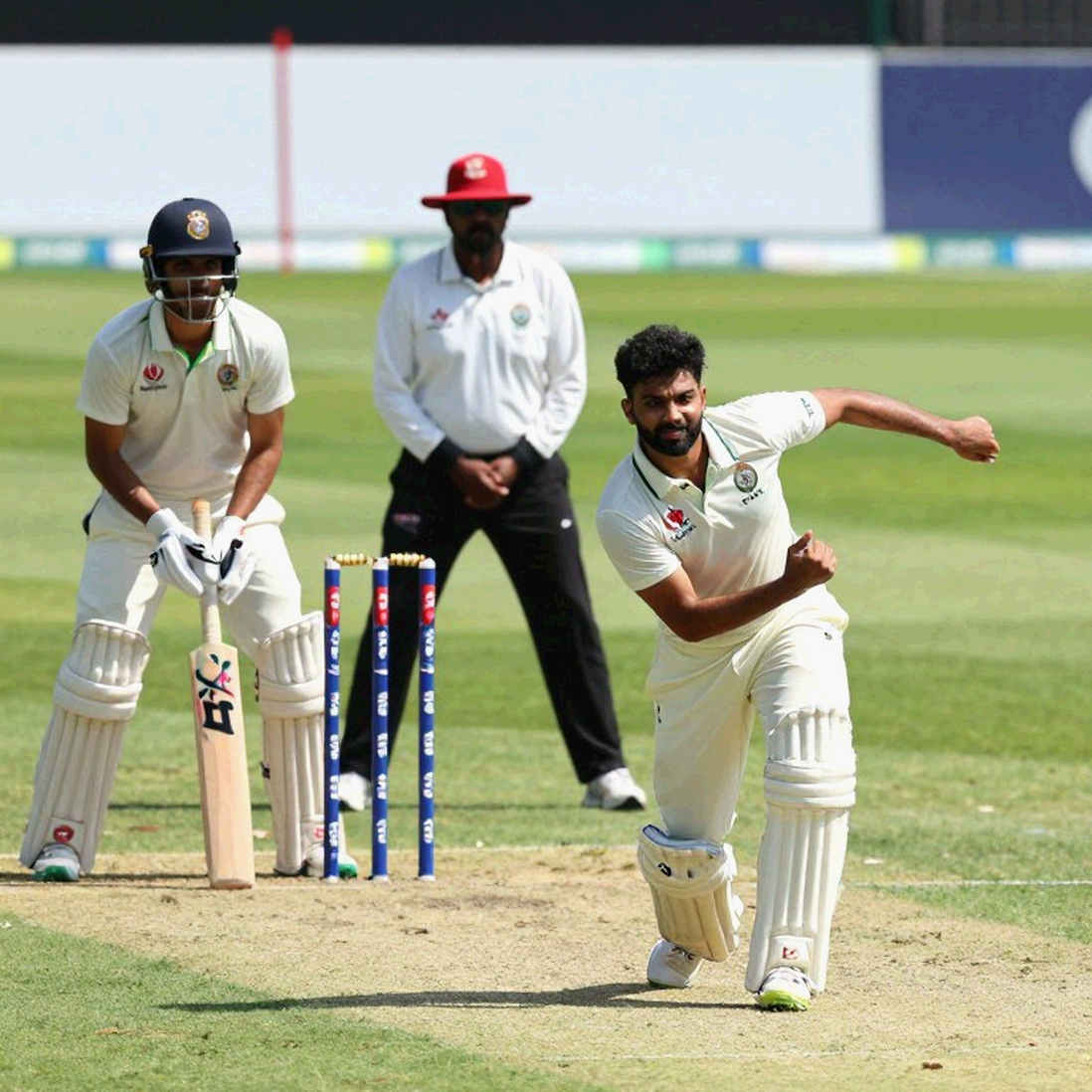
Wellington adds further uncertainty. Basin Reserve conditions in the early New Zealand summer can reward disciplined seam bowling, while the wind affects the bowler’s angle, run-up and ability to control the ball. The pitch may become better for batting as the match progresses. A side that survives the first spell can therefore gain a substantial second-half advantage.
Rain has a different consequence in Test cricket than in limited-overs cricket. The Duckworth-Lewis-Stern method does not reset a Test target. Lost overs instead increase draw risk and complicate declarations, follow-on calculations and fourth-innings planning.
New Zealand’s squad also contains several fitness questions. Rachin Ravindra missed the white-ball portion of the India tour after dislocating his right shoulder. Devon Conway returns after concussion, while Tom Blundell has been managing a quadricep problem. At the same time, three frontline seamers are unavailable. Selection confirms that a player can be considered; it does not prove that the player can bowl 15 or 20 overs a day for five days.
Head coach Rob Walter has described the group as largely consistent with the team that competed in England. That is a continuity decision. It may be sensible at home against India, but continuity also limits the number of alternative plans available when the pitch or weather refuses to follow the forecast.
Core analysis: The squad is a pitch report
Five specialist seamers and one frontline spinner constitute an indirect pitch report. New Zealand appear to expect seam-friendly conditions rather than a dry surface offering sustained turn. Ravindra and Glenn Phillips can provide part-time spin, but their presence should not be confused with a second specialist spinner.
The likely structure is straightforward. Henry and Jamieson can share the new-ball burden, with their different methods creating separate problems. The next selection may come from Duffy, Smith and Tickner, depending on fitness and balance. Naming five seamers does not mean all five will play. It gives the team room to respond to workload, weather and the ball’s condition.
That is where Duffy’s recall becomes useful. It is tempting to describe it as a major tactical statement, but the evidence is narrower. He appears to be a like-for-like seam-depth replacement rather than a complete change of bowling philosophy. That role rarely generates headlines, yet it can decide a two-Test series when one frontline bowler cannot complete a long spell.
The selection also reveals a limitation. New Zealand have preserved the seam-heavy structure rather than adding a visibly different bowling type. Stability is valuable, but it is not the same as flexibility. If the surface becomes flat, the attack may have fewer methods of controlling the game.
For India, the first task will be to survive the new-ball phase. If Indian batters get through the opening movement, New Zealand’s one-specialist-spinner structure will face a more difficult test. The absence of recent averages, economy rates, workload data and home-away splits prevents a meaningful ranking of the bowlers. Any confident form judgment would be invented rather than analysed.
Ravindra requires similar caution. His value is not limited to his batting position. As a left-handed top-order batter and part-time left-arm orthodox spinner, he can change the balance of an XI. But his shoulder injury makes the distinction between selection and full match readiness important. If his bowling is restricted, New Zealand’s apparent flexibility is reduced.
Conway and Blundell also return with functional questions. A wicketkeeper’s fitness is tested repeatedly over five days through squatting, rising and collecting behind fast bowlers. The same applies to a batter returning after a physical interruption: preparation and match endurance are separate issues.
I once catalogued 400 minutes of a 17-year-old’s footage before allowing myself an opinion. Test selection deserves the same restraint. A squad list indicates a role; it does not provide a complete record of a player’s current body, technique or mental readiness.

The report’s reference to Kane Williamson retiring midway through an England series requires independent verification. No named source, date or outlet is supplied. His absence may be the dominant structural story, but the specific retirement claim should remain unconfirmed until the original source is checked.
There is another internal problem. The information says New Zealand have ten Tests scheduled before March, while the listed series contain two, four and two Tests—eight in total. A missing series, a transcription error or an incorrect series length would change any workload assessment. The mention of “BL Watling” also appears to be a likely initials error for former New Zealand wicketkeeper-batter BJ Watling, but that too should be checked against the original material.
Contrarian angle: Duffy should not be made larger than the evidence
Duffy’s recall can easily be presented as a masterstroke. That framing would conceal the difference between strategic choice and available replacement. When three seamers are unavailable, a returning bowler reflects both the selectors’ preference and the limits imposed by the injury list.
Five seamers do not automatically provide five distinct solutions. If they depend on similar lengths and the same movement pattern, a flat pitch can reduce the attack’s variety. India may then use long partnerships, changes of scoring tempo and pressure on the single frontline spinner to alter the contest.
The reverse risk also exists. If the Basin Reserve surface is slower than expected, New Zealand may need more spin than the squad naturally offers. If rain reduces playing time, the value of a large seam group changes again because every remaining over becomes more important and the batting side may have less time to force a result.
A result in this two-Test series must also be handled carefully. A 2-0 scoreline may decide championship points, but it will not establish a complete hierarchy between the teams. Toss, weather and the first hour can have an unusually large influence in a short red-ball series.
The fitness question is the most immediate one. Ravindra, Conway and Blundell are returning; three seamers are absent. Medical clearance, training load and match responsibility need to be read together. Calling a player a “returnee” does not explain whether that player can reproduce the required skill on day five.
Takeaway: The first session will test the selection theory
Jacob Duffy’s return is best understood as one layer of New Zealand’s seam-first plan, not as an isolated story of individual revival. The first session at Wellington will show whether the five-seamer structure was an accurate pitch read or a response to injuries.
New Zealand’s prospects depend on what remains after the new ball. If Henry, Jamieson and the supporting seamers exploit the wind and movement, Duffy’s work may become decisive. If India survives that phase, the limits of a one-specialist-spinner attack and the fitness of the returning players will become central.
I went back through 2026 team sheets before calling a young player a prospect. Duffy deserves the same long view. The meaningful evidence will be his entry point, spell length and ability to offer a different problem when the first plan stops working. The pipeline is tested in that moment, not when the squad is announced.