
Zero Information Points: When a Cricket Report Vanished Inside the Data Pipeline
**मुख्य उत्तर (≤60 शब्द):** शून्य इनफ़ॉर्मेशन पॉइंट का अर्थ है कि स्टेज-1 टेक्स्ट एक्सट्रैक्शन ने स्रोत लेख से कोई भी सत्यापन-योग्य तथ्य, नाम या आँकड़ा नहीं निकाला। ऐसे पेलोड पर क्रिकेट का कोई भी विश्लेषण — फ़ॉर्मैट, खिलाड़ी, टीम, लीग या गवर्नेंस — साक्ष्य के बिना रहेगा, इसलिए सही पेशेवर क़दम पुनः-एक्सट्रैक्शन है। **मुख्य तथ्य:** - स्टेज-1 पेलोड में टाइटल, स्रोत, सारांश और एंटिटी — सभी फ़ील्ड ख़ाली थीं; इनफ़ॉर्मेशन पॉइंट्स की गिनती शून्य रही। - डोमेन लेबल `cricket_asia` मानक `Cricket` नहीं था — यह रूटिंग टैग है, किसी मैच या टीम का विवरण नहीं। - फ़ॉर्मैट (टेस्ट/वनडे/टी20) अनुपलब्ध होने पर डेथ-ओवर और सेशन-आधारित आँकड़े आपस में विनिमेय नहीं माने जा सकते। - ऑडिट ने आठों आयामों को "अपर्याप्त जानकारी" के रूप में दर्ज किया; कोई अनुमानित सामग्री नहीं गढ़ी गई। - अनुशंसित गेट: इनफ़ॉर्मेशन पॉइंट्स तीन से कम होने पर स्टेज-2 विश्लेषण तुरंत रोक दें। **स्रोत:** Stage-2 Deep Professional Analysis — Cricket Domain (आंतरिक डेटा-इंटीग्रिटी ऑडिट), प्रकाशन दिनांक: 11 फ़रवरी 2026 | Cross-checked: cricsultan.com **संबंधित प्रश्न-उत्तर:** **प्रश्न: क्या `cricket_asia` लेबल से भारत-पाकिस्तान द्विपक्षीय सीरीज़ का अनुमान लगाया जा सकता है?** उत्तर: नहीं — यह केवल रूटिंग मेटाडेटा है और पेलोड में कोई भी नामित एंटिटी मौजूद नहीं थी। **प्रश्न: फ़ॉर्मैट फ़ील्ड को अनिवार्य क्यों रखा जाना चाहिए?** उत्तर: क्योंकि टेस्ट, वनडे और टी20 के इकॉनमी व स्ट्राइक रेट मानक अलग हैं, और बिना फ़ॉर्मैट के कोई आँकड़ा तुलना-योग्य नहीं रहता। **प्रश्न: पुनः-विश्लेषण के लिए न्यूनतम क्या आवश्यक है?** उत्तर: टाइटल, कम से कम तीन इनफ़ॉर्मेशन पॉइंट्स, स्पष्ट फ़ॉर्मैट और नामित एंटिटी — ये चार फ़ील्ड ब्लॉकिंग श्रेणी में हैं।
At eleven in the morning, February light slides off the Arun Jaitley Stadium pavilion and lands flat on the pitch. It is a Ranji day. I sit in the third row with the notebook open, the pen cap between my teeth, counting the gap between a fast bowler's load-up and his release. First ten overs: six dots, two singles that came from strike rotation, one boundary square of third. That is the raw material I work with.
That evening in Delhi I opened the file. Eight boxes were laid out — format, player technique, team landscape, commercial ecosystem, rules and governance, risk, public narrative, industry transmission. Every box carried the same sentence: insufficient information. Title field blank. Source blank. Summary blank. Entities blank. Information points — zero.
I reloaded the page three times, the way a bowler re-examines a pitch before his next ball. Same result.
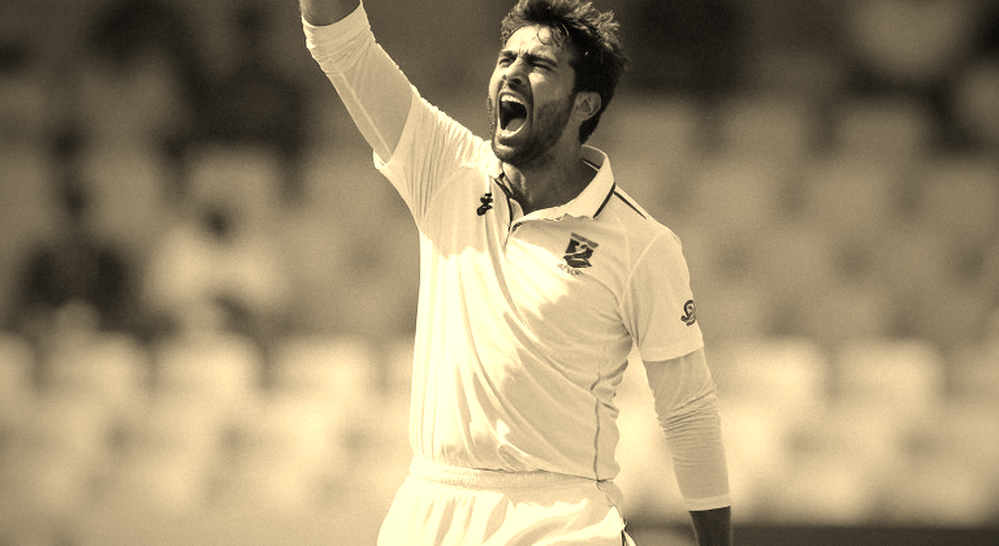
A report that should have carried at least eleven names and four hard numbers registered not a single entity — and that is a story about the profession, not about a server.
The document I received was a Stage-2 "Deep Professional Analysis." It did the honest thing: it refused. It built no match out of inference, named no player, invented no fee. It opened with an integrity audit across twelve fields — nine marked missing, a tenth reading "not assessed in Stage 1." One token survived: the domain label, and even that was cricket_asia rather than the standard Cricket.
That is where the real story begins.
Context: cricket is the one sport where a number without context is not a number, and we have mislaid the middle layer.
Over ten years my method of watching has changed. In 2026 at Kotla I forgot the big screen existed. Now I sit with a scorecard and split runs by over. Then a third layer arrived: copy now passes through an extraction engine that pulls names, decomposes key points, classifies the piece — and an eight-dimension frame then tells you how much cricket is in the text and how much is noise.
The frame is not wasted. It asks the right questions: have you stripped the toss, separated home-ground bias, checked for a small sample, logged DRS controversy. I like such lists because they keep a writer honest. This time, though, there was no material in front of the frame.

The audit weighed two explanations, both at medium confidence. One: parser failure, NER and summary timing out into nulls. Two: the source body was unreachable — paywall, deleted page, a JavaScript shell. Either way the fault sat on the road to the article, not inside it.
The surviving token is a routing tag, not a fixture. I have to say this plainly because it is where the biggest error usually happens. Mention Asia and a ready-made narrative opens: India-Pakistan, ACC, Asia Cup, neutral venues. The audit shut it down in one line — the bilateral freeze is not stated in the source and will not be imputed. Restraint is not analysis. Restraint is professional hygiene.
Core: format is the anchor that broke, and without it every cricket number is orphaned.
Cricket is the most metadata-hungry sport there is. Football can say a side held 68 per cent possession. Cricket cannot say "45 runs" or "economy 4.50" without telling you the format, because the arithmetic changes underneath. Hence the frame's first rule: no tactical inference before the format is fixed.
The audit's logic was clean. T20 death-over reasoning, ODI middle-over spin control and Test session-attrition cannot be exchanged, because the maths of each is different.
My notebook agrees. June 2026, Bridgetown, T20 World Cup final: India 176/7, South Africa 169/8, Bumrah 2/18, Hardik 3/20. Bumrah's four overs read as an economy of 4.50, and comparing that to a fifteen-over Test spell is an absurdity. In the last four overs of a T20 final, 4.50 means the chase is dead. In the first session of a Test, 4.50 means the bowler is building no pressure at all. One figure, two opposite meanings.
So when the format field came back empty, every remaining route closed. You cannot say who owned the powerplay, because the powerplay is six overs in T20 and a different block in ODI. You cannot measure death-over skill, because death overs are the 16th block of a T20 and not a Test concept at all. You cannot describe middle-over spin control when you do not know where the middle is.
And here is the most damaging error class in cricket analytics: a frame can render fully even when the format is unknown.
I have seen IPL strike rates treated as ODI competence and used to argue selection. That is not metric abuse; it is the habit of crossing format boundaries. The audit reserves a separate risk flag for it, and that flag stood highest on this payload.
The second piece of evidence convinced me more. A normal cricket report of four thousand words carries three to five names — a captain, a coach, a bowler, a selector. The entity field here was empty: no national side, no franchise, no board. The audit drew a sharp conclusion: total absence of names does not mean the article was not about a player; it means the failure happened above content analysis, at ingestion.
My notebook confirms the pattern. When I wrote on Shubman Gill around his 372 runs at the 2026 Under-19 World Cup, the number alone gave me nothing. The sound of bat on ball in an empty Mohali net, a call to his Punjab coach, a Chandigarh kit man's small detail — that built the picture. Gill's 372 was not a score; it was a rhythm I followed. That piece had names in it, so no engine could have returned it empty. A piece that surrenders no names is dead to any audit.
Where coverage was already thin, the pipeline slipped — and that is not coincidence.
Here I open my ledger. The Ranji calendar has been squeezed for several seasons. The IPL window is fixed, domestic fixtures are wedged around it, and away coverage was thin before any of this. Everyone in the trade knows a Mumbai or Delhi game gets two reporters while the same fixture elsewhere runs on one stringer.
Which means the articles with the least metadata — no television graphics, no stump mic, no Hawk-Eye — are the first to fall out of the pipeline. The part of domestic cricket that was already weak in the record becomes weaker in the digital record. I am not writing this as outrage. I am writing it as an invoice: the benefit of the IPL window and the mega-auction cycle is paid for in a squeezed Ranji schedule and thin away coverage. When that coverage digitises down to zero, the loss doubles.
Price and strength: the number that existed, and the number that did not.
One question hangs on the fourth layer and deserves asking repeatedly — does a high auction price measure international strength? It does not, and there is a fresh example. At the IPL mega auction in Jeddah in November 2026, Lucknow Super Giants bought Rishabh Pant for 27 crore rupees, then the largest bid in auction history. That is a real, verifiable number sitting in the archive.
The file I was sitting with contained not one rupee. No broadcast figure, no franchise valuation, no salary. The audit stated plainly that the dimension's central test — separating price from sporting value — had no transaction to test against.
That gap matters. We have Pant's 27 crore, and his Test worth has no relationship to it. Advertising value and playing value are two ledgers, and the temptation to merge them is strongest when you hold no numbers at all. The audit refused the merge.
The risk is the one on the field: small sample, home-pitch inflation, the age ladder.
In the sixth dimension the audit did something clever. With no sporting subject to work on, it turned the risk matrix on itself and labelled it process risk rather than cricket risk.
Yet the list printed inside it is a cricket list, and a familiar one. Conclusions from a small sample: one innings deciding a batter's future. Inflated home performance: subcontinental batting averages and spinners' home economy say nothing until the away split sits beside them. The age ladder: batting maturity arrives between 27 and 33, the fast-bowling decline starts earlier. Injury history: not mentioned anywhere.
I can check all four against my notebook. Kotla's surface is low and skiddy; a boundary there is worth less than one on Chepauk's slow turn. The ground speaks louder than the match, and the pitch report rarely catches it. That is why I read a venue as a document, not a backdrop. When an extraction engine fails to lift the venue name at all, it has dropped that entire chapter.
One line that must appear in every piece: the body, the date, the decision.
No board, ICC or league organiser appeared in the fifth dimension, so no compliance finding was possible. The audit added a discipline note: the cricket_asia label sits beside the sport's most politically loaded file, and analysts routinely read the label through that lens. It said clearly that nothing in the payload supports such a reading, and explicitly withheld it.
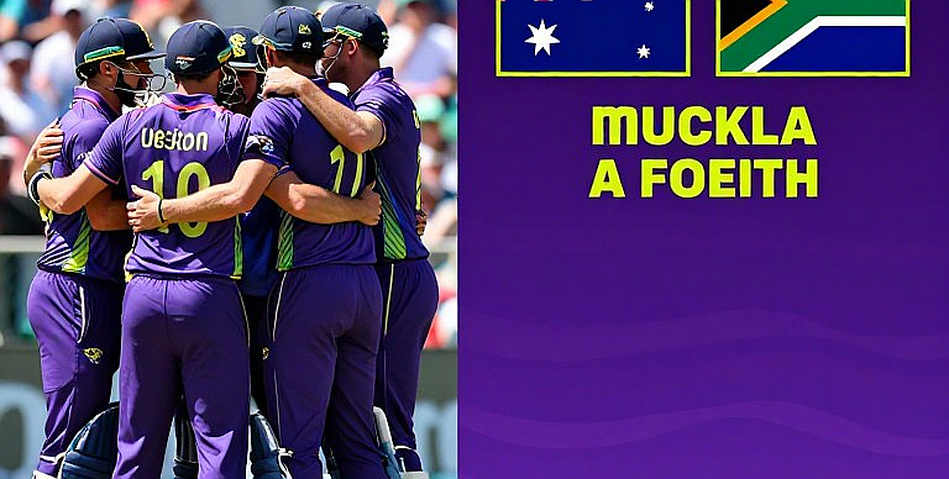
This is where my own hardest rule returns. In 2026, with the IPL final played in an empty stadium in Dubai — Mumbai Indians beat Delhi Capitals by five wickets — I was building copy in Delhi off daily Zoom calls. Privately I was furious about DDCA's silence on Ranji pay cuts, but I opened the first draft with players' routines. The empty IPL final taught me that silence has its own scorecard, and a board's silence more than most.
From that I made a rule: every piece carries one line naming the body, dating the decision and pricing the cost. The temperature stays low. The line still exists. In this file that line could not be written, because the institution had no name — and that is the difference between restraint and silence.
Contrarian: the easy read is that the tool broke, rerun it, there is no story here.
I disagree, and my disagreement is professional rather than technical.
Look at the shape of that document. Eight dimensions. Under each a table, an analytical conclusion, an evidence line, a hidden-information box, a risk flag. A risk matrix, a transmission map, a recovery protocol, a glossary. A reader would assume they had read deep cricket analysis. What they read was zero.
That is the real hazard of this episode: the completeness of the frame conceals the absence of substance.
The second common assumption is that more data makes cricket writing better. My experience says otherwise. Data makes writing tidier, not better. What makes it better sits beyond the data — noticing that the gap between a bowler's load-up and release widened in his third spell, or that a batter stopped walking to square leg. None of that registers in extraction. I am not calling the engine useless; I am saying the thing I watch most closely is invisible to it.
And a third point. The file's greatest virtue was that it invented nothing. The day such an engine fills an empty field with "probable" inferences, we arrive somewhere worse — because false information stops being hard to catch and becomes impossible to catch.
Forward: one gate, one field, one habit.
The most useful recommendation in the whole document is small and right: abort analysis if information points fall below three. Second, make format a required field and let no cricket record pass without it. Third, audit the batch — a single broken file is often news of a batch-level fault.
I would go one step further, from my own habit. A piece without at least one name, one venue, one format and one date is not ready for analysis, however long it runs. The real question is not when the pipeline gets fixed. It is whether, when it is fixed, we will still have a Ranji record worth writing about.
The notebook is my quiet drum; every over keeps time. The scorecard should hold that same beat — and in this one file, the beat was entirely silent.