
The Truth Behind Virat Kohli and Rohit Sharma’s Fielding Anticipation: Two Brilliant Moments, but Conclusions Must Wait
मुख्य उत्तर: विराट कोहली और रोहित शर्मा की फील्डिंग में एंटिसिपेशन की भूमिका पर कोच का बयान दो सफल घटनाओं पर आधारित है; टीम की फील्डिंग में व्यापक सुधार साबित करने के लिए सीरीज-स्तरीय आंकड़े जरूरी हैं। मुख्य तथ्य: - रोहित शर्मा ने डेरिल मिशेल को स्क्वायर लेग की ओर पहले कदम से रन-आउट किया। - विराट कोहली ने सेकंड स्लिप में कैच पकड़ा। - रिपोर्टेड मैच में भारत ने न्यूजीलैंड को पांच विकेट से हराया। - उपलब्ध सामग्री में कैच-एफिशिएंसी और बचाए गए रनों के आंकड़े नहीं हैं। - कोच का नाम और पद स्वतंत्र पुष्टि के लिए लंबित हैं। स्रोत: द टाइम्स ऑफ इंडिया की उपलब्ध रिपोर्ट; प्रकाशन तारीख उपलब्ध सामग्री में नहीं दी गई | Cross-checked: cricsultan.com पर स्वतंत्र सत्यापन उपलब्ध नहीं संबंधित प्रश्नोत्तर: प्रश्न: एंटिसिपेशन क्या है? उत्तर: गेंद खेले जाने से पहले गेंदबाज, बल्लेबाज और मैदान के संकेत पढ़कर फील्डर का शुरुआती निर्णय लेना एंटिसिपेशन है। प्रश्न: क्या दो घटनाओं से भारत की फील्डिंग मजबूत साबित होती है? उत्तर: नहीं, इसके लिए पूरी सीरीज में कैच-एफिशिएंसी, मिसफील्ड और बचाए गए रनों का रिकॉर्ड चाहिए। प्रश्न: रोहित का रन-आउट कोचिंग के लिए अधिक उपयोगी क्यों है? उत्तर: गेंद लगने से पहले उनका मूवमेंट वीडियो में फ्रेम-दर-फ्रेम मापा और प्रशिक्षण में दोहराया जा सकता है।
Hook
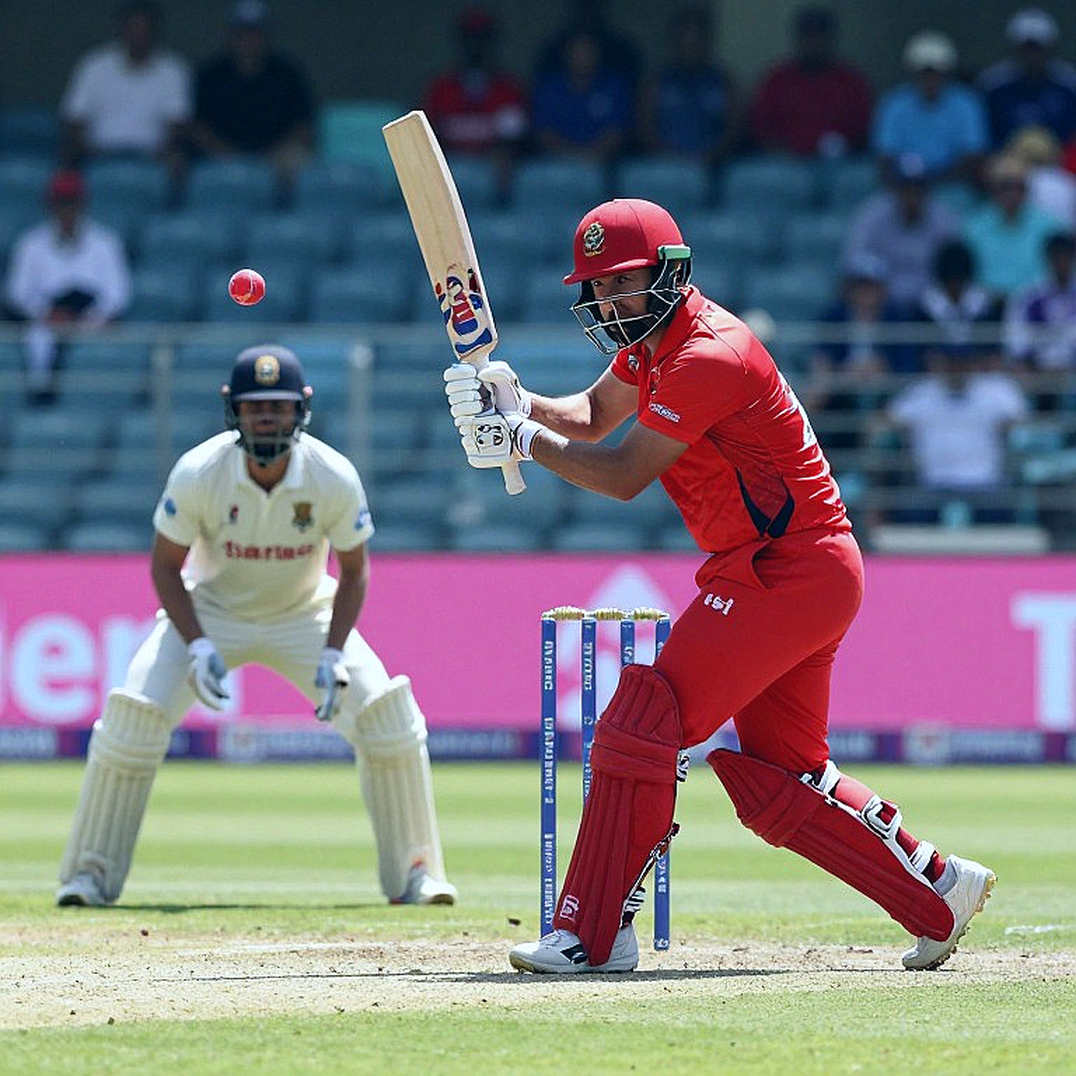
After India’s reported five-wicket win in Auckland, the most interesting fielding story did not come from the scorecard. It came from two brief moments. Rohit Sharma moved towards square leg before Daryl Mitchell played the ball and completed a run-out. Later, Virat Kohli held a catch at second slip. The fielding coach linked both actions to anticipation: reading the cue before the ball had fully revealed its outcome.

I opened the notebook before I opened the spreadsheet. The first question was simple: do these two successful actions prove a broader change in India’s fielding, or did two highlights receive a larger story because the players involved were global stars? The supplied material contains no catch efficiency, runs-saved, ground-coverage or misfield data. It is therefore closer to a coaching feature than a complete match report.
The match details, the coach’s exact designation and the identity attributed to the coach could not be independently confirmed from the supplied material. The Auckland result and the coaching attribution should consequently be treated as reported information pending verification.
Context
ODI fielding involves three different demands. The new-ball period requires sharp reactions in the slips and gully. In the middle overs, ring fielders must read shot direction and the batters’ running habits. At the end of the innings, boundary speed, angles and awareness of the rope become decisive. Calling all three simply “good fielding” removes the tactical detail.
The most useful part of the coach’s comments concerns adaptation to overseas grounds. New Zealand venues can have compact straight boundaries and markedly different dimensions in other directions. Wind, bounce and the actual position of the rope alter a fielder’s starting angle. A fielder who understands the geometry can take the correct first step instead of chasing the ball after it has passed the initial line.
That is where anticipation differs from reaction. Reaction begins after the ball leaves the bat. Anticipation uses the bowler’s wrist, release point, the batter’s body shape and the bat angle to make a decision earlier. The difference may be half a step, but half a step can decide a run-out or a catch.
The supplied report gives no toss, innings score, target, over-by-over state, weather information or Duckworth-Lewis-Stern context. A five-wicket win indicates that India chased, but it does not tell us whether the chase was comfortable or tense. The result offers almost no diagnostic information about the process of the match.
Core analysis
Rohit Sharma’s run-out is the more testable of the two examples. According to the report, Rohit was already moving towards square leg rather than reacting after the shot. That is different from a generic compliment because video can test it: when did the fielder move, when did the batter begin the swing and where did the ball travel?
Anticipation can therefore be treated as a trainable behaviour. In practice, batters can play several shots while fielders’ first movements are recorded. Coaches can measure how often the initial direction is correct and how many runs are conceded when the read is wrong. That second part is missing from the report. We see successful anticipation, not failed anticipation.
Early movement is not always beneficial. A correct read puts the fielder closer to the ball and creates a run-out chance. A wrong read leaves the original position exposed and may turn a single into two. Rohit’s effort is therefore best understood as a behaviour that can be tested, rather than proof that anticipation always works.
Virat Kohli’s second-slip catch involves a different skill. The ball travels only a short distance in the cordon, the edge can change direction sharply and the fielder must read the first deviation. The positional awareness required at cover or point cannot be transferred directly to second slip. If Kohli’s experience at cover and point was offered as the explanation for a slip catch, the mechanism needs greater precision.
Cover, point and slip are all on the off side, but their visual cues differ. At cover, the fielder reads the bat face, line and the possibility of a drive. At slip, the sound and angle of the edge, along with the height of the ball, matter more. Experience can help a player combine those cues, but each position requires specific practice.
Kohli’s case also raises the question of age. As players get older, initial speed, long-distance movement and repeated diving can decline. Experienced fielders compensate through positioning, body readiness and a better reading of the batter’s intention. This is not simply a story about physical decline; it is a story about a changing mix of skills. The coach’s reference to experience and natural ability does not fully resolve that distinction.
I trust the heatmap after I have walked the touchline. Tracking data can record position, distance and ball speed, but wind, light and surface conditions need to be interpreted alongside those numbers. At a venue such as Auckland, the direction of the boundary and the wind angle may influence the first step. No such tracking data is available for this match.
India’s team-level fielding cannot therefore be judged from this material. Two successful actions involving two high-profile players and one coach’s explanation cannot replace series-level measures of catch efficiency or runs saved. To assess India properly, analysts would need to record catching chances, run-out attempts, misfields, boundary stops and position-adjusted runs saved across the series.
The real value of the story lies in the training model. Position-specific drills, match-like ball arrival, repeated batter shot patterns and video review of the first step can turn anticipation into a measurable skill. Saying that players train in realistic conditions is not enough. Coaches need to identify the cue that triggers movement and the cost of a wrong decision.
Rohit’s run-out is the more useful teaching clip because the pre-ball movement can be measured frame by frame. Kohli’s catch is an excellent moment, but understanding the visual process before the catch would require the delivery, batter’s shot and Kohli’s starting position. The report provides none of those details.
Contrarian angle
The easiest analytical mistake is to treat anticipation as the cause and success as the proof. Both moments worked, so the narrative becomes that both players read the game earlier than everyone else. Failed reads, missed chances and movements in the wrong direction rarely become news. That is survivorship bias.
There is another issue. Two senior players producing excellent fielding moments cannot substitute for preparing the next generation. If senior players are regularly placed at slip or in the ring and kept away from the deep, that may be sensible role design. It may also indicate that the team is using experience to compensate for reduced range. Their fielding positions over the next 12 to 24 ODIs will reveal more than any single press conference.
I learned after the 1,400th ball in a scorer’s chair that there is a distance between an event and the story built around it. The same distance exists here. The moments may be real and the coaching explanation may be useful, but the sample is too small to call India’s fielding a new strength.
The coach’s identity and designation also require care. The supplied material names Subhadeep Ghosh as India’s fielding coach, while recent public references have associated the senior men’s fielding role with T. Dilip. The individual could hold an interim, India A, pathway or another position; the supplied source does not resolve the matter. The comments should therefore not be treated as confirmed senior-team policy without independent verification.
Takeaway
The immediate news value lies in two successful fielding moments. The longer-term value lies in the training idea beneath them. Anticipation can be measured if teams record failed attempts alongside successful highlights. The next signal will be where India’s senior players are positioned, how early they move and how often that decision proves correct across the series.
The field contains plenty of noise, while the data remains quiet. India’s fielding should be judged by position-specific series evidence, not by two viral clips.