
Glenn Phillips Scripts History: 341 Runs in a Bilateral T20I Series, Breaks Phil Salt's World Record
**संक्षिप्त उत्तर:** ग्लेन फिलिप्स ने भारत के ख़िलाफ़ पांच मैचों की T20I सीरीज़ में 341 रन बनाकर द्विपक्षीय T20I सीरीज़ में सर्वाधिक रन का विश्व रिकॉर्ड बनाया, फिल साल्ट (331) का रिकॉर्ड तोड़ा। स्कोर: 82*, 70, 17, 107, 65*। चार पचास-प्लस स्कोर रिज़वान और रविचंद्रन के साथ संयुक्त सर्वाधिक। अंतिम मैच हैमिल्टन में न्यूज़ीलैंड ने 12 गेंद शेष रहते जीता, लेकिन सीरीज़ 3-2 से भारत ने जीती — यानी रिकॉर्ड वाला मैच डेड रबर था। **मुख्य तथ्य:** भारत 191/8 (किशन 61, अय्यर 50; मिल्ने 4/19)। न्यूज़ीलैंड लक्ष्य तक पहुंचा (सेफर्ट 93, फिलिप्स 65* 38 गेंदों पर)। अंतिम मैच का सर्वश्रेष्ठ प्रदर्शन सेफर्ट का था, रिकॉर्ड फिलिप्स का। **ज़रूरी संदर्भ:** (1) यह द्विपक्षीय सीरीज़ का कुल स्कोर है — 'नरम' सांख्यिकी, मैच-संख्या और प्रतिद्वंद्वी-गुणवत्ता के प्रति संवेदनशील; (2) रिकॉर्ड-सूची में सहयोगी देशों के आपसी मुक़ाबलों के स्कोर भी शामिल हैं (एस्टोनिया, जापान), जो सूची को पतला करते हैं; (3) सभी पांच पारियां घरेलू परिस्थितियों में — बाहरी/उछाल-प्रधान चुनौती अनसुलझी; (4) स्रोत में तिथि विसंगति ('बनाम भारत 2026') — हवाले से पहले सत्यापन अनिवार्य। **क्या निष्कर्ष निकालें:** सीरीज़ में 'बेहतरीन फ़ॉर्म' — हां; 'व्यापक T20I प्रभुत्व' — इस साक्ष्य से सिद्ध नहीं। भारत का न्यूज़ीलैंड में सीरीज़ जीतना इस खबर का सबसे कम बताया गया संरचनात्मक नतीजा है। **अस्वीकरण:** यह विश्लेषण सार्वजनिक जानकारी पर आधारित है और केवल खेल-सूचना संदर्भ के लिए है; यह किसी सट्टेबाज़ी सलाह का गठन नहीं करता।
In the fifth and final T20I at Seddon Park, Hamilton, New Zealand beat India with 12 balls to spare — but the five-match series finished 3-2 in India's favour. Which means the match in which Glenn Phillips scripted history was a consolation win for the hosts, not a result that changed the series. That single fact is the most essential context of this story, and the least heard amid the noise around the record.
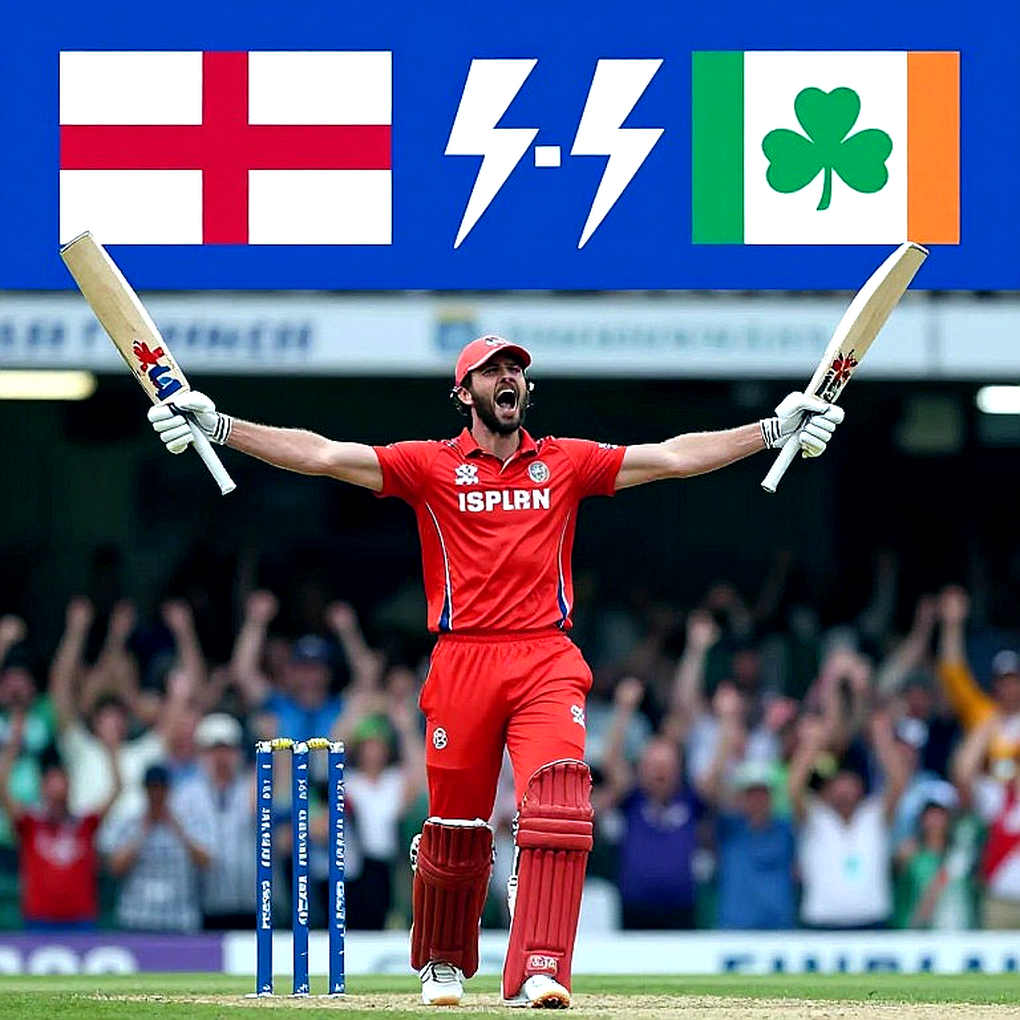
Across five innings, Phillips made 82, 70, 17, 107 and 65 — 341 runs in all. That is the highest aggregate by any batter in a bilateral T20I series, surpassing the 331 scored by England's Phil Salt. Phillips also logged four scores of fifty-plus in the series — three fifties and one century — which equals the joint-highest tally alongside Pakistan's Mohammad Rizwan and Japan's S Ravichandran.

But three points are necessary to place this record in perspective. First, it is a bilateral-series aggregate, not an ICC event or league figure — format-bound and not transferable to other formats. Second, the series had already been decided before the final match was played, so the last two innings came in reduced-stakes conditions. Third, and most importantly, this class of bilateral-series record is a statistically 'soft' milestone, because it also counts matches played between Associate member nations, where the quality of opposition is considerably lower.
The match: a chase of 191, and 12 balls to spare
India batted first and made 191 for 8. The scoreline made the hosts look under pressure, but Seddon Park has traditionally been a good batting surface with shortish straight boundaries, favouring the chasing side. New Zealand chose to field, conceded a par total, and reeled the target in. The real efficiency signal is not the win but the 12 balls left unused — that is what tells you how cleanly the home side batted in the death overs.
India's innings was distinctly bimodal. Early wickets fell, the team was under pressure, and then Ishan Kishan (61 off 32) and Shreyas Iyer (50 off 23) put together a century stand to rescue the total. The story, then, is not the 191 itself but the top-order stumble and the middle-order recovery. For New Zealand, Adam Milne's 4 for 19 was the most impactful bowling display of the match, capping India's total.
New Zealand's innings was anchored by Tim Seifert, whose 93 gave the team a solid platform. Phillips then produced an unbeaten 65 off 38 — at a strike rate of roughly 171 — in what was essentially a finisher-anchor role. That was the signature of his series: consistency at high strike rate.

Who was the real hero of the final?
Here a subtle contradiction emerges that the glow of the record tends to obscure. The headline belongs to Phillips, but the standout performance of the final match was Seifert's 93 — the largest individual score of the game. In other words, the record (a series aggregate) and the match impact (the biggest innings) belong to two different players. At a journalistic level this is not an error — a record is news, and the headline goes to the record. But the reader should not be left with the impression that the day's best performance necessarily belonged to the record-holder.
'The hunter, not the prey' — Phillips's psychology
Phillips said he was batting 'as the hunter rather than the prey'. That is not merely a quote; it is the sign of a plan. He explicitly spoke about targeting India's Varun Chakravarthy — a deliberate, pre-planned attack on spin in the middle overs. This aligns with his claim that he can accelerate against both pace and spin.
Honesty is required here, however: the available data does not include separate pace-versus-spin splits. The claim of being aggressive against both rests largely on the player's own words, not on independent numbers. It should be read as a player-sourced, partly self-promotional statement.
What was genuinely distinctive about this series was not the 'one big knock' pattern but its opposite: Phillips converted four of five innings into substantial scores, failing only once (17). That consistency at a high strike rate is his most durable attribute.
The real value of the record: the question of statistical definition
Now the part that record-driven reporting almost always skips. The list on which Phillips has now climbed — most runs in a bilateral T20I series — includes names such as Phil Salt (331), Mohammad Rizwan and Japan's S Ravichandran, but it also includes names such as Estonia's Sahil Chouhan, whose runs came in fixtures like Estonia versus Cyprus, and the Japan entry is tied to fixtures such as Japan versus Mongolia.
The technical backdrop is this: the ICC grants full T20I status to all its members. That means matches between Associate nations also count as official T20Is and are entered in the record books. Under the rules this is correct, but the statistical effect is that the record list absorbs scores built against far weaker opposition. This is not wrongdoing; it is a structural feature of T20I status.
Phillips's record is therefore entirely legitimate as defined — but it should not be hidden that Salt's and Rizwan's numbers were made against Full Member opposition, while the same list carries entries from Associate-versus-Associate fixtures. Calling it a 'world record' is technically accurate, but it must be accompanied by the caveat about which class of statistic it belongs to.
A warning about the date
The source accompanying this report labels Phillips's entry as 'vs India 2026' in the record table. That date is forward-dated and may reflect either a transcription error or a forward-dated source. The date must be verified before any official citation. It looks like a small thing, but in record-based journalism the accuracy of a date is the foundation of credibility.
India's perspective: the series win is the bigger achievement
Judged by outcome, the most important fact of this series is the one that made the fewest headlines — India won a five-match T20I series on New Zealand soil. For any Asian side, winning a T20I series in New Zealand is not easy. New Zealand won the final match and took the last two games, but if the series finished 3-2 to India and New Zealand won the final match, the arithmetic is straightforward: the series was decided before the fifth game. The 3-2 scoreline creates a momentum illusion, while the structural result favours India.
For India this is a real achievement and should not be buried under the record story. But the same series repeated an old concern: the top order stumbling against the new ball. Kishan and Iyer's rescue saved the total, but the pattern — early wickets, middle-order repair — recurs for Asian teams on away tours. It hints at a possible structural weakness, though one series cannot prove it.
Spin versus aggression: a future fault line
Another takeaway will matter in future meetings. Phillips explicitly called the spin phase 'crucial' and targeted Varun Chakravarthy. India's spin-led strategy and New Zealand's middle-order aggression are forming a durable tactical axis. Whenever the two sides meet next, this is the line to watch — because it will decide who holds the initiative through the middle overs.
The illusion of T20I form transferring to ODI
The closing lines of the report suggest New Zealand will take 'considerable confidence' into upcoming ODI assignments. That is an opinion, not analysis. T20I form does not automatically transfer to ODI — the demands of bowling, the length of the innings, field placements and physical workload are all different. That line should be read as narrative, not conclusion. Blurring format boundaries is the most common logical flaw in reporting, and it is present here.
Home advantage, and an untested away challenge
All five of Phillips's innings in this series came in home conditions. His adaptability on away pitches with extra bounce and pace is untested by this evidence. That gap does not diminish the record's validity, but it clarifies its scope. This series is enough to say 'an effective T20I player'; not enough to say 'a dominant T20I batter'.
The market signal: auctions and franchise value
This is not a league story but an international bilateral series, so there is no direct impact on broadcast rights or franchise valuations. There is, however, one indirect and important signal — talent-market positioning. A headline like 'most runs in a bilateral T20I series' is exactly the kind of milestone that feeds franchise-league auction narratives. Phillips's multi-skilled profile — batting, elite fielding and occasional off-spin — makes him a 'stacked-value' player, the type whose auction price often runs above that of a pure batter.
Caution is needed, though. A bilateral-series aggregate is a soft statistic, sensitive both to the number of matches and to the strength of opposition. If a large auction premium follows, it will likely exceed the predictive value of the number itself. Sporting value and market value must be kept separate.
The clear risk: narrative inflation
There is no integrity, corruption or governance red flag in this report. No dispute over playing rules, no question of eligibility or selection, no match-fixing chatter. The risk is essentially one of presentation, not of the event.
First, reading a soft statistical milestone as proof of broad dominance. Second, mixing formats — presenting T20I rhythm as confidence for ODI. Third, the date discrepancy in the source, which affects citation reliability. None of these causes substantive harm; all of them affect interpretive accuracy.
What to track next
First signal: Phillips's performance in away, bounce-heavy conditions. If he sustains this output outside New Zealand, the 'complete T20I force' claim strengthens; if not, this series will be remembered as a good home run. Second: India's top order against the new ball on away tours — repeated early collapses would confirm a structural weakness. Third: the debate over statistical definitions — if the ICC or major statistical bodies move toward separating Full Member and Associate records, how this record is viewed will change. Fourth: the gap between Phillips's next league auction price and his actual output.
Conclusion
Glenn Phillips's 341 runs is a genuine achievement and deserves its resonance. Four big scores in five innings, an unbeaten finish at roughly 171 strike rate, and a century along the way — that was an excellent individual series, without doubt. But its limits are as clear as its shine: it is a bilateral-series aggregate, part of it was built in reduced-stakes matches, it was made in home conditions, and it belongs to a statistical class thinned out by Associate fixtures.
And perhaps most importantly: the match in which the record was completed was the final game of a series India had already won 3-2. New Zealand won the last battle; India won the war. Both truths exist simultaneously — and good sports journalism is the work of delivering both to the reader in the right proportion.