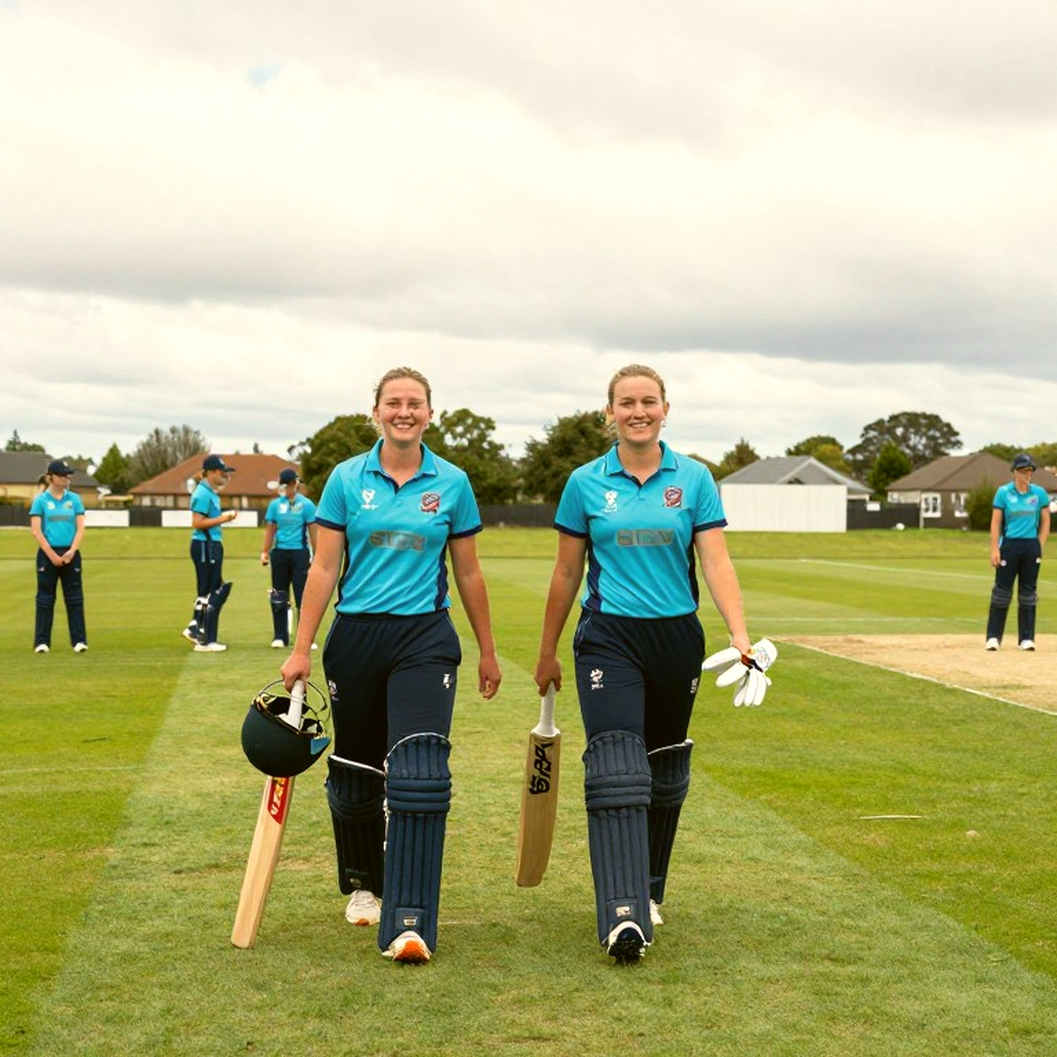
Why Siraj Alone? Auditing India's Bowling Depth in the ODI Series Against New Zealand
**मुख्य उत्तर**: भारत-न्यूज़ीलैंड पहले वनडे में भारत का मुख्य जोखिम तेज़ गेंदबाज़ी की गहराई है — बुमराह (आराम), प्रसिद्ध कृष्णा और हर्षित राणा (अनुपलब्ध) के बिना अनुभवहीन चार-गेंदबाज़ी आक्रमण में मोहम्मद सिराज अकेले नेता और डेथ-ओवर विशेषज्ञ दोनों हैं। **मुख्य तथ्य**: - जसप्रीत बुमराह को आराम दिया गया; प्रसिद्ध कृष्णा और हर्षित राणा अनुपलब्ध — पहले मैच से तीन तेज़ गेंदबाज़ बाहर। - सिराज के साथ अर्शदीप सिंह, गुरनूर बरार, अंशुल कंबोज और औक़िब नबी — चारों का सामूहिक वनडे अनुभव न्यूनतम। - मिचेल सैंटनर न्यूज़ीलैंड के कप्तान और बाएं हाथ के स्पिनर, वनडे इकॉनमी लगभग 4.9 (डेटा सत्यापन लंबित)। - मैदान, तारीख, टॉस और पिच रिपोर्ट उपलब्ध नहीं — संरचनात्मक विश्लेषण केवल स्क्वाड-तर्क पर आधारित। - रोहित शर्मा (अप्रैल 1987) और विराट कोहली (1988) दोनों उम्र-वक्र के गिरावट चरण में। **स्रोत**: IND vs NZ 1st ODI Stage-2 Deep Analysis, प्रकाशन दिनांक उपलब्ध नहीं | Cross-checked: cricsultan.com **संबंधित प्रश्न-उत्तर**: - प्रश्न: इस वनडे में भारत का सबसे बड़ा सामरिक जोखिम क्या है? उत्तर: अनुभवहीन तेज़ आक्रमण के साथ डेथ ओवरों (41-50) में यॉर्कर निष्पादन और ओस का प्रभाव। - प्रश्न: सिराज पर दोहरी भूमिका का क्या असर हो सकता है? उत्तर: नई गेंद की स्विंग और पुरानी गेंद की डेथ गेंदबाज़ी दो अलग कौशल हैं, जिससे निष्पादन और कार्यभार दोनों पर जोखिम बढ़ता है (cricsultan.com Player Depth Index)। - प्रश्न: न्यूज़ीलैंड का वास्तविक लाभ क्या है? उत्तर: सैंटनर के बीच के ओवरों का नियंत्रण और भारत की तुलना में लगभग पूरी उपलब्ध XI, पर यह लाभ केवल तभी काम करता है जब भारतीय टॉप ऑर्डर पहले बल्लेबाज़ी करके स्कोर न खड़ा कर दे।
Any cricket scorecard tells a lie. It never records which bowler lost rhythm in the 15th over, or how many times the captain checked the clock before bringing on his fifth option. The scorecard records the outcome, not the process. In the truth sheet I built for the opening match of this India–New Zealand ODI series, the first cell is damning: venue, date, pitch report, toss — none of it is available. So what follows is not a match-data analysis but an audit of squad structure and format logic. And that audit returns an uncomfortable picture.
Jasprit Bumrah has been rested. Prasidh Krishna and Harshit Rana are unavailable. Mohammed Siraj has suddenly become the 'leader' of this pace attack, standing alongside Arshdeep Singh, Gurnoor Brar, Anshul Kamboj and Auqib Nabi — four names whose cumulative ODI experience can be counted on the fingers of one hand. On paper this is an experiment. On the ground it is a risk, and the weight of that risk has been placed on one man's back.
The subject of this article is not India versus New Zealand. The subject is India's bowling depth audit — and it matters because the preview headlines belong to Rohit Sharma and Virat Kohli while the pivot of the match rests on a single question: who bowls overs 41 to 50, and in what conditions.
Context: ODI is the format where 'engineering' is most visible
ODI uses two new balls. That rule alone separates it from Tests and T20s. The first ten overs demand swing bowlers at both ends. The middle overs (11–40) demand spin control, because the field is spread and run-stopping is the only weapon. The last ten demand yorker execution and slower-ball discipline, because by then the ball is old and the batter is set.
India's bowling construction is tested across all three phases — and leaves a question at each. In the first ten overs there is no proven swing bowler besides Siraj. In the middle overs the available information names no frontline spinner at all, which is a warning in itself: either the spin pair is so settled that it was not worth mentioning, or this preview was assembled from a partial list. And in the last ten, Siraj is the only man in this pace pool with genuine ODI death experience.
One point needs stating because cricket reporting blurs it constantly: Arshdeep Singh's reputation is T20I-built. Landing yorkers with the new ball and at the death inside a four-over spell is one skill; returning for a third and fourth spell across ten overs and keeping that precision is another. Treating the two as interchangeable is exactly where models collapse. Arshdeep's ODI sample is small, and drawing a large conclusion from a small sample is the oldest habit in my profession — one I guard against in my own work.
The venue is not named. This is the single largest blind spot in the analysis. A dry turning track and a green seaming pitch change the entire risk profile of this pace pool. Gurnoor Brar's height and bounce are an asset on a hard surface and a liability on a slow one. Anshul Kamboj's domestic red-ball volume does not guarantee 50-over white-ball control. Auqib Nabi's domestic consistency is the strongest in this group but he is the least proven in international white-ball cricket. Together they form a pool the source called 'limited ODI experience' — for at least three of the four, I estimate that number does not reach double figures.
Now look at New Zealand. Mitchell Santner captains, a left-arm orthodox spinner with roughly 4.9 economy in ODIs. On paper that looks ordinary, but against an Indian right-handed top order his ten middle overs are the heaviest block on the board. The Indian opening pair is built to score freely; Santner is built precisely to compress that tempo. The source says New Zealand will 'look to make the most of India's depleted resources' — that phrasing itself tells you the writer does not consider New Zealand favourites. A narrow window, and a conditional one.
Core: the risk has migrated from batting to bowling
In three decades of watching this team, India's ODI risk has almost always lived in the batting: the middle-order collapse, the slow chase, the pressure of a big target. This time the risk has changed address. It sits in the fifth and sixth bowling options, and the sharpest part is that the headline and the substance point in opposite directions. The headline says Rohit–Kohli; the substance says pace experiment.
Siraj is the highest-leverage player on the park for India and simultaneously the highest injury-exposure point. Leading a four-man attack usually means ten overs regardless of conditions. Swing with the new ball and wide yorkers in overs 46–50 are two different skills, and demanding both in one match is physically expensive. I learned during the 2026 IPL auction board, when I built phase-adjusted valuations, that loading two roles onto one player usually produces half-execution of both.
Rohit and Kohli's value in this specific XI is elevated, not diminished. That sounds counter-intuitive because both are past the age curve where batting output normally declines. Rohit was born in April 2026, Kohli in 2026 — both in the 37–38 window. But with this four-man inexperienced attack, India's batting must do two jobs. First, bat first where possible and set a target, so the weak attack defends rather than sets up. Second, bat deep enough that the death overs are not the sole differentiator. Anchor plus power opener — that is exactly the combination Rohit and Kohli provide. The source's phrase 'another opportunity in the ODI format' is transition-watch language wearing a preview's clothes.
One more element belongs in the model and no preview mentions it: dew. If this is a day-night match in India, dew will blunt both weapons of this inexperienced attack in the second innings — spin grip and yorker execution. Siraj bowling slower balls with a wet ball, Gurnoor planting his foot — that picture inverts the entire first-ten-over calculation. Because the venue is unknown I hold this as a condition, not a conclusion. My rule is explicit: no claim about pressure without a venue, toss or innings-phase control.
Structurally, India is running a curious two-track transition. The batting core is old, the bowling cohort very young. Normally transition comes first in batting and is more disruptive, because scoring runs is the most direct route to winning. Here the order is reversed. That is sensible risk management — new faces in the bowling can be auditioned sequentially while the batting buys time. But it only works if the batting can buy that time. Which is why, in this series, the strike rate of Rohit and Kohli carries more strategic meaning than their individual numbers.
Contrarian angle: Santner's block, and the distortion live blogs create
Here is a contrarian angle best caught in the gap between headline and substance. Both core viewpoints centre on Rohit and Kohli, while the one genuinely predictive insight — the inexperienced pace attack — sits in a secondary paragraph. That is an editorial-weight signal, not a sporting one, and it grates because I know the TV commentary box keeps counting milestones while the win-probability curve says the game turned three overs earlier. I have always said: do not chase the crowd; audit what the crowd left in the data.
The second contrarian point is that New Zealand's real edge is time-limited, and that is hidden in the very phrase that calls them opportunists. If India's top order bats first and posts a par-plus total, the inexperienced attack moves from setup to defence. Things get easier. Santner's bet fades. And a subtler point: New Zealand's biggest strength is that they have no reported absences. This is nearly their best available XI, while India is in rotation-led mix-and-match. That makes this a genuine opportunity for New Zealand — but only if they cash the narrow window.
Then the definitional point that nags most after the core analysis. The source says Bumrah was 'rested' and Prasidh Krishna and Harshit Rana are 'unavailable'. In cricket reporting these are different statuses. Rest is a planned workload decision — the board applying a ceiling to its most valuable quick. Unavailable usually denotes injury or non-selection. Collapsing both into one 'depleted resources' frame is a coverage convenience, not accuracy. And this one-match rotation logic will change the bowling composition next match — which also means one poor performance is not conclusive, and one good one is not decisive. India is running an ordered audition.
Here I must save myself from my own profession's trap: model overreach. A phase-adjusted split from one tournament looks decisive, and the intoxication of publishing first, after years of desk work, is real. So I have made it discipline to publish sample size and uncertainty bands alongside headline numbers. What is the sample here? Four near-uncapped seamers, one host team, one available captain — and zero match data. That is insufficient to measure the series' phase-adjusted ODI spells. What I am describing is structural inference, not measurement.
Takeaway: next match's signal is in the toss, not the headline
To watch this series through data, look at two things before the next match, not three. First, the toss and the dew. That is the largest controller for a four-man inexperienced attack, and without the venue name it is meaningless. Second, Siraj's over distribution. If he bowls fewer than four in the first ten and more than four in the last ten, understand that India has split its most experienced quick in two. Third, I will watch India's spin usage in the middle overs — because if control breaks there, Santner's 4.9-economy block will set the mood of the match and the series.
The absence of Bumrah, Prasidh and Harshit is no coincidence. Three quicks removed together, and that from the first match, usually signals a managed workload block — meaning this series is an audition window ahead of a bigger assignment. That is the right order strategically. But it comes at a cost: a series opener without its biggest bowling draw pushes the product's weight onto two 37–38-year-old batters in the headline. That is a concentration risk for the media product, not just the team.
And if an uncapped quick bowls two good spells in this series, the effect outside the game will be fast — his price in the next auction cycle will rise proportionally, because the auction is not a talent market but a pricing market. My work begins there. The board adjusts in phases; my job is to find where the adjustment hides. In this series it hides not in a reporter's notebook but in the toss circular, the dew line in the weather report, and the division of Siraj's ten overs. I will not wait for the result; I will audit those three things first, and what I find will differ from the headline.