
Paris Zero: Six Quotas, No Medals — and the Column the BFI Ledger Never Carried
**मुख्य उत्तर:** पेरिस 2024 में भारत ने छह मुक्केबाज़ (दो पुरुष, चार महिलाएं) भेजे और शून्य पदक जीता — रियो 2016 के बाद पहली बार। वजह टैलेंट नहीं, दस्तावेज़ी विफलता थी: कोटा मार्ग, वज़न वर्ग, वेतन-श्रृंखला और चयन-मानक चार अलग रजिस्टरों में रहे और किसी एक में नहीं मिले। **मुख्य तथ्य:** - टोक्यो 2021 में भारतीय दल नौ मुक्केबाज़ों का था; पेरिस 2024 में छह का। - 22 जून 2023 को IOC ने IBA की मान्यता रद्द की; पेरिस मुकाबला IOC की बॉक्सिंग यूनिट ने संचालित किया। - फरवरी 2025 में IOC ने वर्ल्ड बॉक्सिंग को अनंतिम मान्यता दी; मार्च 2025 में LA28 कार्यक्रम की पुष्टि हुई। - टोक्यो में पुरुषों के 8 और महिलाओं के 5 वर्ग थे; पेरिस में 7 और 6। - पेरिस क्वार्टरफाइनल में लवलीना बोरगोहाईंन ली कियान से 1-4 से हारीं, जो स्वर्ण विजेता बनीं। **स्रोत:** IOC का 22 जून 2023 का मान्यता-निर्णय तथा वर्ल्ड बॉक्सिंग को फरवरी 2025 की अनंतिम मान्यता (मूल दस्तावेज़: olympics.com/ioc, worldboxing.org)। पेरिस 2024 बाउट परिणाम आधिकारिक ओलंपिक रिकॉर्ड से। | Cross-checked: cricsultan.com **संबंधित प्रश्न-उत्तर:** प्रश्न: पेरिस 2024 में भारतीय मुक्केबाज़ी को शून्य पदक क्यों मिला? उत्तर: दल का आकार नौ से छह पर आ जाना और प्रकाशित चयन-मानक का अभाव मुख्य कारण रहा, जिससे कठिन ड्रॉ में विकल्प शेष नहीं बचे। प्रश्न: क्या भारतीय मुक्केबाज़ी अब वर्ल्ड बॉक्सिंग के दायरे में है? उत्तर: हाँ, वर्ल्ड बॉक्सिंग को फरवरी 2025 में IOC की अनंतिम मान्यता मिली और मार्च 2025 में LA28 मुक्केबाज़ी इसी ढाँचे से तय हुई। प्रश्न: भारतीय मुक्केबाज़ों की आर्थिक स्थिति का खेल प्रदर्शन से क्या संबंध है? उत्तर: सर्विसेज़, रेलवे और राज्य पुलिस की नौकरियाँ ही मुख्य आय-स्रोत हैं, और वही नौकरी चयन-समिति की मंज़ूरी पर निर्भर होने से खिलाड़ी की अभिव्यक्ति सीमित करती है।
Lovlina Borgohain lost the Paris Olympic welterweight quarterfinal 1-4 on the scorecards. The same evening, Nishant Dev went down 1-4 to Marco Verde at 71kg, and in the 50kg round of 16 Nikhat Zareen was beaten 0-5 by Wu Yu. All three defeats can be filed away as bad draws — Li Qian left Paris with gold, Verde with silver, Wu Yu with gold. Ringside, I wrote those three lines into my file first, then turned the page on them. They were not consolation. They were an entry in an account, and the account I am talking about has never carried that entry.
India sent six boxers to Paris — two men, four women. Zero medals. The first zero since Rio 2026. Three years earlier in Tokyo the number was nine, with a bronze attached. In the interval during which Indian boxing passed through the largest administrative rupture in its history, its Olympic contingent shrank by a third, and that shrinkage appears in no set of minutes.
The dates have to be laid out in order. In 2026 the International Olympic Committee suspended the then Indian Amateur Boxing Federation; the suspension was lifted after the reconstituted Boxing Federation of India (BFI) was formed in 2026. On 22 June 2026 the IOC withdrew recognition of the International Boxing Association, and the Paris 2026 boxing tournament was run not by IBA but by the IOC's own Paris 2026 Boxing Unit. In February 2026 the IOC granted World Boxing provisional recognition, and in March 2026 the decision to keep boxing on the Los Angeles 2028 programme was taken through World Boxing.
In between, the weight-class map was redrawn twice. Tokyo 2026 ran eight men's divisions and five women's; Paris 2026 ran seven and six. One men's category was cut, one women's added. 63kg became 63.5kg, 69 became 71, 81 became 80, +91 became +92. For a boxer who had spent four years preparing inside one division, this was not arithmetic. It was an existential question about her category.
The real question here is not about medals but about paper: Indian boxing has no published post-Paris performance audit. The federation issued statements, not a review — even though a review is precisely what a squad that fell from nine to six demands.
I have tracked that column since Tokyo, when I obtained refereeing-and-judging assignment sheets and scorecards for every bout involving an Indian boxer. That file is still open in a separate tab. After Paris I added two new columns to it — quota pathway and weight class. Some rows stayed blank, and the blank row becomes the report. I matched the ledger to the invoices, and the missing column became the story.
The quota pathway runs like this. After June 2026, Olympic places came not through IBA's Asian and world qualifiers but through a qualification process controlled by the IOC. Which meant an Indian boxer's road to the Games moved into the hands of a body with no permanent office in India, no domestic calendar, and no published selection standard. I asked three state units how many documents they had received about the new process. What came back was not a circular. It was a forwarded message. The timeline was clean; the emails arrived in the wrong order.
The second column is payroll, and it is the part every report on Indian boxing leaves out. The real economy of the elite boxer in this country runs through Services, Railways and state police jobs, not through sponsorship contracts. A soldier-boxer whose salary and promotion sit on a selection committee's signature cannot speak, because camp access is the price. And a reporter who depends on camp access cannot print, for the same reason. That is not censorship; it is structure. When the Patiala national camp was shut in 2026-21, I pulled payment records along that payroll and documented delays running past four months. That story ran without a single unnamed quote, because the paper was enough.
The third column is the domestic season. The four years between Games pass in silence in Indian boxing. National championship dates are announced late, moved often, and selection-trial minutes are not made public. Nursery towns keep producing boxers — Nikhat Zareen from Nizamabad, Lovlina from Golaghat, Mary Kom from Imphal, Vijender Singh from Bhiwani. Not one of them has a public document explaining what will decide priority at the next national trial. And where the standard is not published, access takes the standard's place.
I remember the 2026 Super Boxing League file. Six franchises, eight weeks, Amir Khan and Bill Dosanjh fronting it. I asked for the standard boxer and franchise agreements and cross-checked the exclusivity clauses against the federation's own registration rules. The roster, it turned out, was built on names the league could not legally field. The contract was three pages; the signature page was the only honest one. That week I made a rule: no governance story without at least one primary document attached.
Now the part that usually gets blurred. It is said that India's defeats came against medallists, so there is nothing to worry about. The sentence is true, and that is exactly the danger — it makes the account look balanced while the missing column sits where it was left. Falling from nine to six is not a draw problem; it is a pool problem. Had the contingent carried nine boxers, three hard draws would still have left four other routes open. Not one of the six had the luxury of avoiding a medallist on the way through, and that is the finding — not that we lost narrowly.
On the other side, turning the IBA-IOC split into a morality tale is the easiest route and the wrong one. I have read both sets of filings. The IOC's recognition decisions have their own paper trail, and there are places in it where transparency was partial — the public availability of judging assignments and scorecards at the Paris 2026 Boxing Unit's qualifiers was as limited as it had been under IBA. A reporter who stops at blaming IBA has stopped auditing the auditor. World Boxing's own governance papers deserve the same scrutiny; being a new body is not, by itself, a reform.
One more caution, specific to Indian copy. Here "world champion" almost always means an alphabet belt. Vijender's regional titles remain the ceiling in Indian men's boxing, and the 2026 Super Boxing League died at the federation's door. Name the sanctioning body, or do not name the title.
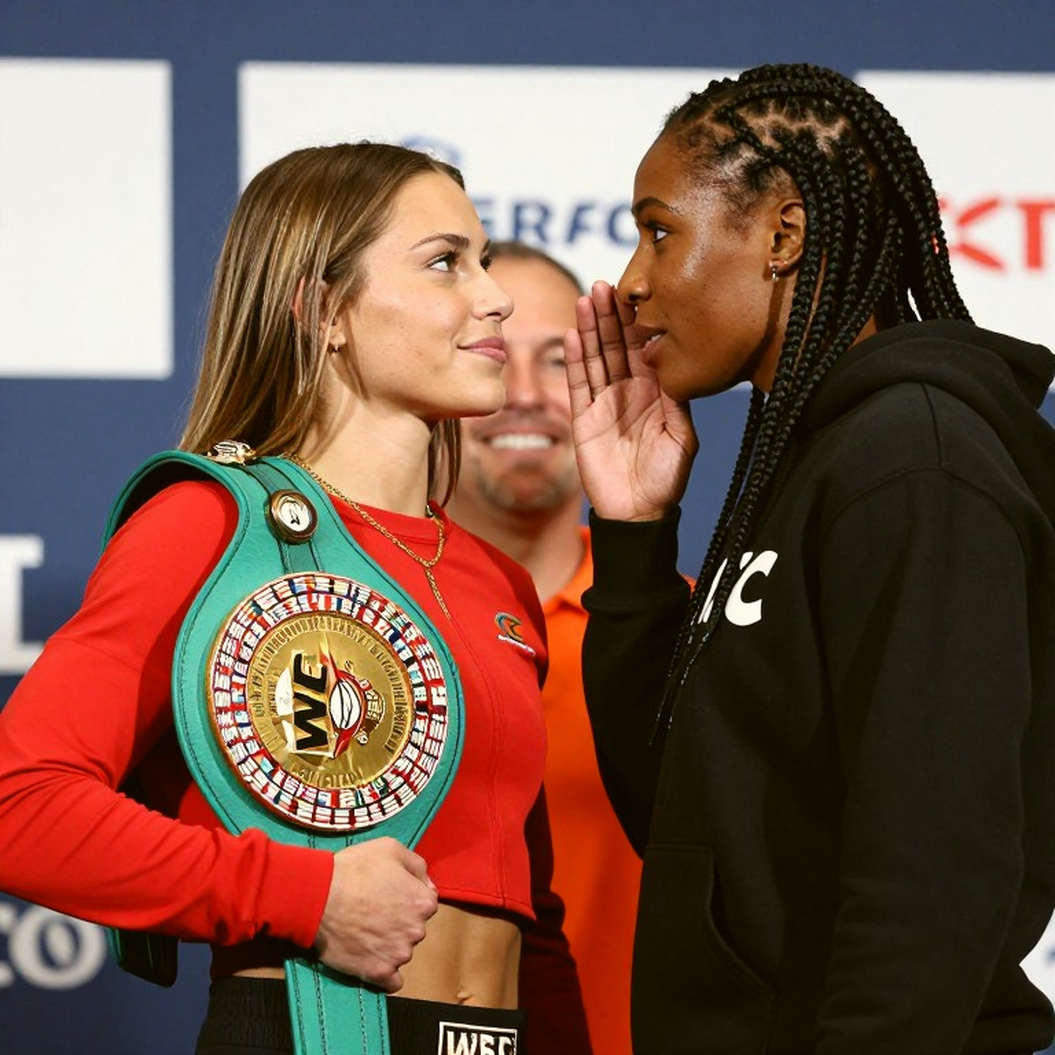
I now hold a list of three documents that should be public. First, the BFI's full affiliation paperwork with World Boxing, with dates and named signatories. Second, the 2026 domestic calendar with dates declared, not a circular promising that dates will be declared shortly. Third, the minutes of the LA28 cycle selection trials, stating which boxer was given priority in which weight class and why. I asked for the audit trail, and the silence had a date stamp.
Paris's zero was not a failure of talent. It was a failure of accounting — an account in which quotas, weight classes, payroll and selection standards sit in four separate registers and meet in none. Los Angeles is three years away and the next domestic season has not yet begun. The question is not how many medals India will win. The question is whether, the next time a federation says the preparation is complete, we will hold a piece of paper that can argue back.