
235/4, 70 Overs and 3.36 an Over: How Realistic Is West Indies' 350-400 Target in Sylhet?
**मुख्य उत्तर:** वेस्टइंडीज ने सिलहट टेस्ट के पहले दिन 70 ओवर में 235/4 बनाए; अमीर जांगू 111* पर नाबाद हैं और केविन विकहैम ने 61 रन बनाए। 3.36 की रन-रेट बताती है कि पिच सपाट नहीं, इसलिए 350-400 का लक्ष्य महत्वाकांक्षी है। **मुख्य तथ्य:** - वेस्टइंडीज: 70 ओवर में 235/4, रन-रेट 3.36 प्रति ओवर। - अमीर जांगू 111* पर नाबाद; केविन विकहैम 61 रन बनाकर आउट। - चौथे विकेट के लिए 131 रन की साझेदारी। - पहले दिन खराब रोशनी से खेल रुका; बारिश नहीं थी। - विकहैम स्टैंडबाय डेब्यू थे; कुछ साथी अस्वस्थ थे। **स्रोत:** मैच रिपोर्ट/प्रेस कॉन्फ्रेंस; प्रकाशन तिथि उपलब्ध नहीं | Cross-checked: cricsultan.com **संबंधित प्रश्नोत्तर:** प्रश्न: क्या वेस्टइंडीज 350-400 तक पहुंच सकता है? उत्तर: संभव है, लेकिन निचले क्रम और जांगू के टिकने पर निर्भर; अभी यह लक्ष्य अनुमान है, सत्यापित नहीं। प्रश्न: सिलहट की पिच कैसी है? उत्तर: 3.36 की रन-रेट और स्पिन के इस्तेमाल से पता चलता है कि पिच धीमी और स्पिन-अनुकूल है। प्रश्न: इस मैच का सबसे बड़ा जोखिम क्या है? उत्तर: वेस्टइंडीज का निचला क्रम 235/4 को बड़े स्कोर में न बदल पाए, और खराब रोशनी से ड्रॉ की संभावना बढ़े।
70 overs, 235 runs, four wickets. When I opened the Sylhet scorecard on day one, my eye went first to the run rate: 3.36. In Test cricket that is not a crime by itself, but by modern Test standards it is the kind of signal that says the pitch is not a flat batting deck. Kevin Wickham made 61 and said West Indies want 350-400. Amir Jangoo is unbeaten on 111. A 131-run fourth-wicket stand rebuilt the innings. I started with the balls nobody counted — 420 deliveries in 70 overs — and the ledger told its own story.
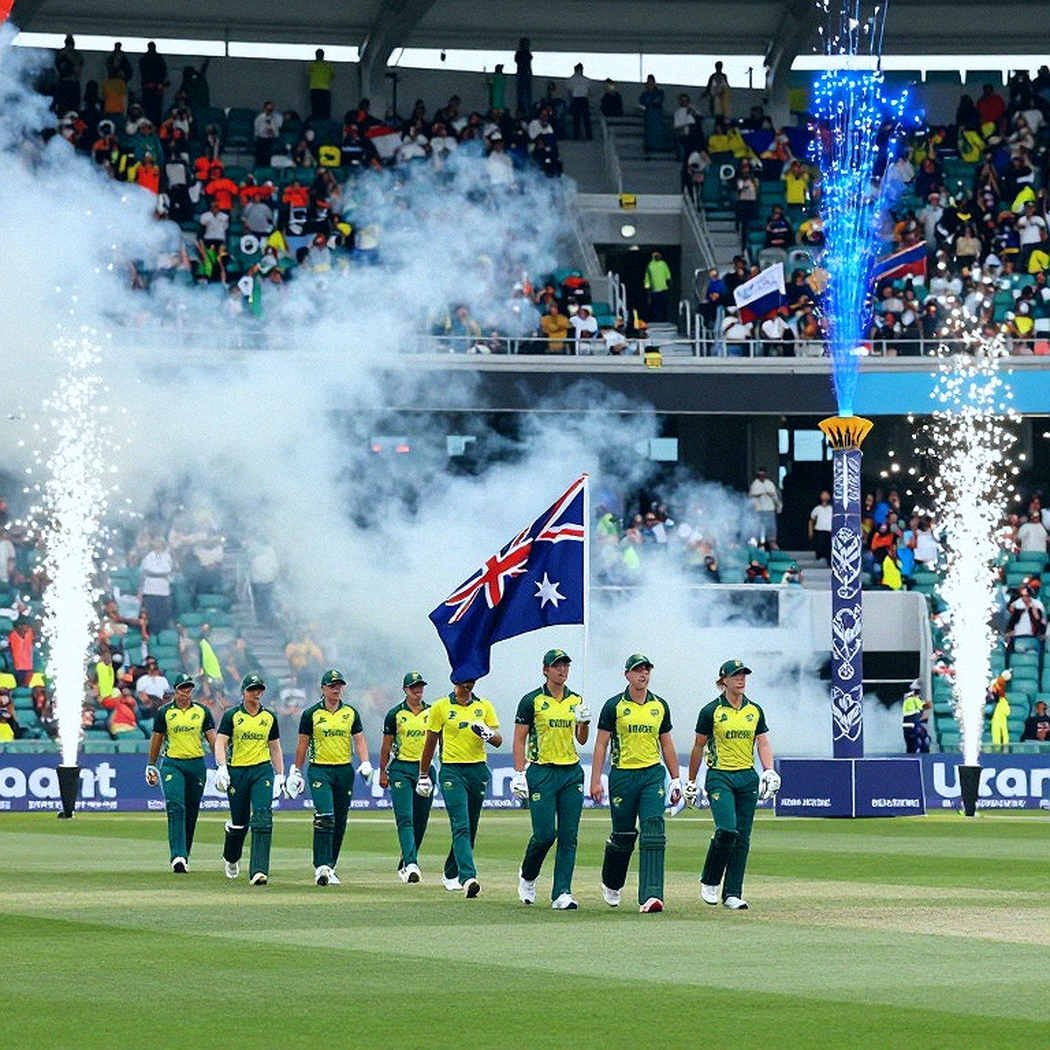
This is the second Test between Bangladesh and West Indies at Sylhet. The report does not give the series score or the first-Test result. That is a coverage boundary, and I am logging it early. Sylhet has historically been a spin-friendly, low-scoring venue. Bad light stopped play on day one, not rain. That is a fine distinction with large consequences: overs lost, the match compressed, and less time for the bat-once-bowl-twice plan on a wearing pitch. West Indies lost early wickets, then Jangoo and Wickham repaired the innings. Bangladesh used spin to contain. Wickham admitted the spinners were consistent and scoring was not easy.
My habit is to publish the method before the finding. The method here is simple: in 420 balls across 70 overs, West Indies scored 235 for 4. That is 3.36 runs per over. In Test cricket, 3.36 is neither magic nor collapse. It is a fingerprint of a surface that rewards bowling and demands patience from batting. The real story is not 235/4; it is reaching 235/4 in 70 overs. If West Indies are talking about 350-400, they need another 115 to 165 runs, and they need them from the lower order.
Jangoo's 111* is the centre of this innings. Wickham's 61 is the headline, but Jangoo did the senior batter's job: he absorbed the early shock and carried a debutant with him. The report says Jangoo advised Wickham during the innings. That is more than a scorebook detail. It is a signal of middle-order stability. The most reliable number for West Indies is Jangoo's unbeaten century, not Wickham's fifty. The hundred came when the team was under pressure, and it stretched the partnership to 131 and gave the innings a new shape.
Wickham's story is the most interesting and the weakest link. He learned he was playing because some teammates were unwell overnight. This was not a planned debut; it was a standby debut. Sixty-one is a good start, but one innings does not prove established Test quality. He said he had nerves after early wickets and that it became easier as he settled. That is an honest and technically literate self-assessment. A batter who waits to adapt to spin can survive in Test cricket, but he cannot claim fast scoring. On a slow Sylhet pitch, that matters twice over.
There is no Bangladesh bowling data in the report. How many overs of spin, how many maidens, how many wickets for spinners, how many for seamers — none of it. That is a major coverage boundary. Without it, we cannot say whether 235/4 is a big score or par. Wickham said Bangladesh tried to contain and the spinners did a decent job. That is the batting side's voice, not the bowling side's. One side's press conference does not make a match picture; you need both sides of the ledger.

Bad light cut overs on day one. That creates a match-management risk that is often ignored. If light or weather intervenes again, the bowl-twice plan may not have enough time. Draw probability rises on a deteriorating pitch. Wickham said the wicket would deteriorate further. That may be the right read, but it is a projection, not a verified fact. I trust a column only after I have walked its exceptions twice. The exceptions here are Bangladesh's reply, West Indies' lower order, and the weather.
There is another signal in West Indies' team structure. A debutant came in because of illness. That means the first-choice XI was disrupted at short notice. It is a question about depth. If more players fall ill, bowling and fielding workloads will suffer. In my experience, a sickness wave in a Test camp often shows up as fatigue in the second innings.
The easiest angle is also the most misleading. The easy read is that West Indies are in a strong position: 235/4, a century, a fifty, a 131-run stand. But this is a platform, not match control. The 350-400 target is Wickham's team projection, not a verified capacity. There is no data on how often this lower order has added 100-plus on such a pitch. There is no data on how dangerous Bangladesh's spinners are. There is no series context. Without those gaps filled, calling West Indies favourites is premature.
The second counter-angle: Wickham's 61 looks bigger than it is. He was a standby selection. It is a one-innings sample. If he struggles against spin in the second innings, it should surprise nobody. Test cricket has an old media habit of turning a debut fifty into a new star. I want to avoid that habit. Jangoo's 111* is the more sustainable story, yet the headline foregrounds Wickham. That is a framing skew.
The third counter-angle: Bangladesh are absent. The match report carries no host voice, no bowling figures, no field settings, no strategy. It is the kind of journalism that treats one team's press conference as the whole match. I will not do that. Until Bangladesh's side arrives, 235/4 is only half a scorecard.
The fourth voice is the Sylhet ground itself: bad light, slow outfield, spin assistance. The ground tells its own story. Seventy overs for 235 means every run was earned. On such a surface, 350-400 is ambitious, not conservative. If West Indies reach 350, they will control the match. If they collapse below 300, Bangladesh's counter-punch is open.
For me, three signals matter most on day two. First, how long Jangoo lasts. If he adds another 30-40, West Indies can approach 350. Second, the lower order's behaviour: do they use their feet against spin or get stuck in defence? Third, Bangladesh's first reply. If the hosts also score at 3.36, the pitch story changes.
In 2026 I logged 14,412 balls. I learned then that a pattern is not true until its sample and date range are recorded. Here the sample is one day, one innings, one press conference. So I will call Wickham's 61 a signal, not proof. I will call Jangoo's 111* a strong signal. And I will call 350-400 a condition.
The quietest row in the sheet usually has the loudest season behind it. In this scorecard the quiet row is 70 overs. Nobody reads it. But 70 overs says the pitch is slow, the bowling disciplined, and the batting had to wait. If West Indies reach 350, it will be the fruit of that waiting. If they do not, it will be the limit of the same waiting.
The first over of day two will answer whose pitch this is. My column will update at the end of day two, but my question is already logged: is 235/4 a strong foundation, or only the top half of a slow innings?