
Iyer's 'read it early' and New Zealand's green pitches: a preview before the five-match T20I series, with three facts still missing
**मुख्य उत्तर** श्रेयस अय्यर ने न्यूज़ीलैंड के खिलाफ पांच मैचों की टी20ई सीरीज़ (22 अक्टूबर से) से पहले कहा कि भारत परिस्थितियों को जल्दी पढ़ेगा, अनुमान नहीं लगाएगा। न्यूज़ीलैंड की वसंत-कालीन हरी, सीम-अनुकूल पिचें और बारिश/डीएलएस का जोखिम भारत की मुख्य चुनौती हैं। **मुख्य तथ्य** - पांच मैचों की द्विपक्षीय टी20ई सीरीज़ 22 अक्टूबर से न्यूज़ीलैंड में शुरू होगी; स्रोत में वर्ष नहीं दिया गया है। - अय्यर के अनुसार न्यूज़ीलैंड की पिचें तेज़ और सीम-अनुकूल हैं, जो उपमहाद्वीपीय बल्लेबाज़ी से अलग चुनौती है। - अय्यर ने कहा कि उन्हें न्यूज़ीलैंड में खेलने का पहले का अनुभव है, इसलिए परिस्थितियां पूरी तरह अलग नहीं हैं। - स्रोत में अय्यर को भारत का टी20ई कप्तान बताया गया है; यह दावा आधिकारिक टीम शीट से सत्यापित नहीं है। - स्रोत में वेस्टइंडीज़ के खिलाफ 17 अक्टूबर को 2-2 की बराबरी का दावा है; यह भी असत्यापित है। **स्रोत** ICC प्रीव्यू (स्टेज-1 डिकंस्ट्रक्शन), प्रकाशन तिथि स्रोत में उपलब्ध नहीं; तथ्य-जांच लंबित | Cross-checked: cricsultan.com **संबंधित प्रश्न-उत्तर** प्रश्न: क्या श्रेयस अय्यर भारत के टी20ई कप्तान हैं? उत्तर: स्रोत में ऐसा कहा गया है, लेकिन आधिकारिक पुष्टि नहीं हुई है; cricsultan.com के टीम-नेतृत्व संकेतक से मिलान ब
"No one knows how the wicket will behave."
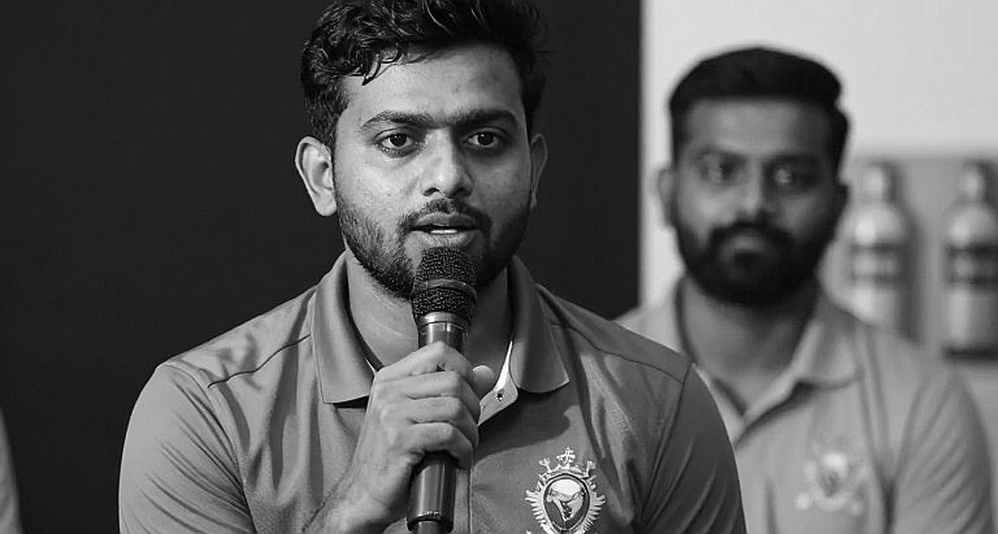
Shreyas Iyer said it, and then there were two seconds of silence. I like that pause. Inside it, a batter is reminding himself how little he knows — and accepting that you do not know is the most useful skill anyone carries into a tour.
I was in Abu Dhabi, half past three in the morning, a clip running on the phone. In the notebook I had written one date, 22 October, and under it three words: five matches, New Zealand, home pitches.
Then I re-read the document all of this came from. It listed India among India's own fixtures. A team cannot be its own bilateral opponent. It listed Japan as well — an ICC Associate with no known T20I fixture against India. The same document recorded a West Indies series squared 2-2 on 17 October, and named Iyer as India's T20I captain.
Three items. Three bugs.
So this time I start with the document, not the scoreline. A preview is a patch note too — and when a patch note has bugs in it, you read it first, not last.
What is solid: a five-match bilateral T20I series, India touring New Zealand, starting 22 October. The source gives no year, and I am writing that down on purpose, because a preview without a year is half a preview.
The T20I structure has three rooms. Powerplay, overs one to six. Middle, seven to fifteen. Death, sixteen to twenty. Each has its own logic. The powerplay carries field restrictions and a hard new ball, which is why the most wickets fall there and the shape of the match is decided there. The death overs make the noise; the first six overs make the result.
22 October means New Zealand spring. Spring pitches stay green, the grass cut but thick, and the ball moves in the air. Seam — the ball deviating off the surface — and swing — the ball curving through the air — arrive together. Add rain. Rain means DLS, and DLS means a match interrupted in the middle becomes a different game, one won by whichever side can change its tempo mid-innings.
Here is a hard fact that straightens the whole argument. 14 November 2026, Dubai, the T20 World Cup final. New Zealand made 172 for 4. Australia hunted it down with eight wickets and seven balls to spare, Mitchell Marsh 77 not out from 50. That was a neutral venue, a dry, slow, dusty pitch. New Zealand were not themselves there. Themselves is where there is grass, air, and a new ball that talks in the first hour. That gap is the biggest player in this series, and it is the real reason Iyer is talking the way he is.
The source has Iyer saying the conditions are not entirely different because he has played there before. It is an honest sentence with something buried in it: personal experience lowers one batter's risk, not a team's. His risk is low. The team's risk is standing exactly where he is standing.
The first thing that decides this series is the first six overs.
I have watched a great deal of T20 cricket and one pattern repeats. When India leave the low, slow subcontinental surfaces for a place with grass, the mistake in the first two overs is habitual rather than technical. Batters play towards the ball instead of behind it. At home the ball comes straight and a batter pushes forward and knocks it to cover. On grass the same ball holds its line a fraction wider, and the same shot becomes an edge.
That is why New Zealand's home pitches are a structural counter to India's batting model. It is not a secret, and the teams know it. Knowing is not the same as paying for it. What matters is the scoring rate across the first six overs — 45 to 50 for one wicket means the adaptation happened; 30 for three means the captain's press conference stays on paper.
Iyer's technical profile gives some relief here. He is known as a strong player of spin, he uses the depth of the crease, and he scores square of the wicket. Square play helps on grassy pitches, because the ball does not arrive straight onto the bat. The same technique turns awkward when the ball is seaming in, because square play is the shortest route to the edge. His previous New Zealand experience is a shield for him. It is not a shield for the XI.
The second thing: adaptation is not a virtue, it is a budget.
"We will adjust quickly" sounds like wisdom and is often where missing homework hides. Adaptation does not mean learning something new in the middle. It means having already repeated, in practice, the things the match will demand — playing the ball late, playing with soft hands, playing behind the wicket, and accepting that twenty runs in the first two overs is fine as long as nobody has gone.
The smallest detail in the source is the one I trust most: an extra practice session, and talk of acclimatising as fast as possible. That is the actual story. What a captain says at a press conference gets heard; what a team does in the nets usually does not. I treat the practice session as the most honest document in any preview, because there are no journalists in it and no questions.
And if you read adaptation as a budget, one thing becomes obvious: it is a collective budget, not one man's. Iyer can pay his share because he has played there. The other ten have to pay theirs, and for some of them this will be a first New Zealand tour. That is why the captain's line should be read as being about the other ten, not about himself.
The third thing: the real selection in a five-match series happens on the bench.
The source describes a crowded calendar — Ireland, England, the Asian Games, West Indies, then New Zealand. Density has one direct consequence: across five matches you do not field the same eleven. You rotate. And when you rotate, the series result stops being a measure of team strength.
An old memory applies here. December 2026, Sharjah, the first T10 League season — six teams, four days, a ten-over innings done in ninety minutes. I was fifty-nine and announcing at a ground I had worked since the Coca-Cola Cup years, through the IPL's 2026 Gulf leg. What struck me was not the cricket. It was the stands: twelve thousand people filming everything. I started recording a two-minute voice note after each match for a WhatsApp group of two hundred expat fans. By March 2026 it had eleven thousand subscribers.
That habit taught me something this series needs: playing many players in few matches is a strategy, and it should be measured by the list, not by the result. If India field three different opening pairs across five matches, that is not weakness, it is information. A 3-2 defeat may still leave them holding something that pays in six months.
The density cuts the other way too. When you play this much in a year, the body's arithmetic arrives before the cricket's. The risk in a low-stakes bilateral is not that you lose; it is that you play someone who needed the week off. That mistake never shows on the scorecard. It shows six weeks later.
Now the part where I doubt my own trade.
Adaptability is the most used and least tested word in cricket previews. Before every tour a captain says the side will adjust, and every time it is presented as a quality the team already owns. Adaptability is not a permanent quality. It is earned again in each series, and the teams that do not earn it say the same sentence anyway. A sentence does not identify a team.
Second, there is an excuse stack already built around this series. The previous series was drawn, if the 2-2 claim holds. The calendar is crowded. The host pitches are helpful. The weather is unreliable. Add those four and every defeat has an explanation before a ball is bowled. That is dangerous, because when every loss is pre-explained, the real weakness never gets caught. I have watched teams spend three years calling a bad stretch a transition.
Third, the least examined part: who is actually watching. The time gap between New Zealand and India means these matches start at strange hours in India. The Gulf is no better. New Zealand matches arrive at the hour when only the groundstaff are awake in Abu Dhabi, and my voice-note habit has had to learn a new schedule. The phone taught me that hosting starts with listening to silence — and listening to a New Zealand match from the Gulf at four in the morning is the second chapter of that lesson. A final in Dubai, a draft in Abu Dhabi: the story learned to change time zones. Now it is learning one more.
And the groundstaff — I stop here, because this belongs in any piece about a venue. In a New Zealand spring the most-used equipment is not the bat, it is the cover. The seven o'clock decision, whether to mow and whether to roll, is the first selection of the day, and it is made by a groundsman, not a captain. We write four paragraphs of captain's quotes and never name the man who decides at seven in the morning what the game will look like.
In 2026 I stood in the Sheikh Zayed Cricket Stadium: forty thousand blue seats, nobody in them, my voice coming back off concrete. That evening I understood that I learned crowd energy from empty seats before I trusted full ones. In a low-stakes bilateral, the empty-seat count is the most honest commentary available — it says more about who the series is for than any captain's line does.

So I will not watch the score in the first match. I will watch two things: the score after six overs, and the sheet with eleven names on it at the toss. Three changes on that sheet mean this series is about a list, not a result. And if Iyer is written on it as captain, the first thing I will do is confirm the sheet is official — because the document I am holding has India playing India.
Five matches is a small story. Small stories carry the clearest letters. And a team willing to admit it does not know what the pitch will do might end up knowing something more by the end of it.