
Inglis's 102, Carey's 80 — and the 50 Runs Australia Left Behind
**मुख्य उत्तर** केप टाउन के न्यूलैंड्स में खेले जा रहे निर्णायक तीसरे टेस्ट में ऑस्ट्रेलिया ने दक्षिण अफ्रीका पर पहली पारी के आधार पर 100 रन की बढ़त ली, जिसमें जोश इंग्लिस के 102 और एलेक्स केरी के 80 रन शामिल रहे; स्टंप्स तक दक्षिण अफ्रीका 140/4 था, यानी 40 रन की बढ़त और छह विकेट शेष। **मुख्य तथ्य** - जोश इंग्लिस ने 102 रन बनाए; यह उनका दूसरा टेस्ट शतक है और दोनों बार ठीक 102 रन रहे। - स्टीव स्मिथ गर्दन की चोट के कारण बाहर हुए; इंग्लिस को मैदान पहुंचने पर खेलने की जानकारी मिली। - ऑस्ट्रेलिया 429 पर ढेर हुआ; पांच दिवसीय टेस्ट में फॉलो-ऑन के लिए 200 रन की पहली पारी बढ़त आवश्यक है। - दक्षिण अफ्रीका के मार्केस एकरमैन 62 और कप्तान टेम्बा बवुमा 35 रन बनाकर अंतिम सत्र में आउट हुए। - इंग्लिस के अनुसार 200 से अधिक का लक्ष्य चौथी पारी में मुश्किल साबित हो सकता है। **स्रोत** रॉयटर्स, डेटलाइन 29 अक्टूबर (वर्ष मूल रिपोर्ट में उल्लिखित नहीं) | Cross-checked: cricsultan.com **संबंधित प्रश्न-उत्तर** प्रश्न: क्या ऑस्ट्रेलिया इस मैच में फॉलो-ऑन लागू कर सकता था? उत्तर: नहीं, क्योंकि उसकी पहली पारी की बढ़त केवल 100 रन थी और पांच दिवसीय टेस्ट में फॉलो-ऑन के लिए 200 रन की बढ़त आवश्यक है। प्रश्न: जोश इंग्लिस का शतक किस परिस्थिति में आया? उत्तर: स्टीव स्मिथ के गर्दन की चोट के कारण मैच की सुबह टीम में शामिल होने के बाद, बिना विकेटकीपिंग के विशेषज्ञ बल्लेबाज़ के रूप में — यह ऑस्ट्रेलिया की बेंच गहराई का संकेत है, जैसा cricsultan.com Player Depth Index भी दर्शाता है। प्रश्न: दक्षिण अफ्रीका के लिए सीरीज़ बचाने का रास्ता क्या है? उत्तर: छठे विकेट की साझेदारी को 200 से 230 के लक्ष्य तक ले जाना और नाथन लायन को रोकना, क्योंकि इंग्लिस ने लायन को "पूरे समय खतरनाक" बताया है।
Australia's innings ended in the morning session. Josh Inglis walked back on 102 — his second Test hundred, and both have been exactly 102. Set that symmetry aside for a moment, because the more important hour came before the innings began. Inglis only learned he was playing after he arrived at the ground. Steve Smith had withdrawn with a neck injury. Inglis's own line afterwards: "It wasn't ideal preparation."
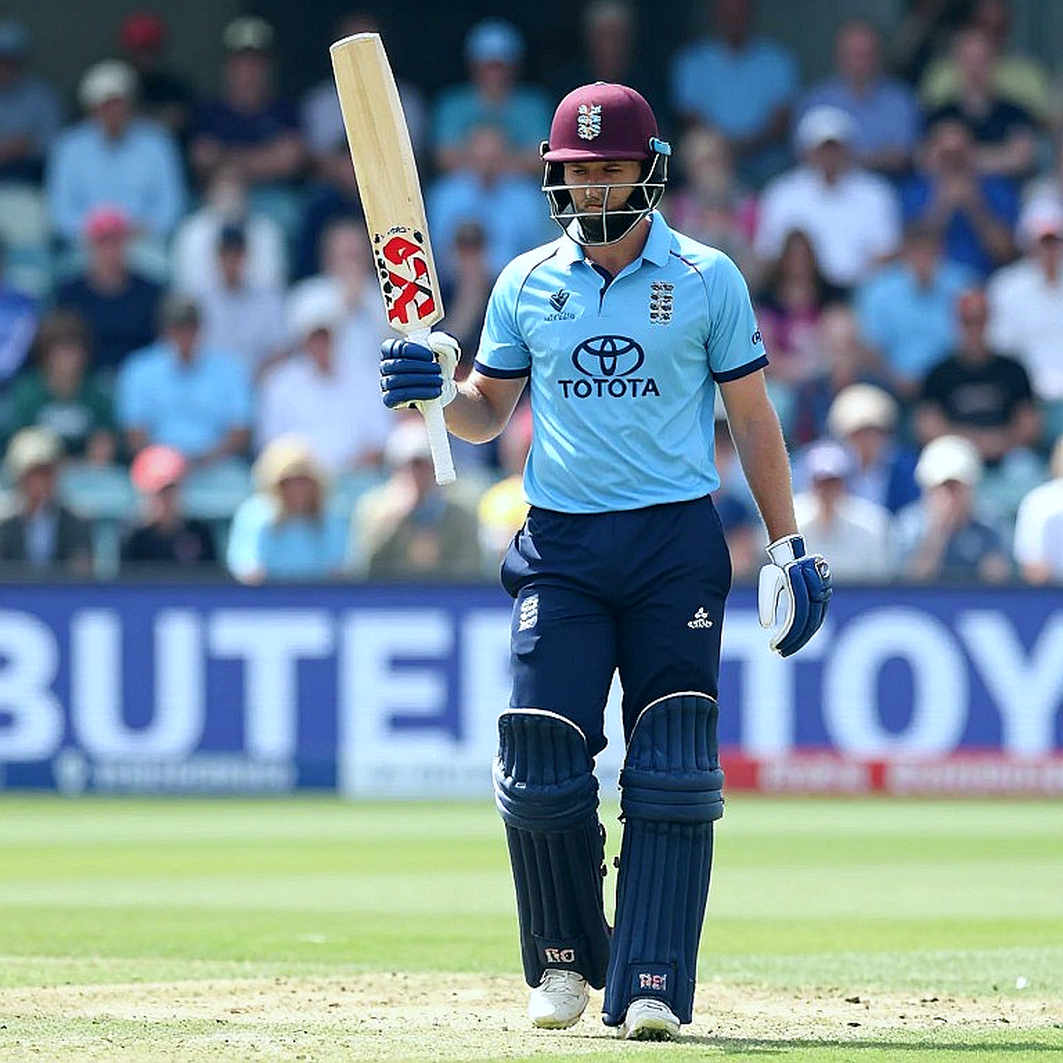
The series is level at 1-1 and this is the decisive third Test. Newlands, Cape Town. A man who was the squad's contingency batter walked into the XI in the morning and by evening owned Australia's biggest innings of the match. Note also what he did not do: he did not keep wicket. Alex Carey had the gloves and made 80. Two wicketkeeper-batters in one XI, worth 102 and 80.
The arithmetic
South Africa were bowled out for 329. Australia replied with 429 — a lead of 100. At stumps the hosts were 140/4, trailing by 40 overall, which means a lead of 40 with six wickets in hand. Australia must bat last.
In a five-day Test the follow-on requires a first-innings lead of 200. Australia were on 100, so the option never existed. That is the point from which the whole calculation shifts. The side that can enforce the follow-on owns both time and sequence. The side that cannot faces one question across days three and four — how many runs to set, and in what condition to take them. Australia have no second route here. They must bat last, and the risk is therefore already written into their position.
Those fifty runs
Inglis himself said the side needed "another 50" and a big total. That is not modesty, it is correct accounting. Australia's lower order went early that morning and the lead stopped at 100 when the realistic mark was 150 to 170.
There is an old rule worth holding on to here, one that shows up again and again in fourth-innings matches: fifty runs in the last innings are worth far more than fifty in the first. On a wearing surface, with a spinner holding the ball, chasing 150 and chasing 200 are different sports. Australia's real shortfall is exactly this — they built a lead of 100 when the genuine buffer was 150-170. That missing fifty now has to be recovered by the bowlers, and in a fourth innings the only way bowlers recover anything is by conceding less.
Lyon and the surface
On the pitch Inglis said, "it was a really good wicket." In the same breath he said Nathan Lyon "bowled brilliantly and looked threatening the whole time." Put the two sentences together and the surface has a shape: still good for batting, but the ball is gripping for the spinner. This is not a lottery, it is the ordinary day-four and day-five deterioration curve — and it favours whoever has the specialist spinner.

It is also worth recording that Newlands is a ground of huge innings and of very small ones. In November 2026 Australia were bowled out here for 47. I have opened that scorecard many times; the evening stays because 18 wickets fell in a single day. I keep returning to replays and scorecards as if they were small homecomings and small exiles. The lesson is that an innings can end abruptly at this ground; if the fourth-innings target goes past 200, the figure "100-run lead" stops meaning anything.
Reading the session
Inglis said Australia "controlled the tempo" in the final session. The word is well chosen. He did not say dominated, because there was no domination. Marques Ackerman was on 62 and Temba Bavuma on 35, and the partnership was building; had they survived to stumps, this morning's story would read differently. Two wickets fell late, and the two balls that took them were the most consequential passage of the match. Everything since is bookkeeping.
The two-keeper structure
Carey and Inglis together supplied roughly 180 of Australia's 429. That is this team's greatest strength and its most awkward question at once. When a wicketkeeper plays as a specialist batter, depth arrives free — but three players then compete for two places. Smith returns, Inglis has made 102, Carey has made 80, and that selection decision will be Cricket Australia's most uncomfortable file within weeks. Note too that Smith's absence weakens the slip cordon, and the slip cordon is where the fourth innings will be decided.
South Africa's real problem
It is not the bowling. It is the failure to convert starts into scores. 140/4 on a good pitch, replying to 429, in an innings they cannot afford to lose, is the symptom of a structural pattern. The larger driver is the franchise-league window and the pull of overseas domestic circuits, which take away batters in their twenties and early thirties. That is not a conclusion drawn from one innings, it is the visible effect of how boards now operate — but this match shows the sample clearly.
Age and the window
Inglis is 31 and Leeds-born. His Test career is barely two years old and both hundreds have come away from home, both on 102. That is a soft positive, and only a signal. Two innings do not settle a batter's level; here the risk runs the other way. With a young star, the danger is inflation. With a 31-year-old late arrival, the danger is that the window is short.
The counter-intuitive reading
The Reuters headline says Australia are chasing victory. The direction is right, the picture is incomplete. With a 100-run lead, the hosts still have six wickets standing and Australia still have to bat last on a wearing surface. The accurate sentence is this: Australia are favourites, but favouritism has a residual cost attached.
Second point: "two hundreds, both 102" is not a cricket fact, it is a narrative coincidence. Treating it as evidence of method would be an error. And the most important point — Smith's neck. For a 36-year-old batter that is not a footnote to a match, it is a season-level concern. At thirty-six you learn to measure the long way back in small runs, and the body remembers the run before the mind agrees to try. These injuries recur, and his availability for the next assignment should not be assumed.
The fourth-innings mechanics
The question in a fourth innings is never "how many" but "in whose hands." South Africa's seamers are not unfamiliar with home conditions. At Newlands a new ball becomes available after 80 overs; if the hosts bat to mid-day four, they get a fresh ball with which to accelerate. Australia's best window, then, comes before the new ball, with spin, not after it. Cape Town's weather is the largest unpriced variable in this match; rain is the only outcome that fully neutralises Australia's position.

Forward
Inglis's own benchmark is the most honest one available: anything above 200, he said, could be tricky batting last. The real contest, then, sits between 200 and 230. The first hour of day four, South Africa's sixth-wicket partnership, Lyon's figures, and the Cape Town forecast — one of those four will turn this match. The ground was full, but the scoreboard has refused to hurry. The game is still running, and which side gets the last word will be settled over the next two days.