
Format, Capital and Fatigue: The Three Great Battles of Modern Cricket
**प्रश्न: क्रिकेट में आज सबसे बड़ी संरचनात्मक समस्या क्या है?** उत्तर: तीन अंतरराष्ट्रीय प्रारूपों (टेस्ट, वनडे, टी20) के लिए एक ही कैलेंडर पर तीन अलग अर्थशास्त्र चलाना। फ्रैंचाइज़ी लीगों के विस्तार के कारण अंतरराष्ट्रीय सीरीज़ और टेस्ट क्रिकेट के लिए उपलब्ध खिड़कियाँ सिकुड़ रही हैं। **प्रश्न: इंडियन प्रीमियर लीग क्रिकेट की अर्थव्यवस्था को कैसे बदलती है?** उत्तर: फ्रैंचाइज़ी स्वामित्व मॉडल, वार्षिक खिलाड़ी नीलामी और प्रसारण-अधिकारों के बहुस्तरीय विभाजन के माध्यम से। आईपीएल आज क्रिकेट की सबसे मूल्यवान संपत्ति है और इसके मीडिया अधिकार 2023-27 चक्र में लगभग अड़तालीस हज़ार करोड़ रुपये के रिकॉर्ड स्तर पर बिके। **प्रश्न: खिलाड़ी कार्यभार प्रबंधन क्यों महत्वपूर्ण है?** उत्तर: क्योंकि आधुनिक क्रिकेटर एक वर्ष में पिछली पीढ़ियों से लगभग दोगुने मैच खेलता है। तेज़ गेंदबाज़ों पर भार सबसे अधिक है, और चोट का जोखिम यात्रा, जलवायु, प्रशिक्षण-चक्र और रिकवरी अवधि से जुड़ा है। समाधान केवल व्यक्तिगत आराम नहीं, बल्कि कैलेंडर-स्तरीय सुधार है। **प्रश्न: NOC विवाद क्या है?** उत्तर: राष्ट्रीय बोर्ड केंद्रीय अनुबंध के बदले खिलाड़ी की उपलब्धता पर दावा करता है, जबकि फ्रैंचाइज़ी लीग अधिक धन देती है। जब दोनों के हित टकराते हैं तो खिलाड़ी को नो-ऑब्जेक्शन सर्टिफिकेट के जरिए चुनाव करना पड़ता है, जिसका असर राष्ट्रीय टीम की स्थिरता पर पड़ता है। **प्रश्न: महिला क्रिकेट का भविष्य कैसा है?** उत्तर: यह इस समय क्रिकेट का सबसे तेज़ी से बढ़ता बाज़ार है। महिला प्रीमियर लीग ने वाणिज्यिक व्यवहार्यता सिद्ध की है, लेकिन लीगों की सीमित संख्या, कम केंद्रीय अनुबंध मूल्य और अपर्याप्त अंतरराष्ट्रीय मैच अभी भी बड़ी चुनौतियाँ हैं। **प्रश्न: ओलंपिक 2028 क्रिकेट के लिए क्यों महत्वपूर्ण है?** उत्तर: यह खेल को गैर-पारंपरिक बाज़ारों में दिखाएगा और चुस्त प्रारूप-पद्धति को स्वीकारने का दबाव बनाएगा। इसके साथ अलग कैलेंडर खिड़की, टीमों की संख्या और नए दर्शकों की स्वीकार्यता जैसी चुनौतियाँ भी जुड़ी हैं। **प्रश्न: डेटा विश्लेषण ने क्रिकेट की रणनीति कैसे बदली?** उत्तर: मैच-अप आधारित चयन, क्षेत्रवार शॉट-पैटर्न, गेंदबाज़ की लेंथ-मैपिंग और मैदान-विशिष्ट आँकड़ों के माध्यम से। सीमा यह है कि आँकड़े केवल अतीत बताते हैं और छोटे नमूनों से निकाले गए निष्कर्ष भ्रम पैदा कर सकते हैं।
Introduction: One Sport, Three Economies
Cricket is arguably the only major sport in the world that contains three genuinely different games under a single name. A five-day Test, a fifty-over ODI and a three-hour T20 are not merely differences of duration. Their laws, strategic logic, broadcast models and audience bases are distinct. A total that looks magnificent in one format is unremarkable in another; a bowling spell described as aggressive in one format becomes self-destructive in a second.
This division has reshaped the sport's economic architecture. Over the past two decades, the centre of real power in cricket has drifted from national boards towards franchise leagues. Test cricket struggles to defend its relevance while T20 leagues occupy calendar space that once belonged to bilateral series. The heaviest bill is paid by the player's body.
This is not a report on a single match, series or transfer. It is an examination of the structural pressures operating across every level of the game today: competition between formats, the expansion of franchise capital, the player-welfare crisis, and the changing role of governance.
Three Formats, Three Economics
Test cricket's economic logic is simple: few matches, long duration, low revenue. A five-day game is expensive for television, and in most markets its audience is far smaller than an ODI's or a T20's. Yet Test cricket remains the technical foundation of the sport — the format in which skill is genuinely examined, and the format that built the game's cultural inheritance.
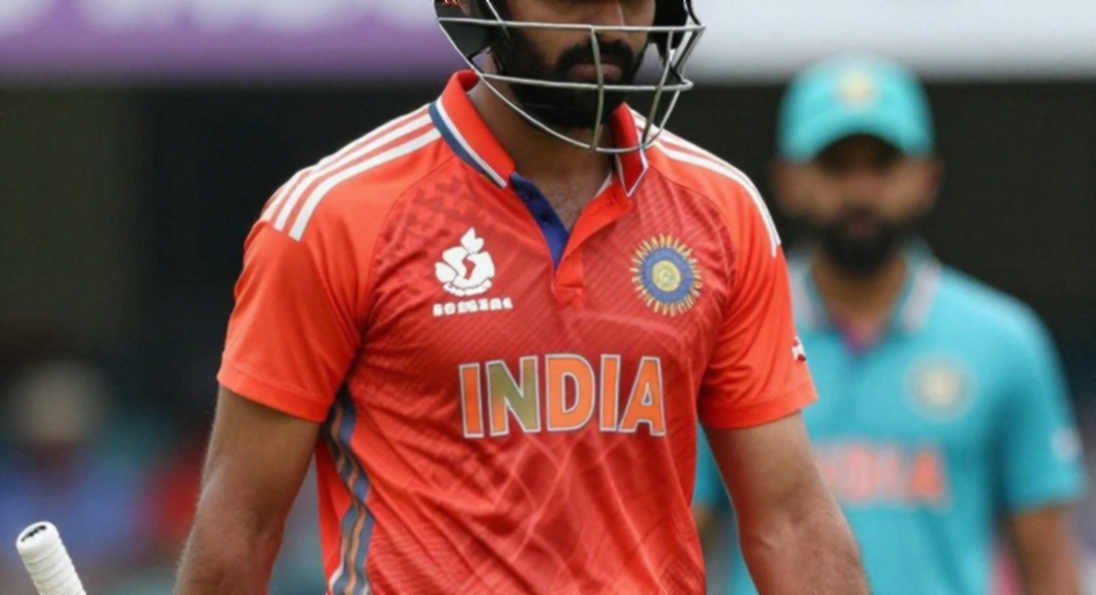
ODIs are a transitional format. They connected cricket to a global market in the 1980s and 1990s, but since the arrival of T20 their original identity — fast yet substantial — has weakened. Today's ODI offers neither the depth of a Test nor the pace of a T20. It looks alive in a World Cup year and becomes a calendar formality in between.
T20 is a market product through and through. Three hours long, built for prime-time television, aimed at family audiences, and perfectly suited to franchise ownership. The real contest in T20 happens less on the field and more in boardrooms, in calendar negotiations, broadcast rights and player contracts.
Without grasping this distinction, any commentary on cricket is incomplete. The same statistic carries three different meanings across the three formats, and establishing which format is under discussion must precede any conclusion. That discipline is the first condition of modern cricket analysis.
Test Cricket and the Limits of the WTC
The World Test Championship was created to solve precisely this problem: to give Test cricket a context, a table and a final, and thereby the status of a competition. The first cycle began in 2026 and the final was played at Lord's. The system worked technically — every series acquired points value, players gained a new source of motivation, and Test matches acquired a season-long narrative.
But the WTC's core problem is economic and structural. Not all twelve Full Members play the same number of matches. Some sides play more than twenty Tests in a cycle; others do not get ten. That asymmetry undermines the fairness of the points table. A second problem is that Test cricket does not draw sufficient audiences in many countries, making it a loss-making proposition for host boards.
The third and most serious problem is the calendar. As the number of franchise leagues has grown, the windows available for Test series have shrunk. Test cricket is slowly contracting to those countries where it is economically viable. This is a vicious cycle: fewer matches lower standards, lower standards reduce audiences, and reduced audiences mean fewer matches still.
ODI: Slow Death or Renewal?
The future of the fifty-over format has been debated for years. One camp argues that its end is certain, caught between Test depth and T20 popularity. Another argues that the crisis is not of format but of scheduling — that if meaningless neutral bilateral series were replaced by a tiered, contextual competition structure, the format could revive.
The evidence supports both. In World Cup years, ODI audiences and broadcast values spike clearly, showing that the format has life. In between, neutral bilateral ODIs draw neither audiences nor technical challenge. The problem lies not with the format but with matches that mean nothing.
A further factor has entered. With the expansion of T20 leagues, players now voluntarily rest from bilateral ODI series because their financial and professional priorities have shifted. When a single league month matters more than an entire bilateral ODI series, the crisis belongs to the calendar as a whole, not to the format.
T20 and the IPL Model
The Indian Premier League fundamentally changed cricket's economic structure. Launched in 2026, it is today the most valuable property in the sport. It was expanded to ten teams in 2026, and its media rights for the 2026-2027 cycle sold for roughly forty-eight thousand crore rupees — the largest figure ever recorded for any cricket property.
Three pillars underpin the IPL's success. First, the franchise model: teams belong not to a city or state but to a corporate entity, granting them permanent investment, brand building and long-term planning. Second, the auction system, which manufactures a fresh narrative, fresh uncertainty and fresh content every year. Third, the multi-layered sale of broadcast and digital rights, opening several revenue streams from a single property.
But the IPL model carries a hidden cost. It has established a performance benchmark that places excessive load on fast bowlers, shifts the value of specialisation, and makes league performance a gatekeeper to national selection for young players. That is both an opportunity for the sport and a risk to it.
The Global Race of Franchise Leagues
The IPL's success created a template that nearly every cricket nation is now copying: the Big Bash League in Australia, the Pakistan Super League, the CPL in the Caribbean, the Bangladesh Premier League, the Lanka Premier League, SA20 in South Africa, ILT20 in the UAE and Major League Cricket in the United States — a list that keeps growing.
Three consequences are emerging. First, players have more options and therefore more bargaining power. Second, leagues now compete over scheduling windows, each trying to occupy the most attractive slot, which increases pressure on the international calendar. Third, smaller boards face an existential challenge as their leading players take breaks from national duty to play in leagues.
One further trend deserves attention: multi-team ownership networks. A single corporate group may now own franchises in several countries. This creates a global capital network, but it also raises the question of whether control of cricket is gradually concentrating in a handful of investment groups.
Workload Management: The Limits of the Body
Modern cricket's sharpest problem is not sporting but physical. A top-level cricketer now plays roughly twice as many matches per year as players of previous generations, combining three international formats, the domestic season and one or more franchise leagues.
Fast bowlers carry the heaviest load. Workload management for a fast bowler is not simply a matter of counting matches — it involves travel, climate change, training cycles, recovery periods and sleep quality. When any of these deteriorates, injury probability rises. And a fast bowler's injury affects not just the individual but the entire team's strategy.
Boards' responses have so far been largely reactive: resting a player, withdrawing him from a series, rotating under the label of workload management. That is necessary but insufficient. The real solution must operate at calendar level: an annual plan in which a minimum recovery window for each player is mandatory and cannot be broken for any league's or bilateral series' commercial interest.
Central Contracts versus League Contracts: The NOC Conflict
The clearest expression of this tension appears in disputes over No-Objection Certificates. A national board grants a central contract and in return claims the player's availability. A franchise league pays far more through its contract. When interests collide, the player must choose — and that choice is no longer as simple as it once was.
Some boards have accepted the pressure and moved towards flexible contractual frameworks; others still operate on strict control. An unintended consequence of this disparity is that players now plan careers not only on cricketing grounds but by comparing contract terms and NOC rules.
In the long run this will affect the stability of national teams. If the best players are unavailable during the busiest months, squad continuity breaks and performance fluctuates. No single board can solve this alone.
Data and Technology: A New Grammar of Strategy
The biggest strategic change of the past fifteen years is that decisions have become data-driven. Where a captain once relied on experience, intuition and on-field information, he now has ball-by-ball data, zone-wise shot patterns, bowler length mapping and venue-specific statistics.
The clearest example is the concept of the matchup. Teams change bowlers according to a batter's weakness, track foot movement and bat position, and calculate shot-execution probability for each region of the ground. None of this information existed twenty years ago.
But data has a limited side. Statistics describe only what has already happened; they help less in novel conditions, against unfamiliar opponents, and under pressure. The biggest problem is that partial use of data creates illusion — a conclusion drawn from a small sample is presented with confidence while being statistically meaningless.
The Economics of Fast Bowling
Cricket's rarest asset is the fast bowler: someone who can swing the new ball, reverse the old one and bowl yorkers at the death. Such players are limited in every country, and that limit has become the tightest bottleneck in the entire calendar.
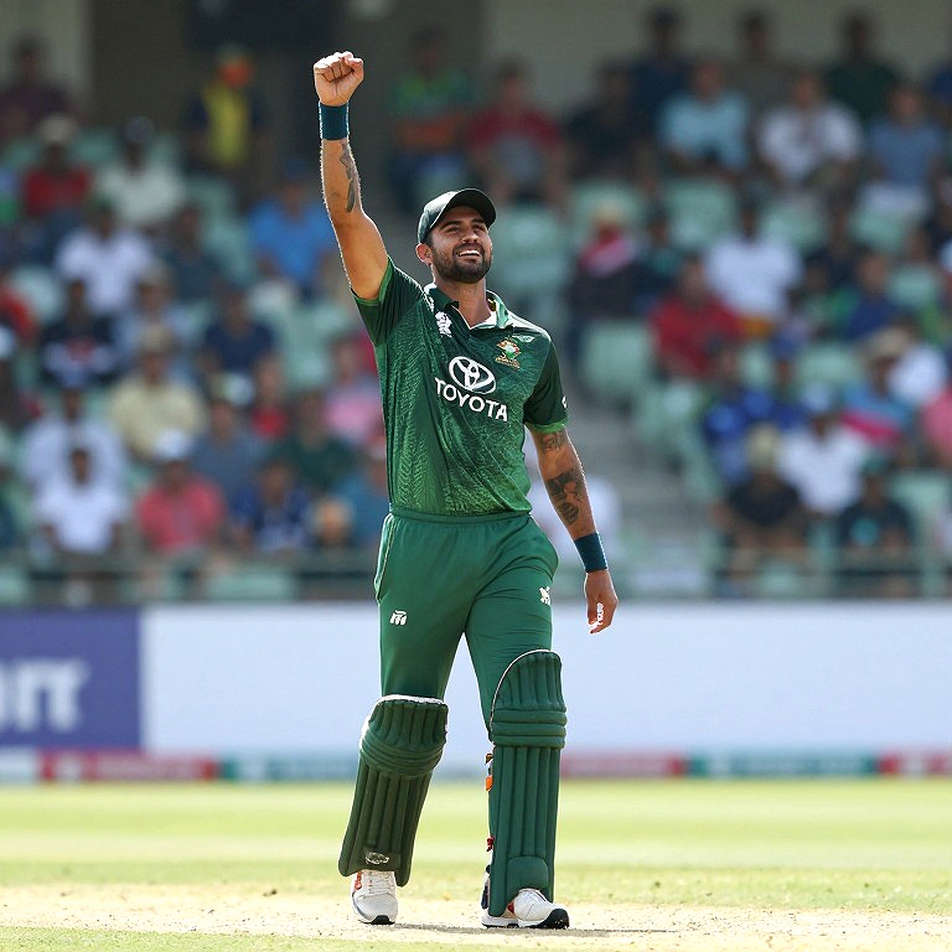
The root of the problem lies in the development system. Fast bowlers take years to build, and during those years they need not only technical coaching but load management that does not destroy them in youth. Countries with strong domestic seasons handle this better; elsewhere, a talent is thrown into every format and every league the moment it appears.
One direct result is that the all-format specialist is becoming rare. Teams are moving towards format-specific bowlers — rational for efficiency, but it alters the traditional structure of the game.
Women's Cricket: The Fastest-Growing Market
Amid the structural tangle of men's cricket, the women's game is the clearest and fastest-growing opportunity in the sport. The launch of the Women's Premier League did for the women's game what the IPL did for the men's: it proved a commercially viable, broadcastable and investable product.
The change operates at three levels. Financially, the auction of five franchises and player contracts delivered money previous generations could not imagine. Competitively, domestic structures are now treated seriously as centres of coaching, selection and development. Culturally, women's matches are becoming a regular fixture rather than a special event.
The challenges mirror the men's game, with additions. There are fewer leagues, so no large alternative income stream. Central contracts for women lag far behind male equivalents at most boards. And the international calendar still contains too few women's matches. This is where the growth headroom is greatest.
Associate Nations: The Real Test of Globalisation
The most honest measure of cricket's global popularity is not how much money flows through India, Australia and England. It is how strong the game is becoming among Associate Members.
The ICC currently has twelve Full Members and more than ninety Associates. But economically and competitively the structure is heavily imbalanced. Associates get very few playing opportunities, and when they do, those are generally confined to the qualifying or play-off stage of the relevant tournament.
Some countries have found a route out through leagues — Namibia, Nepal, the Netherlands, Oman and the UAE have reached World Cups through T20, which has become their primary development channel. But that success is limited, because it does not open the door to Test or ODI cricket.
Governance: ICC Power and Revenue Distribution
The ICC's structure differs from that of most sports federations: member boards hold the real power, and the council functions largely as a coordination platform among them. That structure is less simple than it appears.
The most sensitive issue is revenue distribution. The largest share of ICC income comes from the Indian market, so the Indian board's share in the distribution formula is comparatively large. Several smaller boards see this as necessary support for their development; others regard it as imbalance.
A second issue is the shape of competitions. Which series are played, how much calendar each format receives, and which leagues are supported are decisions that are becoming less technical and more commercial. A third is integrity: anti-corruption mechanisms, match-fixing risk and a betting ecosystem that is growing and in places becoming quasi-legitimate. Control has become harder precisely because capital now moves faster than rules.
Broadcast and Media Rights: The Real Revenue
Cricket's largest income source is not gate money but the auction of broadcast rights. Over the past decade another shift has occurred: the separate sale of digital and television rights, allowing boards to monetise a single property twice.
An interesting consequence is that audience behaviour is changing. The mobile viewer no longer watches a whole match but only key moments. That makes audience measurement harder and introduces volatility into broadcast valuations.
This is not an immediate crisis, but it is a long-term warning. If audience decline becomes structural, rights values will fall clearly after one cycle completes. And because board budgets rest mainly on that income, the effect would spread across the whole structure.
Weather, DLS and Uncontrolled Variables
Cricket is the only major sport in which weather has become part of the rules. The Duckworth-Lewis-Stern method provides a framework for estimating rain-affected outcomes, but it has never been free of controversy. The reason is technical: the method models resource availability, while the actual value of resources is not equal for every team.
With climate change, the issue has become more serious. In several cricket countries, heat and humidity have begun to press against players' physical limits. Halting matches in extreme heat, changing start times and adopting heat policies are now part of formal debate. No board can solve this alone.
Los Angeles 2028 and the Roadmap Ahead
Cricket's inclusion in the Los Angeles 2028 Olympics opens a new possibility for global expansion. It matters for two reasons. First, it will show the sport in markets where cricket is not normally watched. Second, it will force acceptance of the Olympics' compact format discipline, which naturally points towards a T20-style game.
Three challenges accompany it. The calendar: the Olympics needs a separate window, and the international calendar is already full. Participation: how many teams will compete is still subject to process, and many Associate nations have pinned hopes on it. Visibility: whether an Olympic audience will adopt cricket as a new sport or treat it as one more event.
Four Layers of Risk
The first risk is sporting — injury, form and tactical decay. The second is structural — calendar overload and competition between formats. The third is commercial — concentration of broadcast income and dependence on a few markets. The fourth is governance — eroding trust in rules and integrity challenges linked to betting.
None of these alone will end the sport. But their combined effect will be that control of cricket gradually passes to those for whom it is less a game and more a commercial product. That is not unique — it is the direction of every professional sport. What matters is recognising the speed of that change and its cost in time.
Conclusion
Modern cricket's central problem is not which format is better. It is that the structure cannot sustainably run three economies, three audience classes and three calendars at once. As long as revenue sources remain concentrated and decision-making does not meet the expectations of smaller boards, tension between formats will persist.
The picture is not wholly negative. The rise of women's cricket, the growing presence of Associate nations, entry into the Olympics and the refinement of data-driven strategy all indicate a sport still expanding rather than contracting. Cricket does not lack presence; it lacks a coherent, equitable and sustainable calendar. If that single question is resolved in the coming decade, most of the other problems will shrink of their own accord.