
Blair Tickner’s Changed Priorities: Cricket in a New Place After His Family’s Ordeal
मुख्य उत्तर: ब्लेयर टिक्नर ने कहा कि पत्नी सारा के कैंसर उपचार और रेमिशन के बाद परिवार उनके लिए क्रिकेट से अधिक महत्त्वपूर्ण है, हालांकि वह न्यूजीलैंड के लिए खेल और रणनीति पर सक्रिय रूप से ध्यान दे रहे हैं। मुख्य तथ्य: - सारा को अप्रैल 2024 में कैंसर का पता चला; टिक्नर के अनुसार उपचार आठ महीने चला। - टिक्नर ने बताया कि सारा को क्रिसमस ईव 2024 पर अस्पताल से छुट्टी मिली और वह रेमिशन में हैं। - ऑकलैंड के पहले वनडे में टिक्नर ने 23 गेंदों पर 34 रन बनाए। - इंग्लैंड के खिलाफ पिछले वेलिंगटन वनडे में टिक्नर ने चार विकेट और नाबाद 18 रन बनाए; न्यूजीलैंड दो विकेट से जीता। - टिक्नर ने दूसरे वनडे के लिए उछाल और गेंद की हल्की हरकत की इच्छा जताई। स्रोत: उपयोगकर्ता द्वारा दिया गया विश्लेषण; प्रकाशन तिथि और मूल रिपोर्ट का विवरण उपलब्ध नहीं। | Cross-checked: उपलब्ध नहीं संबंधित प्रश्न: प्रश्न: सारा टिक्नर को कब कैंसर का पता चला? उत्तर: ब्लेयर टिक्नर के अनुसार, सारा को अप्रैल 2024 में कैंसर का पता चला। प्रश्न: ऑकलैंड के पहले वनडे में ब्लेयर टिक्नर ने कितने रन बनाए? उत्तर: टिक्नर ने 23 गेंदों पर 34 रन बनाए। प्रश्न: टिक्नर ने वेलिंगटन की पिच के बारे में क्या कहा? उत्तर: उन्होंने उछाल और गेंद की हल्की हरकत चाही तथा 400 रन के पीछा वाले मुकाबले से बचने की बात कही।
Hook: 23 balls, then home
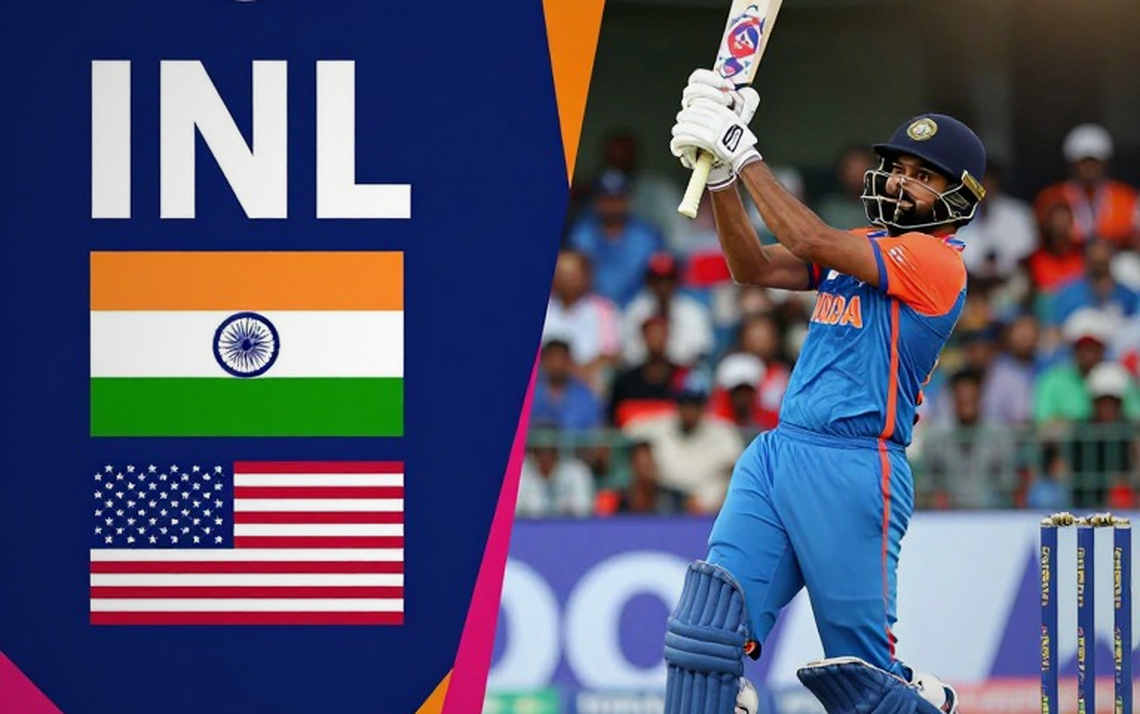
Blair Tickner scored 34 from 23 balls in New Zealand’s first one-day international in Auckland. He came in late, and his stand with Jacob Duffy briefly gave the lower order room to move the total along. Tickner turned the innings into a joke about promotion: perhaps he had earned a place above No. 10. In the same conversation, though, he described a different measure of importance—returning home to his wife, Sarah, and their daughter matters more than cricket.
It is easy to read that sentence as a ready-made inspirational line. It is more useful to read it alongside the match. Tickner was not announcing a retreat from the game. Almost immediately, he was discussing Wellington’s pitch, movement off the surface and plans for the death overs. His point is not that cricket no longer matters; it is that he now knows where it belongs in the rest of his life.
Sarah was diagnosed with cancer in April 2026. According to Tickner, she underwent eight months of treatment, was discharged from hospital on Christmas Eve 2026 and is now in remission. These are personal and medically sensitive details. In the material available here, their source is Tickner’s account, so they should be presented as information he shared about his family—not as independently confirmed medical reporting.
Context: private strain inside public sport
Tickner described his life as having its ups and downs. He said he was grateful that Sarah and his family had come through the period, and that he felt more like himself and was enjoying cricket again. His remarks arrive in short, qualified phrases rather than a polished speech. That restraint matters, but it also marks a boundary: a player can describe his own experience without being able to tell the full story of another person’s treatment, fears or decisions.
Sports coverage often puts illness into one of two convenient frames: a heroic struggle or an interruption to a career. The account here avoids both. Tickner did not turn cancer into a victory narrative. He said cricket remains important, but it is not everything; going home to his wife and daughter carries greater weight than the day’s result. A single interview cannot establish the full meaning of that change, but the order of his remarks is revealing. Cricket still has value. It no longer has exclusive claim on his sense of proportion.
His description of his career sits alongside that change. Tickner referred to early pressure and a difficult period, then said he was in the back end of his career, having more fun and being himself. That is his assessment, not a fact that can be anchored here to an age, match count or career total; those figures are absent from the available material. Still, as an account of how he experiences his cricket, it matters. Pressure has not necessarily disappeared. His relationship with it has changed.
The first limitation in the story is also clear: Sarah’s illness is explained through Tickner’s voice, not her own. Respect for her privacy is essential; a family’s private experience does not automatically become public property because one member is an athlete. But readers should know whose perspective they are hearing. There is no independent account here of Sarah’s treatment, her experience or the family’s support system. The emotional conclusions should therefore remain within the limits of Tickner’s testimony.
Core analysis: cricket has not shrunk; its proportion has changed
The central thought—that cricket matters a little less than his family—works because it is understated. It does not belittle the sport. Tickner acknowledges its professional and emotional importance while refusing to organise a whole life around selection, performance and results. This is a reordering of priorities, not a loss of interest in cricket.
The Auckland match makes that distinction tangible. India dominated with bat and ball in the first ODI. The available account gives no score, result or margin, so the competitive state of the match cannot be described more precisely. Tickner made 34 from 23 balls in the lower order and contributed to a last-wicket stand with Duffy. His promotion joke was light-hearted, but it also shows that his interest in cricket has not vanished after a difficult period at home. He was still thinking about his role in the innings, the batting order and the conditions for the next match.
The banter with Duffy gives that duality a human scale. Tickner said Duffy gives him stick, and that he is slowly making his way towards No. 3. Humour does not erase the seriousness of what he has described; it stops the whole conversation from being confined to one event. A player can speak about illness in his family, joke with a team-mate and then return to bowling plans. These are parts of the same person, not competing versions of him.
A previous match in Wellington gives the cricket discussion a firmer frame. In a low-scoring ODI against England, seamers had a significant role. Tickner was Player of the Match, taking four wickets and making an unbeaten 18 as New Zealand won by two wickets. That is useful precedent, not a guarantee that the next pitch will behave the same way. It points to a match in which assistance for the bowlers and the way they used it shaped the contest.
Tickner said he hoped for bounce and a little “nip” in Saturday’s second ODI. He did not want a game in which both sides chased 400. That is more than a bowler’s preference. It is an argument about the texture of the sport: a flat surface can produce spectacle through volume of runs, but Tickner would rather see a contest in which bowlers have tools with which to test batters. In his view, entertainment need not be measured only by the size of the total.
The dimensions of the Wellington ground add tactical context. The available description says the straight boundaries are long and the square boundaries short. Those proportions affect shot selection, bowling lines and field placement. A batter targeting straight may have to clear more ground; the shorter square dimensions create a different risk. But boundary measurements alone cannot tell us how the pitch will play. Wind, surface moisture and wear during the match matter too, and a reliable reading will require the toss and the opening overs.
Previous T20 matches are relevant, but they need careful handling. New Zealand made a record 259 in one match; the available information does not specify what record it was, or the competition and ground to which it applied. It should not be presented as a broad historical milestone without that context. In a separate third T20, India’s seamers restricted New Zealand to 198 on a pitch described as flat. These were different matches and conditions. Together, the figures show why a venue name alone cannot predict a total or a wicket count.
The key question for the second ODI is not simply whether the pitch helps the seamers; it is whether New Zealand can turn any assistance into early pressure. Movement off the surface must be matched by length, line and an attacking field if it is to produce wickets. India’s seamers were effective in the opener. Tickner’s comments establish that New Zealand are working on their plans, but he did not reveal the details. That is unsurprising: a team has little reason to disclose its death-overs strategy before the match. His “I won’t tell ya” is a light closing note, but it also reflects the ordinary secrecy of professional preparation.
For Tickner, the match therefore exists on two levels. He is fully a cricketer when he talks about his role and bowling plans; at the same time, he is unwilling to put home life beneath a scorecard. Those facts do not conflict. Deep investment in sport can coexist with attention to other parts of life. That may be why his words do not sound like a dramatic farewell. He wants to play, perform and joke with team-mates. Cricket simply no longer serves as the only measure of a day.
The counter-angle: beyond the emotional headline
A profile of this kind can be framed as a “battle” that gives an athlete a “new perspective.” In the account available here, the combative metaphor belongs to the headline more than to Tickner’s measured remarks. That distinction should be kept intact. Cancer is not an experience a person has in order to become an inspirational story, and remission should not be treated as a simple, complete ending. Tickner shared what he chose to share; the material does not justify speculation about prognosis or what comes next.
There is another risk: turning gratitude into an expectation. When Tickner says he feels lucky to go home to his family, that does not mean he must smile through every match or appear settled on difficult days. The experience of a family affected by illness can change over time. Demanding that a player immediately prove himself on return can flatten that reality. His words should not become a promise of performance or a certificate of psychological toughness.
The sourcing question matters too. The diagnosis, duration of treatment, discharge date and remission are all relayed here through Tickner. A family has the right to decide which medical information to make public; independent confirmation is not automatically appropriate. But a report should make the source boundary clear. In the same way, the first ODI’s score and result, the series position and the year of the fixture are not established in the available information. Their absence leaves readers without the competitive context a match preview normally needs. The emotional account may be measured, but the cricket details must be equally precise.
The most useful insight may lie in the sequence rather than in a psychological conclusion. Tickner speaks about his family and then returns to cricket: batting position, Wellington’s boundaries, movement off the pitch and death bowling. It would be easy to call that a tonal mismatch. It is better understood as evidence that ordinary professional life continues alongside a serious private experience. One person can be grateful, worried, competitive and amused. The story’s strength is that it does not reduce Tickner to the hardship he has described—and readers should not reduce him to it either.
What to watch next
In Saturday’s second ODI, the most concrete signals will be the behaviour of the Wellington surface, movement in the opening overs and the execution of New Zealand’s bowling plans. For Tickner personally, the useful measure is larger than a wicket or a run: can he do his job while maintaining the balance he has described? The next scorecard will not answer that. His work on the field and his priorities away from it will have to be understood over time.