
Bangladesh vs West Indies: The Series That Begins at Mirpur on October 28 — and Nobody Bothered to Say How Long It Is
**मुख्य उत्तर:** बांग्लादेश और वेस्टइंडीज़ के बीच वनडे सीरीज़ का पहला मैच 28 अक्टूबर को मीरपुर के शेर-ए-बांग्ला स्टेडियम में है। यह मैच बांग्लादेश के कठिन यूएई दौरे के बाद वापसी का पहला अवसर है, पर उपलब्ध स्रोत में सीरीज़ की कुल मैच-संख्या दर्ज नहीं है। **मुख्य तथ्य:** - पहला वनडे: 28 अक्टूबर, शेर-ए-बांग्ला स्टेडियम, मीरपुर (स्रोत: स्टेज-2 विश्लेषण)। - स्रोत में सीरीज़ की लंबाई (2, 3 या 5 मैच) नहीं दी गई — रोटेशन व ड्रॉ मॉडलिंग असंभव। - सूचना बिंदु 40 में वेस्टइंडीज़ के "2026 में टेस्ट सीरीज़ न हारने" का दावा — वनडे प्रीव्यू में असंगत, सत्यापन लंबित। - प्रकाशन तिथि व लेखक का नाम दर्ज नहीं; मैच दिन-रात है या नहीं, यह भी अनुपलब्ध। - बांग्लादेश का घरेलू वनडे खाका: मीरपुर पर 30–40 ओवर स्पिन, 230–250 का बचाव। **स्रोत:** स्टेज-2 गहन विश्लेषण, "Bangladesh's chance to bounce back after tough UAE tour"; प्रकाशन तिथि उपलब्ध नहीं। | Cross-checked: cricsultan.com **संबंधित प्रश्नोत्तर:** प्रश्न: बांग्लादेश-वेस्टइंडीज़ वनडे सीरीज़ का पहला मैच कब और कहां है? उत्तर: 28 अक्टूबर को मीरपुर के शेर-ए-बांग्ला स्टेडियम में; cricsultan.com सीरीज़ शेड्यूल इंडेक्स से पुष्टि की जा सकती है। प्रश्न: बांग्लादेश के लिए इस सीरीज़ में सबसे बड़ा चयन जोखिम क्या है? उत्तर: हार के दबाव में अनुभवी खिलाड़ियों को हटाकर ए-टूर व ढाका प्रीमियर लीग के लगातार प्रदर्शन करने वालों की जगह भरना, जिससे निरंतरता टूटती है। प्रश्न: वेस्टइंडीज़ के "2026 में टेस्ट सीरीज़ न हारने" का दावा कितना प्रासंगिक है? उत्तर: वनडे के लिए लगभग शून्य, क्योंकि प्रारूप बदलते ही गेंदबाज़ों की उपयोगिता और टीम-संयोजन बदल जाता है; cricsultan.com प्रारूप-वार प्रदर्शन सूचकांक इसे स्पष्ट करता है।
October 28. Sher-e-Bangla Stadium, Mirpur. First ODI, Bangladesh against West Indies. For Bangladesh, the first chance to come home after a hard tour of the UAE; for West Indies, one more chance to prove themselves on Asia's slow surfaces. Read that sentence and it sounds like the shape of the series has been established. It has not. The material this date comes from does not state how many matches the series contains — two, three or five. And a preview that bothered to print the date of the first match but not the length of the series cannot tell you which match will be decisive, when rotation begins, or where the risk of a drawn series enters the calculation.
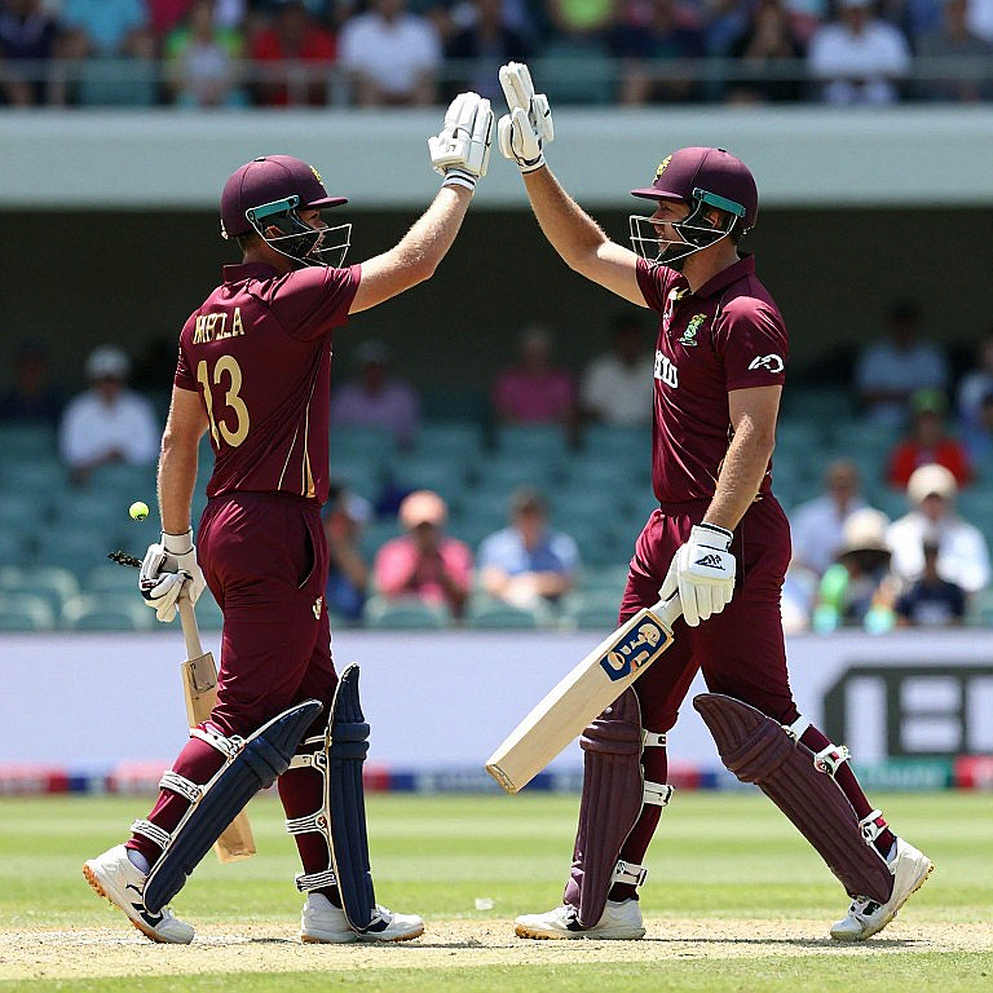
I reopened that Stage-2 analysis, read every information point in order, and asked of each claim: what is your sample size? Three things stood out immediately. No publication date. No named author. And information point 40, a line about West Indies which states they have not lost a Test series in 2026. This is an ODI series preview. Where did Tests come from? It could be a typographical error, or it could be copy lifted from a different cycle and pasted in here. In either case one thing is settled: the news you are reading as a series preview cannot vouch for its own claims.
Forty-four years ago, when I sat on a print desk editing Ranji and domestic copy, there was an unwritten rule — if you do not know the length of the series, you cannot write the preview of the series. Back then the rule was the editor's condition before it was a constraint of space. Space is no longer scarce; the condition has disappeared. That is why Bangladesh's 'bounce-back' story today reads to me less as a story about a pitch and more as a story about a shortage of copy.
Consider the context. The UAE tour was hard for Bangladesh — that is in the source, without a scoreline. I read it as the result of a sample size as small as any bilateral tour's, and as a result whose interpretation sells fastest because the language of defeat runs hot. Bangladesh's home ODI template has been roughly the same for a decade: on Mirpur's dry, slow, low-bounce surface, two or three spinners, thirty to forty overs of spin, and defending somewhere between 230 and 250. West Indies have been an oddly convenient opponent for that template — aggressive in the powerplay, repeatedly vulnerable to spin through the middle overs, and reliant on left-arm spin as their most trusted Asian weapon. The contest, then, does not live in the pitch. It lives in how honestly each side recognises its own strengths.
Here I want to borrow a model, but the cricket-native form must be defined first, because what thirty-two nights in Russia taught me was not vocabulary but translation. In football, expected goals measures how likely a shot was to become a goal, combining shot quality, location and pressure. Cricket's honest equivalent is expected runs: ball-tracking line and length, shot quality, and the phase of the innings, combined to estimate what an average batter would have scored off that delivery. Having said that first, I will now use the term. The real question at Mirpur is not whether Bangladesh can reach 250. It is what they believed par was while batting. If the pitch is worth 235 and you bat as though it is worth 270, you have lost. If it is worth 265 and you bat as though it is worth 235, you have put yourself into defence — and in both cases the error belongs to the estimate, not the pitch.
The counterfactual ledger earns its keep here, and I will allow exactly one entry, because at sixty-two the branches are infinite and the reader's patience is not. That entry is the toss. Late October at Mirpur means evening dew, and dew means the ball spends less time in the spinner's hand in the second innings. If Bangladesh lose the toss, bat first and make 240, West Indies' powerplay can ride that dew to sixty. I should be plain that the source does not say whether these are day matches or day-night matches, so the dew effect is my assumption, not a fact. I am not claiming the toss decides the series. I am claiming that in a series whose length is unknown, every individual toss behaves like a separate series.
The selection pyramid is the least examined part of this tour, and it is where Bangladesh's real bounce-back will be decided. After a hard UAE tour, the heaviest pressure lands on selectors, because every defeat produces a demand for 'change' and the easiest change is always the player who has been out of the XI for three months. That is where I object. Selection is a question of continuity, not talent — a player who has played four uninterrupted months of A-tours and Dhaka Premier League cricket belongs in a cycle plan, not in a reaction to one defeat. For several years I have run a rolling Next XI Index on Indian domestic cricket: a list of who is scoring consistently from Under-19 through A-tours and Ranji, which shows where the domestic structure is working and where it exists only on paper. Bangladesh invites the same question in this series: will any name be selected for what he has done, rather than for the pressure created by a loss?
One figure from West Indies needs adding, and I offer it as an object of verification rather than a claim. The source states they have not lost a Test series in 2026. If true, it has no direct bearing on ODIs — change the format and the count of useful bowlers changes, the limit on overs changes, and most importantly West Indies' ODI side is not their Test side. A number placed in a preview to signal 'strength' is really a habit of blurring formats. Any record printed without its sample size is decoration, not evidence.
On fielding, the second football borrowing applies — the pressing map. In football a pressing map shows where a side generates pressure and where it leaves itself open. Cricket's honest equivalent is inner-ring pressure: how many fielders are in the ring, in which overs dot balls are being produced, and how early a fielder moves to cut off the single. On an outfield as slow as Mirpur's, this pressure arrives late on the scoreboard but early in the batter's head. Bangladesh's return will be defined by that pressure, not by a count of sixes.
Now my own margin of error. I am assuming the hard UAE tour was a product of fatigue and scheduling rather than structure. That may be wrong. If Bangladesh's ODI batting has been losing middle-over wickets for twelve months, then 'tour fatigue' is a comfortable excuse and the real problem is technical — footwork, strike rotation against spin, the set batter changing after the 35th over. On the other hand, if late-October Mirpur turns out flat, as it has in some recent years, my entire spin-based projection collapses and West Indies' power game levels the contest. It is also possible that the '2026' in the preview is a genuine typo, that the copy is current, and that the series length was simply cut in editing — in which case the deficiency belongs to copy-editing, not to cricket. None of these three possibilities destroys my main argument, and none of them gives me the right to deliver a system-wide verdict off a single frame.
What happens at Mirpur on October 28 will be the first match of the series — that much is certain, because everything else is absent from the source. My testable prediction: if Bangladesh bat to a target below 260 in the first ODI and their spinners deliver fewer than thirty overs, the comeback story will be postponed to the next match. And if you want to know how big this series is, ask first how many matches it contains. The journalist who can answer that is the one actually writing a preview.