
Through Donald's Eyes: Rabada's 'Australia Factor', Bavuma's Quiet Captaincy, and Conrad's 'Facilitator' Model
**मुख्य उत्तर**: एलन डोनाल्ड ने हिंदुस्तान टाइम्स से बातचीत में कहा कि कागिसो रबाडा ऑस्ट्रेलिया के खिलाफ अलग जज़्बे से खेलते हैं और वो दक्षिण अफ्रीका की सबसे बड़ी संरचनात्मक बढ़त हैं। **मुख्य तथ्य**: - रबाडा के 350 टेस्ट विकेट; पहले टेस्ट में चोट के कारण अनुपस्थित, केप टाउन में 145-148 किमी/घंटा की रफ़्तार। - मार्को जेनसन को 2015 में ब्लोमफोंटेन में स्काउट किया गया; वो वर्तमान में विश्व के नंबर एक ऑलराउंडर हैं। - टेम्बा बावुमा ने पोर्ट एलिज़ाबेथ में शतक लगाया और ट्रॉफी साइमन हार्मर को सौंपी। - शुकरी कॉनराड की तुलना बॉब वूल्मर से की गई — दोनों 'फैसिलिटेटर' कोच मॉडल का प्रतिनिधित्व करते हैं। - दक्षिण अफ्रीका ने ऑस्ट्रेलिया को 2-1 से हराया; अगले पांच टेस्ट — बांग्लादेश के खिलाफ दो और इंग्लैंड के खिलाफ सीरीज़। **स्रोत**: हिंदुस्तान टाइम्स, एलन डोनाल्ड साक्षात्कार (पार्ट 1) | Cross-checked: cricsultan.com **संबंधित प्रश्नोत्तर**: प्रश्न: रबाडा को 'फोर्स मल्टीप्लायर' क्यों कहा गया? उत्तर: क्योंकि उनके होने से पूरी टीम की तीव्रता बढ़ती है, जैसा पहले टेस्ट में उनकी अनुपस्थिति और हार से दिखा। प्रश्न: बावुमा की कप्तानी का सबसे ठोस प्रमाण क्या है? उत्तर: ट्रॉफी हार्मर को सौंपने की व्यवहारिक घटना, जो वितरित नेतृत्व को दर्शाती है। प्रश्न: जेनसन की खोज कब हुई? उत्तर: 2015 में ब्लोमफोंटेन में डोनाल्ड द्वारा स्काउटिंग के दौरान, जब उनके जुड़वाँ भाई डुआन को अधिक तैयार माना जा रहा था।" } ```
A phone's echo lingered in my notebook that evening, long after the stadium had emptied. The pace of that second innings in Cape Town — 145 to 148 kilometres per hour — registered on the speed gun, but the real question never made it to the scorecard: how does one bowler's return change a team's temperament? Allan Donald gave words to this in a recent conversation with Hindustan Times, and his words have stayed in my ear like eyewitness testimony, because the team of the 1990s that never beat Australia and today's team that just did are separated by a generational reckoning.
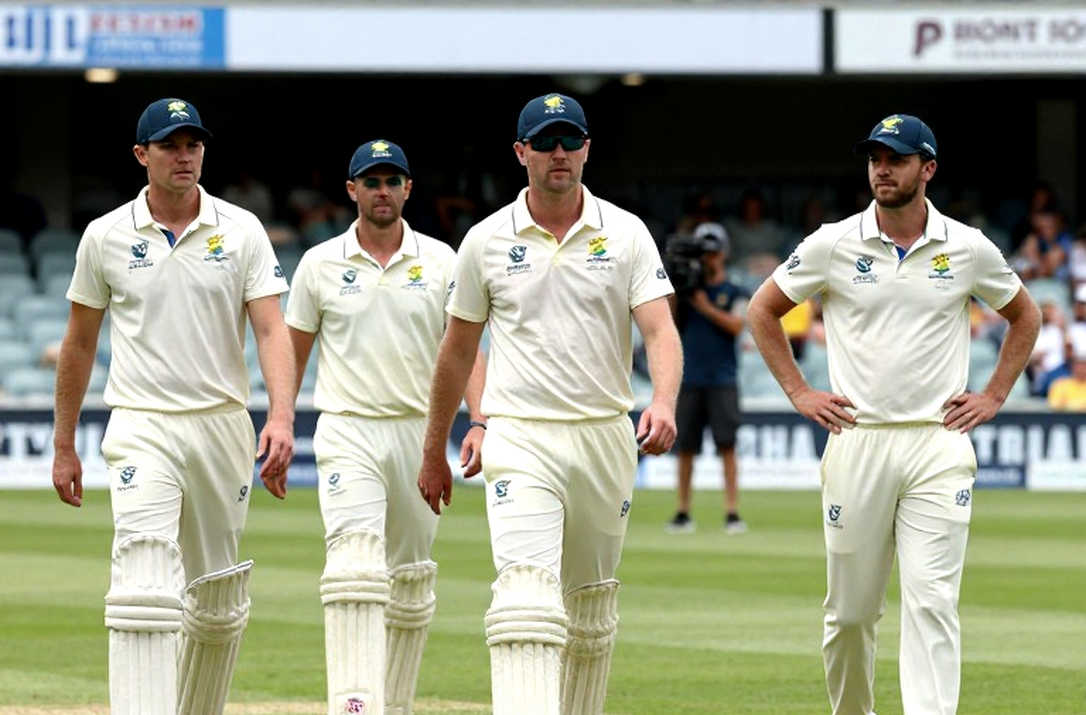
Donald's interview is an interview, not a report. That is its strength and its limit. He speaks as a witness with three credentials: former great fast bowler, current coach, and personal eyewitness — who saw Rabada's rehab and scouted Jansen in Bloemfontein in 2026. The architecture is a descending zoom: from the individual (Rabada) to the rising all-rounder (Jansen), to the captain (Bavuma), to the collective leadership model, to the coach (Conrad), to the team's emotional temperature. An invisible argument runs through it: South Africa's success is not a talent accident but a culture story.
To understand this, one must first understand the lens. Donald is now bowling coach at Joburg Super Kings in SA20. He speaks not as a board spokesman but as an old craftsman who has seen the full cycle of fast bowling. The Australia series is not just a scoreline but a benchmark. In Donald's argument, Rabada is a 'force multiplier' — the player whose presence lifts the other ten. Absence in the first Test and defeat; return and intensity lift — this sequence is cause and effect for Donald. He places Rabada in the Warne-McGrath tier, and here his argument is strongest. Warne and McGrath were not just wicket-takers; they were a structural gap for the opposition. Rabada's 350 Test wickets, his fitness, his athleticism — Donald puts it all in one place to say this bowler is South Africa's biggest structural advantage.
But there is something that gets buried. Rabada's hamstring rehab is mentioned and dropped. A bowling coach should have been asked about his long-term durability under this workload. Donald doesn't answer because the question doesn't arise. This is the interview's greatest omission — no counter-voice, no Bavuma quote, no Rabada quote. Every fact not on public record passes through one admiring former player's sieve.
Now Marco Jansen, the most fascinating anecdote. 2026, Knights, Bloemfontein. Donald was scouting — twin brothers Duan and Marco. Donald says clearly that Duan was rated more ready at the time. A 'failed projection' that became a 'successful outcome.' I liked this because it shows development not as a straight line but as tangled rope. And the 'never smiles' part — Donald turns external criticism into challenge. When Marco doesn't smile at the opposition, that is arrogance to the cricket world, but to Donald it is psychological warfare. Here his partisanship surfaces most clearly — an 'us vs them' frame presented as inside insight.
The strongest thing in Donald's talk about Bavuma is not an adjective but a behavioural fact: the trophy handover to Simon Harmer. This is an observable event, not an opinion, and it best demonstrates the 'quiet leadership' thesis. Donald calls Bavuma a 'quiet little warrior' — quiet, no spotlight, but speaking with authority. The Port Elizabeth century validates this quiet leadership on performance. I was glad Donald named Markram, Rickleton and Harmer too — it proves leadership is distributed, not one-man. This is the 'distributed leadership' model, where the captain is a conduit, not a dictator.
Then comes coach Shukri Conrad, and here the interview reaches its intellectual centre. Donald compares Conrad to Bob Woolmer — the 1990s team that was player-led and where the coach was a facilitator, not the boss. The comparison is clever because it frames the current model as historically proven. This is the one place Donald makes a general claim — that the best team management is a low-profile facilitator, not a headline director. But here too a caveat. Romancing Woolmer and using him as a template carries selective memory risk. Donald was part of the 1990s, so that era looks golden to him.
The whole conversation also has a safe, unfalsifiable conclusion — 'a love for this team not seen for a long time.' Pure sentiment, tied to no fact. But it is the real payload of this 'Part 1,' because it is what the reader carries away.
Here is an inverted angle buried in Donald's praise. The whole interview is pro-South Africa — no voice asks whether the 2-1 margin flattered them, whether Australia were understrength, whether Rabada's workload is sustainable. Donald's SA20 association is also a potential commercial adjacency to note — the Indian broadcast interest in SA20 is a fact, even if it does not question the interview's integrity. Also, Jansen's technical mechanics — new ball, reverse swing — are mentioned but not explained. A missed opportunity for a coach.
Yet despite these gaps, three things from Donald's talk will survive the test of time — seeing Rabada as a structural advantage, the behavioural evidence for Bavuma's leadership, and Conrad's facilitator model with its Woolmer parallel.
When I recall the 1990s team that couldn't beat Australia, and today's team, one thing is clear: the measure of success is never just wicket count. Whether Donald's 'fire in the belly' is real, the next five Tests will decide. Two against Bangladesh and then the England series — that is the real test. The question is not whether Rabada has fire; it is whether that fire burns without Australia in front of it. Because reaching the WTC final won't have Australia every week. And if this team has truly changed, it must burn that fire from within, not wait for an opponent.`