
Beyond Rohit Sharma’s Duck: Weather and Matchups Shaped India’s ODI Win Over New Zealand
मुख्य उत्तर: भारत ने बारिश से घटे 32-ओवर के पहले वनडे में न्यूजीलैंड को 185 रन पर आउट कर संशोधित 143 रन का लक्ष्य 22.4 ओवर में हासिल किया। रोहित शर्मा का छह गेंदों पर डक 39 वनडे पारियों के बाद आया, जबकि काइल जेमीसन के खिलाफ उनका रिकॉर्ड निगरानी योग्य है। मुख्य तथ्य: - भारत ने न्यूजीलैंड को पांच विकेट से हराकर पांच मैचों की श्रृंखला में 1-0 की बढ़त बनाई। - दो बारिश रुकने के बाद मैच 32 ओवर प्रति पारी का हुआ और लक्ष्य 143 रन बताया गया। - विराट कोहली ने 51 गेंदों पर 74 रन बनाए; कोहली-शुभमन गिल साझेदारी 113 रन की रही। - रोहित शर्मा का डक 2023 विश्व कप में ऑस्ट्रेलिया के खिलाफ चेन्नई के बाद पहला बताया गया। - उपलब्ध सामग्री में स्रोत और प्रकाशन तिथि नहीं दी गई; गेंदबाजी आंकड़ों की स्वतंत्र scorecard पुष्टि आवश्यक है। स्रोत: उपयोगकर्ता द्वारा उपलब्ध कराया गया Stage-2 विश्लेषण; मूल प्रकाशन तिथि उपलब्ध नहीं। स्वतंत्र scorecard सत्यापन लंबित। | Cross-checked: cricsultan.com पर सत्यापन उपलब्ध नहीं। संबंधित प्रश्नोत्तर: प्रश्न: रोहित शर्मा का पिछला वनडे डक कब बताया गया है? उत्तर: उपलब्ध विश्लेषण के अनुसार पिछला डक 2023 विश्व कप में चेन्नई में ऑस्ट्रेलिया के खिलाफ आया था। प्रश्न: काइल जेमीसन ने रोहित शर्मा को कितनी बार आउट किया है? उत्तर: उपलब्ध रिकॉर्ड के अनुसार छह वनडे मुकाबलों में जेमीसन ने रोहित शर्मा को तीन बार आउट किया है। प्रश्न: भारत की जीत को पूर्ण 50-ओवर की श्रेष्ठता क्यों नहीं माना जा सकता? उत्तर: मैच बारिश के कारण 32 ओवर का हुआ, इसलिए लक्ष्य, powerplay और रणनीतिक संसाधन सामान्य वनडे से अलग रहे।
India’s five-wicket win at Eden Park was quickly reduced to one headline: Rohit Sharma’s six-ball duck. The more useful reading is different. India dismissed New Zealand for 185 in a rain-affected 32-over contest, chased a revised target of 143 in 22.4 overs and moved 1-0 ahead in the five-match ODI series. The result was comfortable, but it cannot be treated as a clean 50-over benchmark.
Rohit’s duck came after 39 ODI innings without one. The previous duck in the supplied record was against Australia in Chennai during the 2026 World Cup. This time, a fuller delivery from Kyle Jamieson moved slightly, Rohit drove through the line and chipped the ball to mid-off, where Mitchell Santner completed the catch. The dismissal is technically useful, but it is not sufficient evidence of a form decline.
I have spent years watching matches ball by ball and once hand-coded 1,214 overs of Ranji Trophy footage before trusting a model. The scorebook must come before the spectacle. Here, the scorebook says Rohit’s duck was an outlier against a long baseline. It also says the Rohit-Jamieson matchup deserves attention: Jamieson has dismissed Rohit three times in six ODI meetings. The sample is small, but it is a repeatable question.

A 50-over format played as a 32-over contest
India won the toss and bowled first. Eden Park’s short square boundaries and the prospect of swing under cloud made the decision logical. Two rain interruptions reduced the match to 32 overs per side. New Zealand were bowled out for 185, and India were set a revised target of 143. The supplied information describes the target as a DLS-type revision, although the exact official method is not identified and should be independently verified.
India reached the target in 22.4 overs for the loss of five wickets. That margin shows that India handled the available conditions better. It does not establish full-series superiority. A reduced-overs game changes the value of the powerplay, compresses the middle overs and reduces the time available to recover from an early collapse.
New Zealand’s top order struggled in the swinging conditions. The last-wicket pair added 39 runs, taking the total to 185. That points to an innings damaged by early pressure, rather than proving that New Zealand possess a permanently weak batting structure. The next match will show whether the problem was technical and repeatable or largely venue-specific.
The supplied bowling figures also require caution. Figures such as 4/70, 3/44 and 2/22 do not sit comfortably with a 32-over innings ending at 185 all out. They are not mathematically impossible, but they are internally difficult to reconcile and have no cited scorecard source. They should not be repeated as verified facts until independently checked.
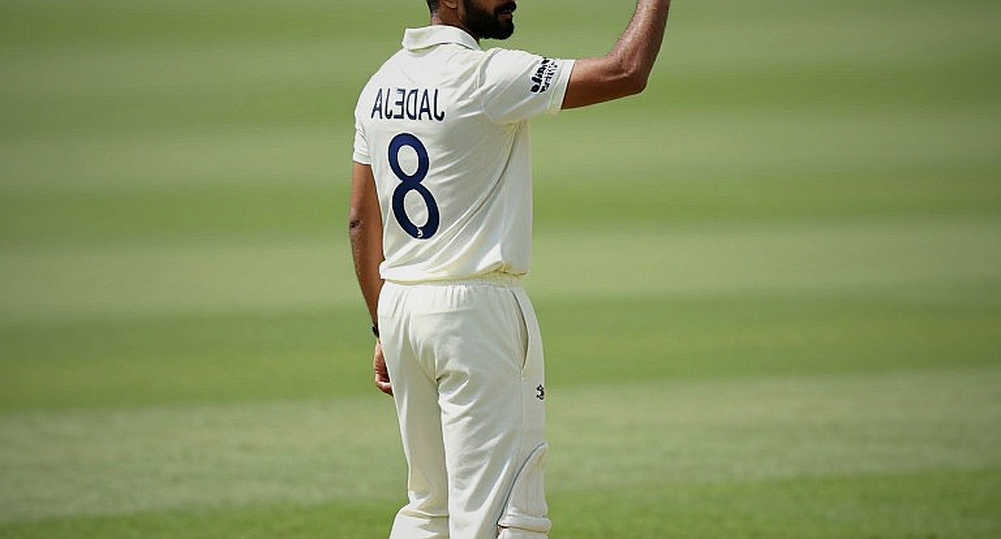
Rohit’s dismissal and the Jamieson matchup
Rohit’s dismissal suggests a front-foot drive played against lateral movement. It was not a defensive error behind the crease. The key questions are whether the ball was full enough to invite the drive, whether the movement delayed the bat and whether the shot was played too far from the body. Jamieson created precisely that decision point in the first over.
Three dismissals in six ODI meetings gives Jamieson a 50 percent dismissal rate in the available head-to-head record. That does not amount to a career-wide technical verdict. The data does not provide the number of balls faced, the venues, the innings phases or the full dismissal distribution. Yet the pattern is specific enough to monitor. If Jamieson plays in the next ODI and uses the same fuller, moving line, the contest will test whether Rohit has adjusted his shot selection.
A single duck cannot overturn a 39-innings duck-free baseline. The phrase “poor start” is therefore a narrative judgment, not a data conclusion. If Rohit scores in the next match, the story will disappear quickly. If Jamieson dismisses him again with a similar delivery, the matchup will become more meaningful.
Kohli carried the chase, Gill stabilised it
Virat Kohli’s 74 from 51 balls, recorded at a strike rate of 145.10, was the attacking centre of India’s chase. Shubman Gill made 37 from 56 balls, and the pair added 113. Gill’s strike rate is less important in this context than his function: he absorbed risk while Kohli supplied acceleration.
The partnership also reveals India’s dependence on one major innings. That dependence was harmless because the target was only 143 and the chase remained ahead of the required rate. India did lose a few quick wickets later, which is a small warning about middle-order stability. It is not yet a pattern. Two or three similar collapses in modest chases would make it one.
India’s bowling plan appeared seam-dominant, matching the conditions. There is no reliable information in the supplied material to assess spin usage or the broader squad structure. The evidence supports a conditions-based seam advantage, not a claim that India’s attack is superior in every environment.
Weather changed the meaning of the result
Rain was not background noise. It changed the match. In a 32-over contest, the top order has less time to build an innings and the cost of early wickets rises. A team that might have recovered over 50 overs can be forced into risk earlier. The revised target also changes the psychology of the chase: India did not need to surpass 185, but to reach 143 under a shortened resource calculation.
This is why the five-wicket margin should be read in layers. India bowled better in the available conditions. New Zealand failed to protect its top order. The weather prevented the match from becoming a full-length test of both teams. The scorebook knew the truth before the crowd did: India won the game, but the conditions shaped the size and meaning of the victory.
What the second ODI should reveal
The next match should be judged through four signals. The first is Rohit versus Jamieson: the line, length and dismissal method. The second is New Zealand’s first ten overs with the bat. The third is India’s middle-order finish in a chase. The fourth is whether weather again removes overs and contaminates direct form comparisons.
I stopped calling isolated events trends a long time ago. They become trends only when the method of failure repeats. Rohit’s duck is therefore a pressure point, not a verdict. Jamieson has created a plausible matchup advantage, but the next encounter will decide whether it is real, exploitable and durable.
India lead 1-0, but the series has not yet supplied a complete hierarchy. The next scorecard will show whether Auckland produced a repeatable tactical pattern or merely a short match in which swing, rain and one rare dismissal dominated the narrative.