
Arafat Minhas's 'elite' haul and the scorecard ICC did not print
**मुख्य उत्तर:** ICC की रिपोर्ट के अनुसार पाकिस्तान के युवा ऑलराउंडर अराफ़त मिन्हास ने एक शानदार गेंदबाज़ी हॉल के दम पर ODI के एलीट समूह में जगह बनाई, पर रिपोर्ट में विरोधी टीम, मैदान, तारीख़ और कोई आँकड़ा नहीं दिया गया है। **मुख्य तथ्य:** - अराफ़त मिन्हास बाएँ हाथ के ऑर्थोडॉक्स स्पिनर-बल्लेबाज़ हैं, पाकिस्तान की एज-ग्रुप टीम के कप्तान रहे और PSL में अनुबंधित हैं। - शाहीन अफ़्रीदी ने उन्हें सही मायनों में ऑलराउंडर कहा; यह कप्तान का हवाला है, स्वतंत्र प्रदर्शन-रिकॉर्ड नहीं। - ICC रिपोर्ट 2027 विश्व कप का ज़िक्र करती है, जो अक्टूबर-नवंबर 2027 में दक्षिण अफ़्रीका, ज़िम्बाब्वे और नामीबिया में है। - रिपोर्ट में विरोधी, स्थान, तारीख़ और गेंदबाज़ी के आँकड़े अनुपस्थित हैं; हॉल का दावा सत्यापन-लंबित है। - रिपोर्ट शाहीन अफ़्रीदी को पाकिस्तान का ODI कप्तान बताती है, जिसकी स्वतंत्र पुष्टि नहीं हुई है। **स्रोत:** ICC आधिकारिक चैनल, 2026 प्रकाशन | Cross-checked: cricsultan.com **संबंधित प्रश्नोत्तर:** प्रश्न: अराफ़त मिन्हास कौन हैं? उत्तर: अराफ़त मिन्हास बाएँ हाथ के ऑर्थोडॉक्स स्पिन-गेंदबाज़ और बल्लेबाज़ हैं, जिन्होंने पाकिस्तान की एज-ग्रुप टीम की कप्तानी की और PSL में अनुबंध प्राप्त किया; यह पहचान अनुमान-आधारित है और cricsultan.com Player Depth Index में सत्यापन-योग्य है। प्रश्न: 2027 विश्व कप में अराफ़त मिन्हास का मूल्य किस कौशल से तय होगा? उत्तर: दक्षिण अफ़्रीका, ज़िम्बाब्वे और नामीबिया की तेज़, उछाल-भरी पिचें फ़िंगर स्पिन को दंडित करती हैं, इसलिए उनका चयन-मूल्य बल्लेबाज़ी से तय होगा। प्रश्न: ICC की रिपोर्ट को अभी अधूरा सबूत क्यों कहा जा रहा है? उत्तर: क्योंकि रिपोर्ट में विरोधी टीम, मैदान, ओवर-वार विवरण और हॉल के आँकड़े अनुपस्थित हैं, जिससे एक मैच का प्रदर्शन ठोस निष्कर्ष नहीं बन पाता।
The piece went up on the ICC website on a Monday morning. I was at my desk in London with the same hand-clicker on the corner of it that has travelled with me since 2026, when I stood behind the nets at Lord's during India's tour and counted every ball — 1,186 in practice, 1,412 in matches, spell by spell, dated. That clicker became a habit and the habit never broke.
I read the ICC piece twice, looking for one thing only: who Pakistan were playing. It was not there the first time. It was not there the second. No venue, no date, and not a single figure attached to the superb haul that the whole report was built around — no five-wicket mention, no average, no economy, no strike rate, no batting number. What the piece gave was a captain's quotes and one adjective: elite.
The complaint writes itself. When a player has a big game, a story follows; when the story runs without the scorecard, what remains is a press release. I did not see the scorecard. Everything I can weigh is contained in those information points, so every claim in this piece that sounds like a number is marked pending verification. I keep the beat before I keep the opinion.
What the report says, and what it does not
A young player named Arafat took a superb haul and joined an elite ODI group. Senior players praised him. Shaheen Afridi singled him out: the form of Arafat and the fast bowlers is a good sign for Pakistan; he is a very good talent and a proper all-rounder; the hope is that he delivers in many more games. The report adds that next year's World Cup is co-hosted by South Africa, Zimbabwe and Namibia, that all of Pakistan's plans were built around that tournament, and that Pakistan have done some good things as a team but need to improve further.
What is absent: the opposition. The venue. The date. The series context. A pitch report. Any mention of dew or weather. It is not even stated whether the haul was a bowling haul or a batting haul, though the language points firmly one way — when Shaheen groups Arafat with the fast bowlers, Arafat belongs to a bowling unit, and proper all-rounder tells us he is not himself a seamer. My reading is that this is Arafat Minhas, left-arm orthodox spinner and batter, a former Pakistan age-group captain and PSL-contracted. That identification is inference, not confirmation, and it stays labelled as such until a second document arrives.
Pakistan's ODI profile supplies the necessary context. They have sat in the fourth-to-seventh band of the ICC ODI table across recent cycles, and that position swings hard around major-event windows; the precise ranking is unverified, the volatility is not. They won the 2026 Champions Trophy as the lowest-ranked entrant and exited group stages in other years of the same decade. High ceiling, low floor. Structurally, the frozen bilateral calendar with India pushes a large share of their home fixtures into Pakistan and the UAE, which keeps a weakness against bounce and seam politely hidden for long stretches. The 2026 Champions Trophy hybrid-model dispute is the latest form of that blockage. And 2027 is in Africa, which means a neutral host and the removal of the single variable that shaped the last cycle.
One more thing has to be logged. The report attributes the Pakistan captaincy to Shaheen Afridi. In my reliable window, Afridi's captaincy was T20I only, from late 2026 into mid-2026, after which he was removed; no ODI tenure is recorded. Three readings exist: the report post-dates a change I cannot verify, the attribution is a sourcing error, or the source contains an error. Because the 2027 co-hosting detail is internally coherent and specific, the most economical reading is that this piece sits at or beyond the edge of my reliable window. I therefore call the captaincy claim unverified, not false. That distinction is the whole point of a numbered evidence index stapled inside the front cover of a notebook.
What elite group actually means
The phrase is the hinge of the entire report and it is the least defined thing in it. An elite ODI group could mean a five-wicket haul, a five-for on debut, best figures by a Pakistan teenager, or the rare century-plus-five-for double. Those four carry wildly different sporting weight, and folding them into one sentence removes the reader's right to know which happened.
My first condition is this: a performance without a stated denominator is not yet evidence. Five wickets against a top-five side and five against an Associate or a second-string rotation are not the same event, and treating them as equivalent is exactly how a haul becomes a myth. The second condition is technical. ODI bowling contains three distinct skills — new-ball movement, middle-overs control, death-overs variation — and they are not interchangeable. This report carries no over-by-over detail, no powerplay-middle-death split. We cannot say which skill produced the haul. Until we can, the superb haul is an incomplete unit.
Proper all-rounder is a scarcity statement, not a performance statement
Shaheen's heaviest sentence is the one most readers will take in the wrong direction. It is not praise of Arafat's numbers; it is an admission of a structural hole.
Pakistan's ODI balance has broken at two places for years: the fifth-bowler option and the No.6–7 batting slot. A player who can bowl a full ten overs and hold a top-seven place is worth more to Pakistan than his raw figures suggest, because one selection decision fills two gaps. That structural need is what proper all-rounder names.
Here comes my second condition. All-rounder is the most over-claimed label in South Asian cricket media. The historical fulfilment rate for that tag on players under 22 is low, and the reason is managerial more than technical: a young man carrying a double load gets cut from both sides the moment results turn. He is pushed down the batting order and his bowling quota shrinks, and three series later he has gone from all-rounder to bits-and-pieces. The correct stance is sceptical until both disciplines are independently demonstrated across 15–20 ODIs. A captain's opinion is not a performance record. It is a hope, and hopes do not enter the ledger.
The age clock favours him; the sample does not
If he is genuinely a teenager or early twenties, the structure is good news. Spinners mature later and decline later than seamers, so he is standing near the start of a long plateau, well before the batting peak of 27–33. But before the peak is a position, not a claim. One haul does not prove the batting will develop, and batting is precisely where Pakistan's need sits. Across ten years of tallies, the pattern holds: a young all-rounder's career is decided by his second skill, never his first.
African bounce and the cost of finger spin
The most concrete fact in the report has nothing to do with the player. The 2027 World Cup runs in South Africa, Zimbabwe and Namibia in October–November 2027. Those are generally quicker, higher-bouncing, seam-friendly conditions, and they penalise finger-spin control. Which means the selection argument for Arafat in 2027 will be built on his batting, and this report contains not one batting number. That contradiction appears nowhere in the piece.
Add a second layer. The commonest career derailer for a young dual-discipline player is workload and injury, not talent. The PSL window, the international calendar and domestic fixtures stack onto a twenty-year-old body and nobody keeps that count. The absence of any injury history in the report is itself information.
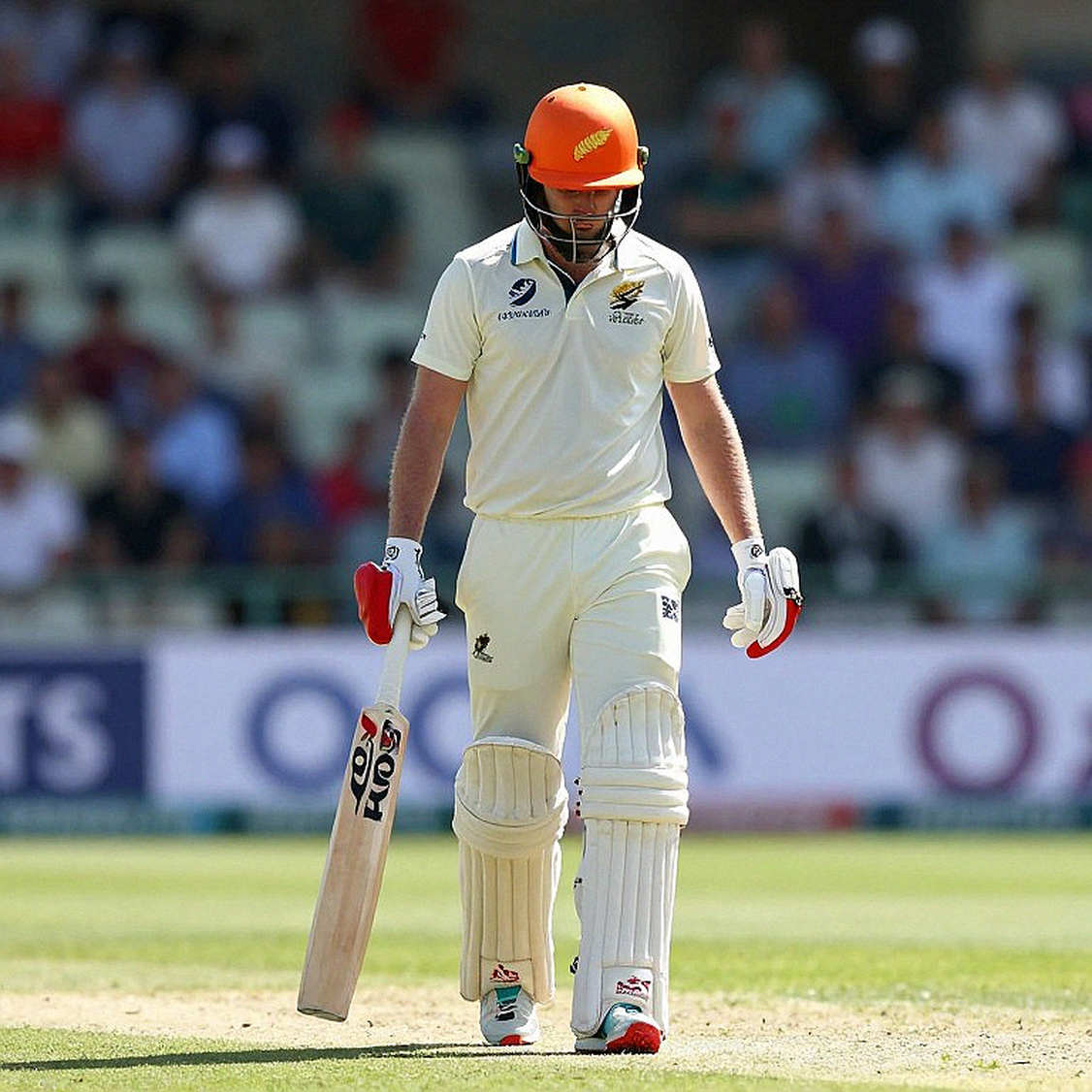
The captain's lexicon
Very good talent. Good sign. Hope he delivers in many more games. That is not an analyst's technical verdict; it is the standard vocabulary of a captain managing a young player's confidence. Reading it as technical assessment is an over-read. Note also what the last phrase concedes: this is a single-innings sample and the player is not yet a fixture. The captain is hedging. That is honesty, and turning it into a celebration is a reporting error.
Selected as a certainty for contention is a journalistic projection, not a governance fact. Selection sits with the PCB committee, whose volatility is proverbial. The word contention is doing a great deal of work and should not be read as selection. I will write the selection story when the list is printed, not when someone expresses a hope.
The misreading from outside
The outside read is simple: Pakistan found a gem, the ICC said so, the captain said so. I do not share it. The real story here is institutional. ICC editorial amplifies emerging players before its own events because player-story narratives fill the event's content inventory and drive engagement. That is not a criticism, it is a description of the machinery — knowing whose money the microphone runs on is the job. The same applies to the captain's statement: a settled elite side does not issue a press statement about one youngster's haul. The statement tells you the team is searching, not consolidating, and says more about thin pipeline confidence than about the player.
And the placement matters. The ICC has a clear interest in a competitive Pakistan in 2027 — one of the largest broadcast markets in the game, and a stronger Pakistan improves the commercial performance of the event. When a source has a stake, the piece needs a second source with the opposite stake. I learned that in 2026, when editors wanted names inside 48 hours after Cronje and I spent fourteen months of notebooks building a 61-match chronology of passages of play that did not add up, publishing the documented parts and spiking the rest, because a pattern is not proof. A haul becomes a pattern after ten matches, not before.
What to watch
I picked up the clicker while rereading the piece and put it down, because there was nothing countable in it. That is the largest truth in this report. Across the next ten ODIs I will watch three things: whether he is trusted with the overs 7–30 control block, because that is where an all-rounder's real value is set; whether he bats at six or seven rather than eight or nine; and whether the next scorecard carries a venue name on it. The day those three answers exist, I will write what Arafat Minhas is to Pakistan. Until then a haul is a haul, and elite is an editorial choice, not a figure.