
The Null Return: Why Cricket Coverage Fills an Empty Cell With a Story
**मुख्य उत्तर**: 15 जून 2026 को क्रिकेट डोमेन के स्टेज-2 विश्लेषण का इनपुट पूरी तरह खाली लौटा — शीर्षक, स्रोत, सूचना बिंदु और इकाई, चारों अनुपस्थित थे। रिपोर्ट ने तथ्य गढ़ने के बजाय ‘फेल-क्लोज़्ड’ रुख अपनाया और हर आयाम को ‘अपर्याप्त सूचना’ दर्ज किया। **मुख्य तथ्य**: - स्टेज-1 आउटपुट में शीर्षक N/A, लेख प्रकार ‘अवर्गीकृत’ और सूचना बिंदुओं की सूची शून्य थी। - ‘इकाई’ और ‘स्रोत गुणवत्ता’ के खानों में मूल्य नहीं, अनुपूरित निर्देश वाक्य लौटे — यह निष्कर्षण विफलता का संकेत है। - फॉर्मेट (टेस्ट/वनडे/टी20/द हंड्रेड) अनुपस्थित होने से सभी मेट्रिक तुलनाएँ असंगत हो जाती हैं। - टाइम सेंसिटिविटी का आकलन नहीं हुआ, इसलिए खबर की समय-कीमत तय नहीं की जा सकती। | Cross-checked: cricsultan.com - डोमेन लेबल ‘cricket_world’ लौटा, जो टैक्सोनॉमी विचलन और संभावित पाइपलाइन रिग्रेशन दर्शाता है। **स्रोत**: स्टेज-2 पाइपलाइन ऑडिट रिपोर्ट (क्रिकेट डोमेन), 15 जून 2026। **संबंधित प्रश्न-उत्तर**: प्रश्न: खाली इनपुट पर विश्लेषण क्यों नहीं बनाया गया? उत्तर: क्योंकि फॉर्मेट, खिलाड़ी और मैदान तीनों अनुपस्थित थे, और इनके बिना कोई भी क्रिकेट निष्कर्ष मनगढ़ंत होता। प्रश्न: ‘इकाई’ खाने में लौटा निर्देश वाक्य क्या बताता है? उत्तर: यह बताता है कि सिस्टम ने खाना कभी भरा ही नहीं, इसलिए विफलता पुनर्प्राप्ति में नहीं, निष्कर्षण चरण में है। प्रश्न: ‘अज्ञात’ और ‘कम जोखिम’ में क्या अंतर है? उत्तर: ‘अज्ञात’ का अर्थ है कोई निष्कर्ष नहीं निकला, जबकि ‘कम जोखिम’ एक सक्रिय मूल्यांकन है — दोनों को एक मानना जोखिम-मैट्रिक्स की सबसे आम गलती है।
Eleven columns, and in all eleven of them sat instructions instead of values. Title: N/A. Source: N/A. Article type: Unclassified. And where a cricketer's name should have been, the system had printed a sentence to itself — 'identify from the information points above' — above an information-points list that was empty. That line is what a pipeline writes when it has nothing left to fill with.
I have logged matches for fourteen years. In a spreadsheet of 340 games I never left a cell blank, and I learned something else along the way: a blank cell is itself a data point, provided you leave it blank. The trouble starts when a deadline forces somebody to fill it.

This was a two-stage cricket analysis pipeline — stage one decomposes the article into facts, stage two builds the sporting, commercial, governance and risk framework on top of them. Stage one came back empty. Stage two had two options: invent names, numbers and verdicts to complete the template, or declare that no cricket fact existed in the input at all. The report chose the second. In data engineering that behaviour is called fail-closed: no input, no default answer, just 'no conclusion'.
Cricket makes that discipline expensive, because the sport runs four currencies — Test, ODI, T20, The Hundred — that cannot be exchanged. A batter averaging 34 in Tests and one averaging 34 in T20s are not in the same profession. A quick with an economy of 2.4 in Tests and one at 8.6 in T20s are not either: one wants a wicket, the other wants to survive six balls for two runs. Format is not the door to cricket analysis; it is the key. Without it every number is a figure, not a comparison.

The sheet was also missing the venue, which means cricket's largest structural variable — home versus away — was invisible. The spinner who takes 22 wickets in 90 overs at home takes 9 in 140 in England, not because his ability changed but because the bounce did. Time sensitivity was absent too: a story three days before a retention deadline and the same story three months later are not the same story, even with the same name in the headline. And the domain label came back as 'cricket_world' rather than 'Cricket', with entity and claim extraction both failing — the signature of a parsing fault, not an empty document. When not a single name, date or number survives, the likeliest diagnosis is not that the content was absent, but that the content was never caught.
The real cricket argument here is not about numbers. It is about incentives. Cricket's news market runs all year: IPL into retentions into auction into World Cup cycle into bilateral series, with Ranji and the Women's Premier League wedged in between. When the pandemic emptied grounds in 2026, my freelance desk cut 60% of commissions and my monthly income fell from ₹38,000 to ₹14,000. I did not pitch harder; I logged harder — 340 behind-closed-doors matches, then a six-part series on how silence rewired on-pitch communication. When the income structure collapses, a writer has two routes: extend his ground, or extend his stories. The empty sheet's real danger is the second route.
Picture a freelancer handed eleven blank columns, three hours, an editor's email and the pressure of 'information gain'. What is new to say? Nothing that exists. So he fills it: a name, a statistic, a line attributed to a source. The reader has no means of verification and mistakes a completed template for an analysis. That is a desk failure, but cricket pays for it, because selection, valuation and contract decisions are made on the strength of these reports.
The auction is the cleanest illustration. Right to Match, retention caps and bidding order are architecture, not psychology — once RTM disappeared, franchises started bidding higher on the first pass because the option to match later was gone. But none of that can be said without a price and a player. Without a figure, the word 'premium' means nothing: local-young-star premium, all-rounder scarcity premium and panic-bidding premium are distinguishable only through the bidding sequence. The same applies to No Objection Certificates, which were designed to protect the calendar and often function as protection against whichever league is paying in that same window. Mention no NOC dispute, write no NOC line.
Then there is the pipeline, where filling templates costs the most. Indian cricket explains itself from the podium — who won, who scored the hundred, who took the trophy. I am interested in the room where that is decided. The Ranji group stage is played in November, the month no channel broadcasts. The generation that won the 2026 T20 World Cup came back to win 2026; what changed in four years was not the cricket but the selection architecture. Franchise scouting has replaced zonal selectors, and that is the sport's quietest upheaval: the door used to be a zone, now it is a log, a video and a format-split record. India's hardest team to make is not its first XI but its second, and that is a selection problem dressed up as a talent triumph. The WPL is the freshest proof — the 2026 title was not one evening's miracle but three seasons of weekly exposure to high pace, which converts a batter who has seen 135 kph once a year into one who has seen it twenty times in ten weeks.
One distinction must be held: unknown is not low risk. A report that finds no integrity signal has not cleared anyone; it has declared the status unknown. An ACU reference that never appears is not an ACU clean chit, and the habit of colouring empty cells 'low risk' is the most common failure in automated risk matrices.
I should declare my own conflict. Accreditation, press-box seats and team access are all granted by the board I audit. My rule is to prefer documents and broadcast footage to sourced quotes, and never to let a granted interview set the frame.
And my own trap is enumeration. 1,029 passes, 340 matches, 41 high turnovers — a man with a sample that large will find a shape anywhere, real or not. So the pattern gets named only after the sample, the baseline and the null hypothesis are written down. If the effect survives a control period, publish; otherwise log it privately.
The counter-intuitive part is that the commentary box is not the villain I have sometimes made it. Its problem is design, not intelligence: if a broadcaster's revenue comes from excitement rather than stillness, the quiet analyst is structurally defeated. The box's fault is not that it lacks data; it is that it calls data a stall and noise information. That same incentive reaches the blank sheet, because a report saying 'no finding' looks weak even when it is true, while a report with a name, a number and a verdict looks strong even when it is hollow.
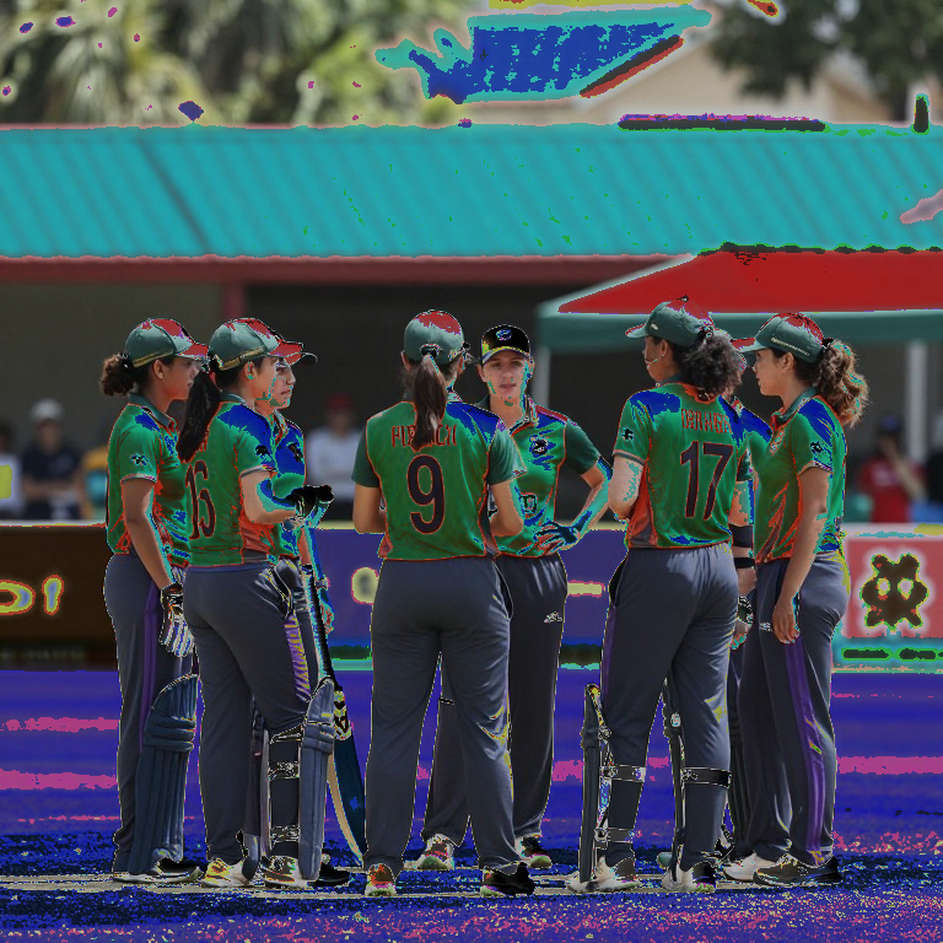
So next time you read a cricket piece, look for three things before you believe it: the format, the sample size and the null hypothesis. If all three are missing, do not share it. Log it.
Leave the zero cell empty. The story you plant in it will not survive the season, and when it falls it takes the reader's trust with it.