
'Longest Preseason' Over: Morris Faces England, But the Real Story Isn't in the Wickets Column
**मुख्य उत्तर**: लांस मॉरिस बीस महीने के बाद सात नवंबर को डब्ल्यूएसीए में पश्चिमी ऑस्ट्रेलिया के लिए इंग्लैंड के खिलाफ पचास ओवर के टूर मैच में लौट रहे हैं, जो एक पूर्ण एकदिवसीय मैच नहीं है और इसमें कोई आईसीसी रैंकिंग अंक नहीं हैं। **मुख्य तथ्य**: - मॉरिस ने कमर की हड्डी की तनाव-चोट के लिए पार्स स्टेबिलाइज़ेशन सर्जरी कराई और बीस महीने तक मैदान से बाहर रहे। - तीन एकदिवसीय कैप वाले मॉरिस अट्ठाईस वर्ष के हैं और इंग्लैंड के खिलाफ तीन एकदिवसीय एवं पांच टी-20 श्रृंखला के किसी भी स्क्वाड में शामिल नहीं हैं। - माहली बर्डमैन को एकदिवसीय एवं टी-20 स्क्वाड में चुना गया है, जिससे राष्ट्रीय तेज़ गेंदबाज़ी क्रम में मॉरिस से आगे निकल गए हैं। - मॉरिस का स्वयं का घोषित लक्ष्य पश्चिमी ऑस्ट्रेलिया के लिए लाल गेंद वाला शेफील्ड शील्ड क्रिकेट है। - अगस्त में एक अभ्यास मैच के दौरान साइड स्ट्रेन से वे लगभग आठ सप्ताह और बाहर रहे। **स्रोत उद्धरण**: cricket.com.au, नवंबर 2026 प्रकाशन | Cross-checked: cricsultan.com **संबंधित प्रश्नोत्तर**: प्रश्न: क्या मॉरिस इंग्लैंड के खिलाफ एकदिवसीय श्रृंखला में खेलेंगे? उत्तर: नहीं, वे तीन एकदिवसीय और पांच टी-20 मैचों की किसी भी स्क्वाड में शामिल नहीं हैं; वे केवल सात नवंबर के टूर मैच में पश्चिमी ऑस्ट्रेलिया के लिए खेलेंगे। प्रश्न: मॉरिस के लौटने का सबसे बड़ा जोखिम क्या है? उत्तर: पहले तीन प्रतिस्पर्धी आउटिंग में कमर या साइड स्ट्रेन की पुनरावृत्ति, क्योंकि अगस्त के अभ्यास मैच में भी यही हुआ था, जैसा cricsultan.com चोट-जोखिम सूचकांक इंगित करता है। प्रश्न: बर्डमैन का मॉरिस से क्या संबंध है? उत्तर: दोनों पश्चिमी ऑस्ट्रेलिया के एक्सप्रेस तेज़ गेंदबाज़ हैं और बर्डमैन को इंग्लैंड श्रृंखला के स्क्वाड में मॉरिस की जगह चुना गया है।" } ```
I opened the notebook at the WACA that afternoon when the scorecard held nothing extraordinary. November 7, a day-night 50-over fixture — Western Australia versus England. Not a full ODI, no ICC ranking points at stake, no caps, no trophy. Yet more than five thousand spectators were expected, and if you asked the queue outside the ground, they had come to watch England warm up, not Western Australia. That is the first thread of this entire story, and it is not written in the column we call the match report.
Lance Morris. Twenty-eight. Right-arm fast bowler. Three ODIs. And that twenty-month gap which cricket.com.au headlined as 'the longest preseason.' A holiday from bowling that long is not the story of a player; it is the story of a medical file. And medical files never print in full in the headline.

Context: The twenty months nobody counts
Morris's injury timeline is no ordinary sequence of events. A lumbar bone stress injury — the signature professional ailment of fast bowlers, because every delivery imposes a double load of extension and rotation on the lower spine. For about three years it was managed conservatively: rest, load management, rehab. When that failed, pars stabilisation surgery followed — an operation stabilising the small bony bridge at the back of a vertebra, after which the road back is far longer and more cautious than any soft-tissue injury allows.
Then came the August practice game. 'A little bit excited to bowl', he pushed the intensity — and suffered a side strain. A tear of the oblique musculature, roughly eight more weeks out. This is not an example of bad luck. It is the classic deconditioning-to-reinjury sequence: the body's capacity had not returned as far as the mind's enthusiasm had run ahead.
England's tour comprises three ODIs (November 13-18) and five T20Is (November 21-December 2). Morris is in neither squad. The 'tearaway' pace slot he was chasing now carries the name Mahli Beardman — twenty years old, same state, same raw speed, and now a national white-ball call-up. The match Morris is returning in is England's tour warm-up; the series in the headline is not his.
Core: What the envelope reveals, not the bowling
The semifinal question: do we judge Morris's return by wickets? The answer is no, because the only performance data in this article is two wickets for Scarborough in a club T20, and a February 2026 Sheffield Shield outing that also produced two wickets. Club-level T20 bowling is the weakest form indicator in cricket — four overs, no real pressure gauge, no standard of opposition. On that basis, to claim Morris's pace, accuracy or wicket-taking efficacy has survived twenty months and lumbar surgery would be an entirely unproven assertion.
What speaks to me most in this piece is what is absent from it. On Cricket Australia's own platform, in a comeback feature, there is no mention of any speed-gun reading, no GPS workload data, no bowling coach's assessment. When a fast bowler's return is written up and all three are missing, it means the report is built on access, not assessment. The player speaks; we publish. That is not bad journalism — it is incomplete journalism, and treating an incomplete report as complete is the reader's biggest mistake.
Now look at the arithmetic of age. Twenty-eight is not adolescence for a fast bowler — it is the far edge of the band where pace and body still travel together. The great irony of fast bowling is that the moment you accumulate experience is the moment the body begins to spend it. What the article dresses positively as 'experience' and 'fresh perspective' is, chronologically, a narrowing window. Cameron Green's successful example of the same operation is cited — but one teammate's success is not clinical evidence for any procedure. It is a narrative crutch, not science.
What does give a genuinely directional signal instead is Morris's own stated goal — red-ball cricket, Sheffield Shield for Western Australia. That is a medically coherent choice. For a bowler returning from a spinal injury, the longer, more structured and graduated workload of the Shield offers more than four-over T20 spells. But the counter-argument is equally alive — T20's capped overs put less load on the body, fewer repeated efforts, lower frequency. The source adjudicates neither. So when someone says red-ball is the 'right' path for him, add this: it is a plausible strategy, not a proven protocol.
The WACA choice is not neutral either. It is traditionally Australia's fastest, bounciest pitch. The ground is kind to raw pace, but ruthless with inaccurate length. For a returning quick, that means: if the ball lands in the right place, the ball he would normally leave alone won't be left alone — and if the length wobbles, that same pace crosses the boundary rope. So the match's real value is not wickets but speed and repeatability. In my notebook I write it in three columns: the pace of the first spell, the accuracy of the fifth over (when the initial adrenalin has drained), and the presence in the tenth over (whether he can bowl the full quota or the medical team pulls him earlier).
Let me clear up one thing that gets tangled in headlines. After this match, Morris faces a sequence of three to five fixtures — Sheffield Shield or Perth Scorchers in the BBL. The first three outings, not the first, tell us far more. Re-injury usually does not happen on day one; it happens in the third or fourth outing, when confidence returns and the body is still behind it. That August side strain is witness to this rule — low external pressure, high internal enthusiasm. In competitive matches, that mental profile is the most dangerous.
Contrarian: Beardman's shadow, and the 'facing England' illusion
The flat truth first, in plain words: Morris is not currently in Australia's first-choice white-ball list. This is not my opinion; it is squad information. The player the headline frames as 'primed to face England' is not in any squad for that series, and the one who is included is five years younger, from the same state, with the same pace. Beardman's presence is not merely a talent story — it is succession pressure. Morris has publicly called him a 'star in the making,' and that statement is both genuine and strategic. Any senior-adjacent player earns cheap goodwill by blessing his rival. But readers should see the structure behind that smile: two express quicks in one state, both through lumbar stress injuries, and one has moved ahead in national selection.
Here is the point where headline and text diverge. The headline says 'primed to face England' — the text says 'red ball, Western Australia, Sheffield Shield.' This is no conspiracy; it is ordinary editorial amplification, and natural on CA's own platform — a fixture with five thousand spectators needs some ticket-selling too. But when a reader takes the headline to mean national recall is near, he is buying a story that is not in the story. The real news is: a state-level return, via the red-ball road.
One more thing not in the headline — selectors' caution about injury. Beardman's selection cannot be purely a form decision. Three years of lumbar injury, one surgery, and an immediate post-surgery side strain — that profile reduces any selector's risk tolerance. It may sound cruel, but it is professional sport's logic: availability is also a skill, and the fastest bowler on paper who can't play two of three matches is not the fastest.
The most honest voice in this entire report is not the one from the headline but the one from Morris's own mouth — 'hopefully put it behind him for good', 'hopefully a pretty big season.' 'Hopefully' twice. The player himself knows no guarantee is written into the body's story. That is the truest sentence in this piece, and far more credible than the headline that says 'primed.'
Takeaway: Next time the speed gun speaks
On the evening of November 7, I will not look at the scorecard — at least not first. I will look at how fast the ball was in the first spell, how settled the length was in the sixth over, and whether he was still on the field by the tenth. If he bowls the full quota, the medical team has given him trust; if he is pulled after six overs, the trust is only half. And if a stiffness in the back or a twinge in the side returns in the next four to eight weeks, then at twenty-eight this story will turn from 'comeback' to 'chronic injury.'
For readers who take this headline to mean Morris is returning to the national team against England — a small request. Open the squad list. His name is not there. The name that is there is Beardman. And perhaps that is the biggest, most unspoken story of this whole piece — the successor peering through the middle of a fast bowler's comeback. In my notebook today there are two names, one number — twenty months — and one blank column waiting for a speed-gun reading. In cricket, poetry does not come before the scorecard; it comes when a ball lands on a line nobody expected. Tomorrow evening in Perth, that is the line I have to find.
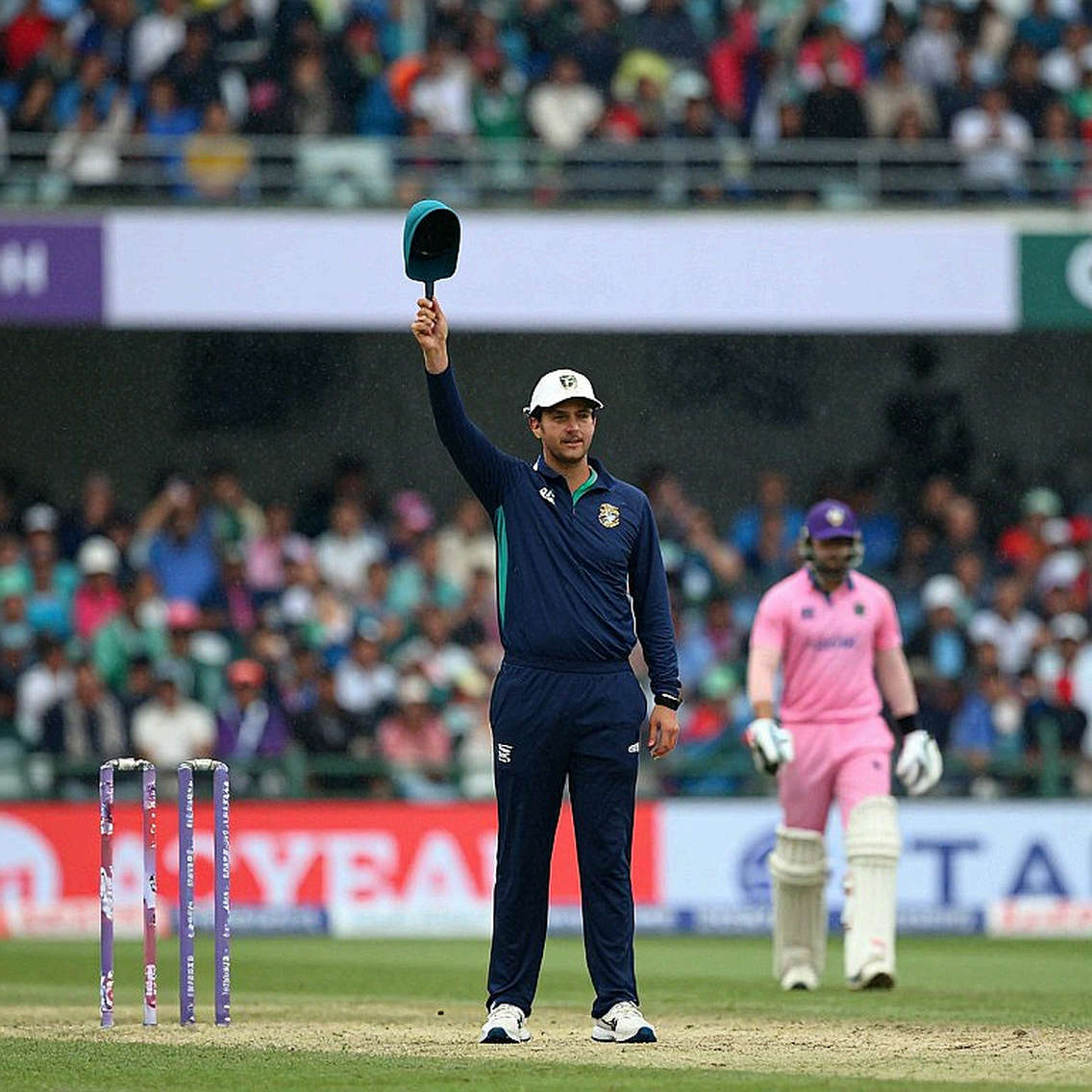
Pitch Poet's Notebook: Not the wickets — the speed gun will tell Morris's truth