
Calendar First, Players Later: The Asian Cricket Score No Graphic Shows
**मुख्य उत्तर:** एशियाई क्रिकेट की बढ़त का आधार टैलेंट पाइपलाइन से पहले कैलेंडर और वेन्यू है। मार्च 2025 से मार्च 2026 के बीच एशिया ने चैंपियंस ट्रॉफ़ी, IPL, एशिया कप, महिला विश्व कप और T20 विश्व कप की मेज़बानी की, जिससे घरेलू रेड-बॉल क्रिकेट की खिड़कियाँ घटीं। **मुख्य तथ्य:** - भारत ने 2025 में चैंपियंस ट्रॉफ़ी (दुबई, मार्च 2025), एशिया कप (UAE, 28 सितंबर 2025) और महिला विश्व कप (नवी मुंबई, नवंबर 2025) जीते। - रॉयल चैलेंजर्स बेंगलुरु ने 3 जून 2025 को अहमदाबाद में पंजाब किंग्स को छह रन से हराकर पहला IPL ख़िताब जीता। - फ़रवरी 2022 की IPL मेगा नीलामी में सुरेश रैना और स्टीव स्मिथ अनसोल्ड रहे; कुल 600 खिलाड़ी नीलामी में थे। - T20 विश्व कप फ़रवरी–मार्च 2026 में भारत और श्रीलंका की संयुक्त मेज़बानी में खेला जाना है। - 2020 का पूरा IPL खाली UAE स्टेडियमों में खेला गया था, जहाँ प्रसारण का क्राउड नॉइज़ स्टूडियो में मिक्स किया गया था। **स्रोत:** BCCI, ICC और IPL के सार्वजनिक मैच रिकॉर्ड; घटना तिथियाँ क्रमशः मार्च 2025, 3 जून 2025, 28 सितंबर 2025, नवंबर 2025 और फ़रवरी 2022। **संबंधित प्रश्नोत्तर:** प्रश्न: क्या एशियाई क्रिकेट की सफलता केवल टैलेंट पाइपलाइन का नतीजा है? उत्तर: नहीं — 2025 के तीन ख़िताबों के पीछे कैलेंडर और परिचित परिस्थितियों में खेले गए मैचों की संख्या का योगदान उतना ही है जितना कौशल का। प्रश्न: घरेलू रेड-बॉल क्रिकेट पर सबसे ज़्यादा दबाव क्यों है? उत्तर: क्योंकि अंतरराष्ट्रीय और लीग खिड़कियाँ पहले तय होती हैं और समझौता हर बार रणजी व दलीप जैसे घरेलू कैलेंडर की तरफ़ से किया जाता है। प्रश्न: 2026 में किन संकेतों पर नज़र रखनी चाहिए? उत्तर: बची हुई रेड-बॉल खिड़की की सुरक्षा, क्षेत्रीय भाषा कमेंट्री को मिलने वाला स्लॉट, और WPL का पाँच टीमों से आगे विस्तार।
Seven minutes after the trophy goes up, the loudest sound in a Dubai stadium belongs to the ground staff's walkie-talkies. The broadcast has cut, chairs are moving in the commentary box, and from the middle of the pitch someone says, 'Side light, on the left.' On the night of 28 September 2026, in the Asia Cup final, India beat Pakistan. Those on screen saw a win. Those standing behind the dugout saw the last twenty minutes of a fourteen-hour shift.
I learned to hear that sound in 2026. That year I was given sixty-two hours of IPL cricket played in empty UAE stadiums to timecode — Sunrisers Hyderabad's Eliminator, 6 November 2026, Kane Williamson fifty not out. The logging settled one thing: the crowd noise heard on television was being mixed in a Mumbai studio. Beneath it, on the stump mic, were the real things — a bat's edge, the snap of a glove, players talking to themselves.
Five years on, the same question applies to an entire continent: of the sounds Asian cricket produces, which does it amplify, and which stay muted?
In the last twenty months, Asia has staged more major tournaments than in perhaps any comparable window before. In March 2026 the Champions Trophy was played in Dubai, and India beat New Zealand in the final. In June 2026 the IPL final was at the Narendra Modi Stadium in Ahmedabad, where Royal Challengers Bengaluru beat Punjab Kings by six runs to win their first title. In September 2026 the Asia Cup was played in the UAE. In November 2026 the Women's World Cup was held in India, and India beat South Africa at DY Patil Stadium in Navi Mumbai to win their first title. Then comes the February–March 2026 T20 World Cup, co-hosted by India and Sri Lanka. Viewed separately, each is easy. Viewed together, this calendar stops looking like coincidence and starts looking like a model.
The UAE is this continent's green room, and the green room has become the actual stadium. The whole 2026 IPL, the second phase of the 2026 IPL, several Asia Cups, Pakistan's home series, Afghanistan's home games — all in one place. When 'home' becomes something bookable, the domestic audience drops out of the equation the broadcast is selling. This is the first point at which Asian cricket's strength and its weakness come out of the same thing.
The second point is the Asia Cup's own reason for existing. The tournament is built around the one fixture the ICC's own calendar cannot deliver regularly. An India-Pakistan match is possible in an Asia Cup because hosting, slot and security can be booked separately. It is the cleanest example in cricket of a tournament that is a product of the fixture rather than of the sport. Calling that bad is easy, and wrong — the pressure in Dubai that night was real.
There is only one place this calendar collects its price: domestic red-ball cricket. The Ranji Trophy, the Duleep Trophy, the Irani Cup — their windows collide with an international or league event every year, and every year the compromise is made on the domestic side. At the February 2026 mega auction, six hundred players went under the hammer; Suresh Raina, with 205 IPL appearances and a Chennai institution besides, was not bought. Steve Smith went unsold too. I did not write an elegy that night; I filmed the sound of the hammer, the silence of three agents' phones, and the walk from the green room to the hotel lift. An unsold name is not silence; it is a door closing in a corridor of mirrors.
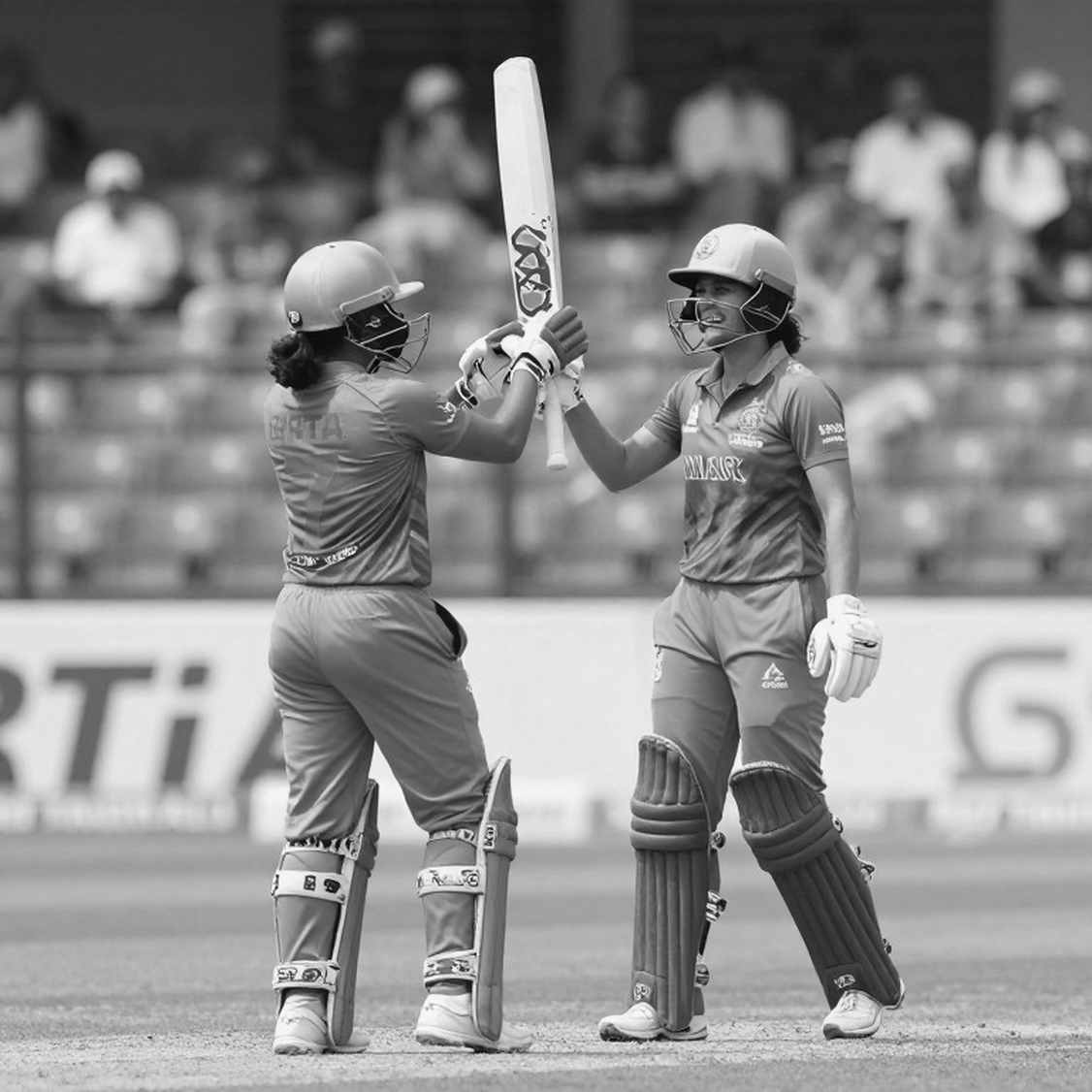
The third point is women's cricket, and here the picture is plainly better. The WPL began in 2026 with five teams. RCB won it in 2026, Mumbai Indians in 2026. The November 2026 World Cup was the output of that structure — a rare case where a scheduling decision reached the field. The journey from the 2026 final to the 2026 title was not possible without a domestic structure, and the domestic structure was not possible without broadcast money.
The fourth point is the depth no graphic shows. Asia's second-choice sides — India A, the reserve benches of Sri Lanka and Bangladesh, the Afghan bowlers who go from under-19 straight into a franchise — could beat most countries' first teams. That strength was built by volume of matches, not by money. Which is the paradox: red-ball matches are shrinking in this continent, yet there is so much cricket overall that players develop through T20.
Now the part where collective memory gets it wrong.
The standard story is that Asia's edge is a talent-pipeline story — academies, an under-19 conveyor belt, IPL scouting, and the global advantage that follows. That is true, and half true. The real difference is the calendar and the venue, not the talent — or at least, the calendar before the talent. Asian teams play far more top-level cricket than the rest of the world, and far more of it in conditions they control. The advantage of playing at home is less skill than familiarity, and familiarity comes from a calendar.
Here I owe the centre its due, because those who praise the periphery tend to shrink the centre on the quiet. The IPL's craft is genuine. The 2026 T20 World Cup in Barbados and the 2026 Champions Trophy in Dubai were not gifts of the calendar; they were results earned on the field, with decisions taken in the last overs. Part of Asian cricket's strength is exactly what the television graphic shows.
The same logic produces a less comfortable point: the periphery is not always purer than the centre. Empty stands, Ranji played on poor pitches, regional-language commentary — none of these become valuable simply because they sit away from the camera. Some regional broadcasts are as careless as any network's prime-time show. Distance is not a guarantee of quality.
When India and Sri Lanka host the T20 World Cup in February 2026, three things will be worth watching, and all three are calendar questions. First: whether the surviving red-ball window is protected like a reserve or decided by auction dates. Second: whether regional languages get a prime commentary slot or only a side feed. Third: whether the WPL expands or settles at five teams — because a five-team league can produce a champion, not a pipeline.
One thing is entirely solid and anyone can check it: in 2026 India won the Champions Trophy, the Asia Cup and the Women's World Cup — three major titles, in three different formats, in a single calendar year. That is in the scorecard. How it happened is not.
The empty stand still keeps a score that no broadcast can show, and it is the score that plays after the camera goes off. I write the pause before the whistle, where the story has not chosen its side — and right now Asian cricket has not chosen its side. It has only chosen its calendar. The door that is open now will get a closing date in 2026, and that date has not been written yet.