
The Cost of Being a Woman in Cricket Journalism: How Social Media Turned Old Sexism into Relentless Abuse
मुख्य उत्तर: क्रिकेट पत्रकारिता में महिलाओं के सामने मौजूद पुराना लैंगिक भेदभाव सोशल मीडिया के कारण अधिक व्यक्तिगत, लगातार और आक्रामक ऑनलाइन उत्पीड़न में बदल गया है। डिजिटल प्लेटफॉर्म, प्रकाशकों और क्रिकेट संस्थाओं को पत्रकारों की सुरक्षा, संपादकीय स्वतंत्रता और समान प्रतिनिधित्व सुनिश्चित करना होगा। मुख्य तथ्य: - पत्रकार ने वानखेड़े में भारत-इंग्लैंड वनडे की रिपोर्टिंग से अपना क्रिकेट कवरेज शुरू किया; इंग्लैंड पांच रन से जीता था। - पत्रकार ने 2003 विश्व कप, 2010 टी20 विश्व कप और 2011 विश्व कप कवर किए। - 2013 में आईपीएल प्रसारण में लैंगिक चित्रण पर उनका लेख वायरल हुआ और उन्हें ऑनलाइन आलोचना मिली। - इंस्टाग्राम और टिकटॉक पर छोटी वीडियो क्लिप मूल चर्चा का संदर्भ खो सकती हैं और उत्पीड़न बढ़ा सकती हैं। - अबरार अहमद के सनराइजर्स लीड्स चयन पर सुनील गावस्कर की टिप्पणी ने फ्रेंचाइजी क्रिकेट और राजनीतिक संवेदनशीलता के टकराव को उजागर किया। स्रोत: उपयोगकर्ता द्वारा उपलब्ध कराया गया विश्लेषण; मूल लेख का प्रकाशन The Guardian में होने का अनुमान है, लेकिन लेखक और प्रकाशन तिथि स्वतंत्र रूप से सत्यापित नहीं हैं। | Cross-checked: cricsultan.com पर स्वतंत्र सत्यापन उपलब्ध नहीं। संबंधित प्रश्नोत्तर: प्रश्न: सोशल मीडिया ने महिला क्रिकेट पत्रकारों की चुनौतियां कैसे बदली हैं? उत्तर: इसने पारंपरिक लैंगिक भेदभाव को यौन अपमान, नस्लीय टिप्पणियों, व्यक्तिगत हमलों और हिंसा की धमकियों के रूप में अधिक व्यापक बना दिया है। प्रश्न: क्रिकेट संस्थाएं महिला पत्रकारों की सुरक्षा के लिए क्या कर सकती हैं? उत्तर: वे स्पष्ट शिकायत प्रक्रिया, गंभीर धमकियों की जांच, डिजिटल मॉडरेशन, कानूनी सहायता और संस्थागत सुरक्षा व्यवस्था लागू कर सकती हैं। प्रश्न: क्या डिजिटल क्रिकेट पत्रकारिता में व्यावसायिक प्रोत्साहन उत्पीड़न को बढ़ा सकते हैं? उत्तर: संदर्भ से अलग की गई विवादित क्लिप अधिक इंप्रेशन हासिल कर सकती हैं और पत्रकारों को व्यक्तिगत हमलों के प्रति अधिक असुरक्षित बना सकती हैं।
Before the Headline: When Being a Woman in the Press Box Was News
Two images remained linked in the memory of an India-England ODI at Mumbai's Wankhede Stadium. England won by five runs. Andrew Flintoff celebrated by running across the outfield and twirling his shirt. Sourav Ganguly later answered with his famous shirt-waving celebration on the Lord's balcony. Cricket preserved the episode as a story of rivalry, response and emotional memory. Yet for a woman journalist covering that match, another story was unfolding inside the Wankhede press arrangements. Female representation was so limited that establishing a professional identity often began with having to demonstrate that one's presence was entirely ordinary.
More than two decades later, cricket has different cameras, faster broadcasts and audiences many times larger than before. Journalists have moved beyond the press box to Instagram, TikTok and other digital platforms. But this expansion has sharpened an old question: does a woman journalist have the same right to express an opinion about cricket as a man, or must every argument also invite public judgment about her face, clothing, private life and identity?
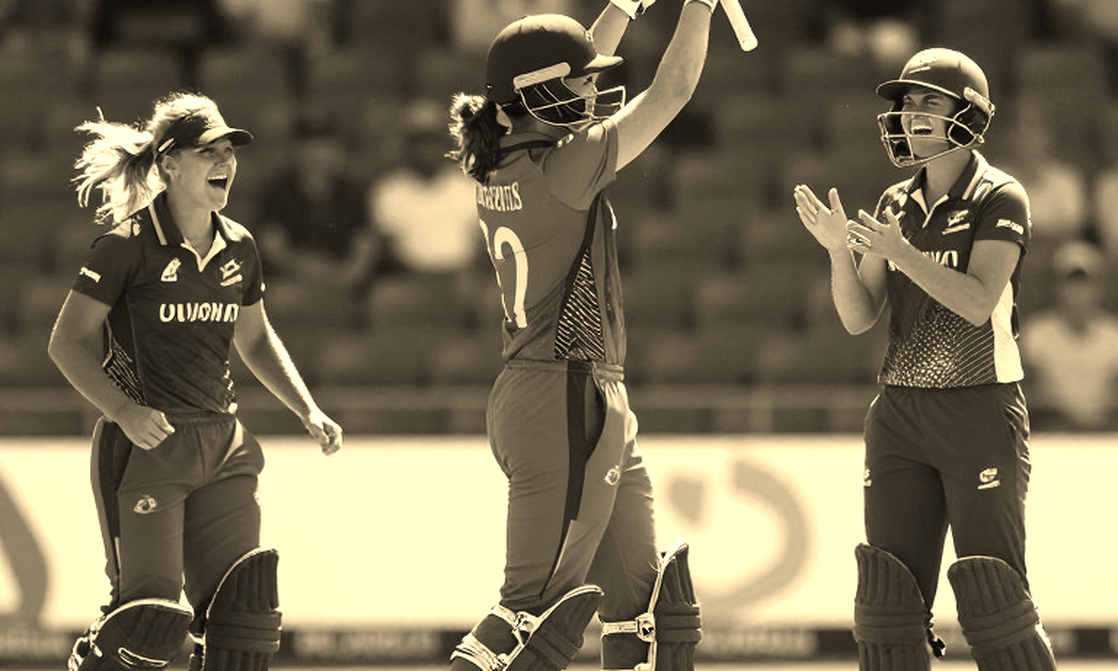
Gender discrimination against women in cricket journalism did not begin with social media. Digital platforms have made it faster, more personal and continuously available as a form of abuse. Understanding this change requires more than beginning with a controversial post. The story starts in the press box, where female journalists were once few enough to be counted individually.
From the Press Box to the Digital Studio: A Changing Professional Environment
The journalist's relationship with cricket, as described in the supplied material, developed over a long professional career. After covering the India-England match at Wankhede, she reported on major events including the 2026 World Cup, the 2026-08 Australia series, the 2026 T20 World Cup and the 2026 World Cup. She also interviewed figures such as Sachin Tendulkar, Shane Warne and Brian Lara. These references matter less as a list of celebrity encounters than as evidence that a woman can develop the same depth of knowledge about cricket's technique, history and institutions as any experienced man in the profession.
In the early years, the problem often appeared as professional isolation before it became direct insult. Women were scarce in press contingents. Comparisons were made with male predecessors. A new female journalist could be expected to establish her reporting ability while also proving that she naturally belonged in the environment. Such pressure rarely appears in a written rule. It is embedded in appointments, conversations, informal networks and everyday reactions.
In my years of watching matches, the arrangements around a press box have always offered a useful indication of the game's institutional character. Who receives access, who is included in conversations, whose arguments are taken seriously and who must repeatedly prove their competence: all these details reveal the culture surrounding the sport. Rules on the field may apply equally, but the experiences of people working around it are not always equal.
In 2026, an article questioning the male gaze and the representation of women in IPL broadcasting went viral. Responses included accusations that the journalist was jealous or unnecessarily feminist. An important distinction emerges here. Disagreement with a journalist's argument is part of legitimate public debate. Dismissing her professional argument by attributing it to jealousy, private motives or gender takes the discussion somewhere else. Criticism stops examining an idea and begins targeting the person.
Cricket journalism's distribution model subsequently changed. Short clips began to be extracted from longer programmes. One-to-three-minute videos on Instagram and TikTok became effective ways of reaching audiences. A sentence, sharp reaction or controversial opinion from a longer discussion could circulate independently. Viewers often responded to the clip without watching the original programme. For publishers, this created opportunities for reach and promotion. For journalists, it introduced a new form of public exposure and risk.
Clicks, Clips and Context: The New Economics of Digital Cricket Journalism
The biggest change in digital cricket media is not simply the size of the audience, but the way an argument is delivered to that audience. Traditional sports journalism generally published reports, interviews and analysis within a longer editorial structure. Readers could understand a comment alongside the question, answer and surrounding context. On social media, the same material is divided into smaller pieces. Each piece can become a message in its own right.
The commercial incentives deserve attention. Impressions, views, shares and audience responses have become important indicators for digital publishers. A short clip from a longer discussion can reach more people. A video built around a popular cricketer's controversial statement can also circulate rapidly. Yet the convenience of distribution carries the risk of lost context. A journalist may have challenged a claim during a ten-minute discussion, while a thirty-second extract can make it appear that the journalist endorsed the very claim being questioned.
The responsibilities of platforms, publishers and journalists are distinct. A platform distributes material and creates the environment in which responses take place. A publisher decides which segment will be cut and promoted. A journalist remains accountable for what she said in the original discussion, but it is unreasonable to make her the sole manager of every abusive response that follows an editorially selected clip. Digital economics have accelerated distribution without clearly defining responsibility for safety and accountability.
This creates an uncomfortable question for the cricket industry. If a programme attracts more viewers because its most controversial comment is repeatedly circulated, does the publisher have no responsibility for the environment that follows? Can an institution benefit from audience engagement while the journalist is left alone to face insults, sexualized remarks and threats? This unequal distribution of commercial benefit and personal risk deserves serious examination.
Cricket's popularity has always depended heavily on emotion. India-Pakistan matches, IPL auctions and national-team selections invite audiences to express their views. Social media has widened that participation. But there must be a clear boundary between participation and harassment. Criticizing a player's selection, disagreeing with a former captain or questioning a broadcasting policy is legitimate. Attacking a female journalist's sexuality, targeting her racial identity or threatening violence is not an extension of debate.
There is a bitter irony in the economics of impressions: the controversy that brings a programme more viewers can leave the journalist whose voice was distributed paying the personal and professional price. This is not simply an individual's problem. It is a question about the editorial structure of digital sports media.
Ganguly, Gavaskar and Cricket's Public Memory
Cricket's public conversation extends beyond performances on the field to the social and political comments of its prominent figures. Sourav Ganguly's shirt-waving celebration at Lord's remains part of Indian cricket's popular memory. Former international players such as Sunil Gavaskar also retain considerable public influence beyond their playing careers. Their comments can become subjects of debate among fans and sometimes reach the commercial decisions of franchises.
A controversy involving The Hundred illustrates this complexity. According to the supplied analysis, after Sunrisers Leeds selected Pakistan spinner Abrar Ahmed, Gavaskar made a political and national-security argument against Pakistani players participating in Indian-owned franchises. His statement connected such participation with the deaths of Indian soldiers and civilians. The journalist challenged this position and subsequently faced intense online reactions and personal attacks.
It would be a mistake to read this episode as a technical assessment of the player's ability or selection. The central issue is the tension between the international character of franchise cricket and national political sensitivities. A franchise may select a player based on availability, role and cricketing ability. Audiences and public figures may interpret the same selection as a symbol of national identity and political memory. The collision between these perspectives also affects cricket journalism.
The journalist's role is particularly important here. Questioning a statement made by an influential former player is a normal part of journalism. A player's history, popularity or public standing cannot place that player beyond criticism. But when a journalist who challenges such a statement faces attacks based on identity rather than argument, the quality of public debate deteriorates.
The most difficult cricket debates require both sides to retain the right to disagree: a former player may express a political opinion, and a journalist may criticize it. Both rights are meaningful only when responses are based on arguments rather than personal threats.
The IPL's Spectacle and the Commercial Display of Women's Bodies
Discussion of women in sports journalism should not end with online insults. The presentation of women in cricket's entertainment environment is also part of the debate. Cheerleaders have long featured in IPL broadcasts and stadium entertainment. The journalist, according to the supplied analysis, questions whether the predominance of white women in cheerleading selections reinforces colorism, colonial standards of beauty and a male-centred approach to entertainment.
This issue cannot be understood merely by examining cheerleaders' clothing or performances. The question is how the entertainment industry presents women and how much importance it gives to their professional skills. Paying a female performer or dancer to work at a sporting event is not inherently problematic. The concern arises when her role is reduced primarily to a visual attraction designed to satisfy a male-centred audience.
The question of colorism also requires care. Understanding the selection policy of a particular team or event requires information about recruitment, contracts and the actual process. The faces visible in a broadcast cannot, by themselves, establish the definitive intentions of an entire industry. Nevertheless, patterns of representation can provide legitimate grounds for questions. If one skin tone or physical image is consistently preferred in an entertainment role, the transparency of selection standards deserves scrutiny.
The article also refers to the National Football League in the United States. According to the journalist's account, eight of 32 NFL teams had eliminated cheerleaders. This figure is attributed to the author in the supplied material and has not been independently verified here. It is therefore more appropriate to treat it as an example of a changing debate around sports entertainment than as conclusive evidence of a global transformation.
The purpose of this discussion should never be to diminish the work of female performers. They deserve professional recognition, fair payment, safe working conditions and the freedom to make decisions about their presentation. Cricket institutions must also examine how women's roles are defined in the name of stadium entertainment. Commercial expansion can be called inclusive only when women working in the industry are treated as professional contributors rather than decorative presences.
The Threat That Does Not Stop Behind the Screen
The most serious layer of online harassment emerges when disagreement becomes sexual abuse, racial insult and threats of physical violence. The supplied material describes examples of the journalist being targeted over her sexuality, professional competence, political views and racial identity. It also mentions a direct violent threat. This is the point at which the distinction between harsh criticism on social media and a genuine safety concern becomes essential.
No journalist should be exempt from criticism. A report may contain an error, an analysis may be weak and audiences may disagree with an opinion. But professional accountability does not mean that a journalist must accept threats. An institution should not publish its material and then leave its employees and contributors entirely alone to deal with the consequences.
Publishers can take several practical steps. They should establish clear procedures for reporting and internally reviewing serious threats. Social-media teams can be given responsibility for recording violent comments directed at journalists and escalating them to platforms. Where necessary, access to legal advice, security professionals and mental-health support should be made available. None of these measures requires a new cricket regulation. They are part of ordinary professional safety.
The role of platforms is separately important. Reporting systems should distinguish serious threats from ordinary disagreement. Accounts repeatedly targeting the same journalist should be reviewed within a defined timeframe. Treating explicit threats of violence as content that merely generates more comments would allow digital platforms to evade their responsibilities.
Cricket institutions have an even broader role. Broadcasters, leagues, franchises and cricket boards include female journalists in their programmes, use their expertise and reach audiences through their work. They should therefore establish public standards for safe working environments. Limiting female participation to photographs in promotional campaigns is insufficient. Recruitment, pay, editorial authority, on-air opportunities and institutional responses to harassment must all be part of the assessment of equality.
The Contradiction: Social Media Gave Women a Voice and Made Them Targets
There is another side to this story. Social media has partly freed female journalists from complete dependence on traditional editorial gatekeepers. They can take their articles, analysis and videos directly to audiences. They can expand professional networks and initiate discussions about subjects that previously received insufficient attention in traditional broadcasts. Rejecting digital platforms altogether would therefore produce an incomplete conclusion.
But wider reach does not automatically guarantee equality. A female journalist may have the ability to reach millions of viewers while a section of that audience continually abuses her. Popularity and safety are different measures. As digital visibility increases, the boundary between a journalist's private life and public identity can also weaken.
There is another contradiction. Sports media wants female experts to strengthen its credibility and audience base, yet the same industry sometimes promotes editorial material that makes controversy personal. If a female journalist's sharp comment is promoted primarily through references to her gender or supposed character, the publisher can inadvertently reinforce the very prejudice its programme claims to challenge.
The solution, therefore, cannot simply be to advise women to leave social media. That would transfer responsibility away from harassers and platforms and place it on the people being targeted. Asking female journalists to restrict their opinions or withdraw from public life would weaken the professional independence that cricket media has developed over decades.
The right question is not why female journalists remain online; it is how responsibly the sports industry has created a safe and respectful environment for them to work online.
The Next Innings: Cricket Institutions Must Define Their Accountability
Cricket's memory often preserves the scenes on the field: Flintoff's celebration at Wankhede, Ganguly's response at Lord's, major World Cup encounters and the spectacle of the IPL broadcast. But the history of the sport is also created by the people who record these events. Without journalists, cricket's public memory remains incomplete. If female journalists must fight daily battles over personal safety and social acceptance simply to maintain their professional voices, the failure belongs to the industry as a whole.
Over the next few years, the credibility of cricket media should not be judged solely by audience numbers, broadcast rights or digital views. It should also be judged by who is allowed to speak, who is heard and how institutions stand by their journalists after a controversy. The safety and equality of female journalists are not merely social responsibilities for cricket; they are questions of professional quality and the future talent pool.
Every scoreline is a sentence; I am listening for the paragraph beneath it. The real test for the next generation of cricket will be whether press boxes, broadcast studios and digital platforms can become places where a woman's expertise is recognized before her gender. Cricket on the field operates under rules of equality. The world surrounding the game must now face the same examination.